











The Art of Losing: The Freedom of Not Needing to Win

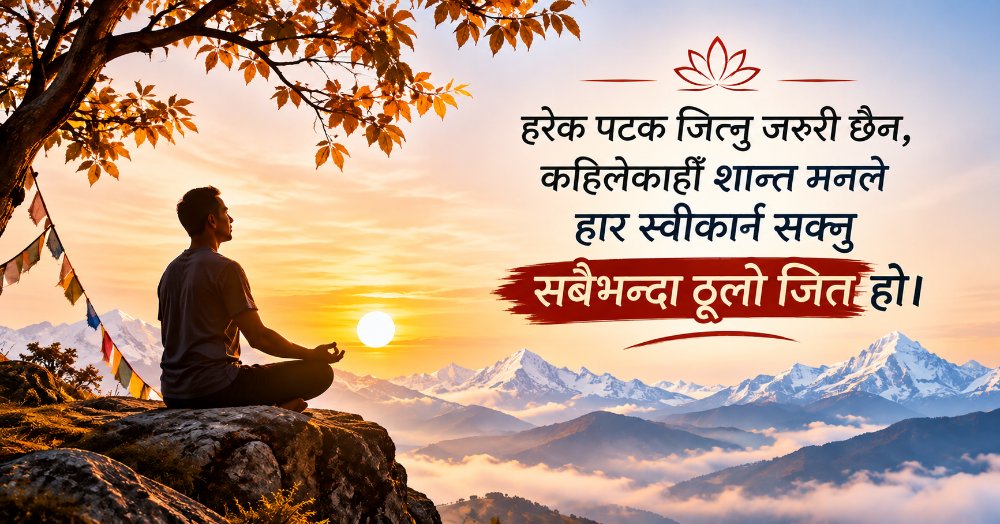
Sometimes, the greatest victory in life is realizing that you don't have to win.
From childhood, we are taught to compete. Be the best student, get the better job, earn more, achieve more, and prove ourselves.
Over time, winning becomes more than an achievement. It becomes part of our identity.
We feel happy when someone agrees with us, praises us, or acknowledges that we are right. But when someone challenges our opinions or proves us wrong, we often become defensive.
Why?
Because without realizing it, we have connected our happiness to our ego.
The Invisible Competition
Think about a simple disagreement with a friend, spouse, colleague, or even a stranger on social media.
What begins as an exchange of ideas often turns into a competition. Suddenly, the objective is no longer to understand each other but to prove who is right.
Winning brings satisfaction. Losing hurts our pride.
But what if we approached these situations differently?
What if we could consciously choose to lose—and genuinely feel happy about it?
The Unexpected Joy of Letting Someone Else Win
Imagine having an argument where you believe you are right. You could continue debating, presenting evidence, and trying to prove your point.
But instead, you smile, acknowledge the other person's perspective, and peacefully move on.
Not because you are weak or intimidated, but because you realize that winning this argument adds nothing meaningful to your life.
Something remarkable can happen.
You discover a different kind of satisfaction—not from defeating someone, but from knowing that your happiness does not depend on defeating anyone.
You have nothing to prove.
When You Lose Gracefully, Someone Else May Win More Than an Argument
There is another beautiful aspect to consciously letting someone else win.
Your willingness to lose happily can positively influence the person who wins.
When you refuse to turn a disagreement into a battle, you remove the tension and hostility that often accompany competition.
The other person may feel heard, respected, and valued rather than challenged or threatened.
And perhaps, over time, they too may begin to realize that every discussion does not need a winner and a loser.
Your peaceful response might encourage them to become less defensive, less competitive, and more open-minded in future conversations.
Of course, this will not always happen. Some people may simply enjoy their victory.
But that is perfectly fine, too.
You are not losing to change them. You are choosing peace for yourself. If it helps them grow as well, that is an added victory.
You Don't Have to Compete in Every Race
Life constantly invites us to compare ourselves with others.
Someone earns more, owns a bigger house, receives a promotion, or achieves greater recognition.
But someone else's success does not diminish yours.
You can admire others without envying them. You can celebrate their victories without questioning your own worth.
And you can continue improving yourself without needing to be better than everyone else.
Just because someone else is running a race doesn't mean you have to participate.
Knowing When to Stand Your Ground
Choosing not to win does not mean abandoning your principles or accepting injustice.
There are times when defending your rights, speaking the truth, and standing up for others genuinely matter.
The wisdom lies in recognizing the difference between protecting something important and simply protecting your ego.
Not every disagreement deserves an argument.
Not every criticism requires a response.
And not every victory is worth pursuing.
The Greatest Victory Is Over Your Own Ego
Imagine reaching a point where someone disagrees with you, challenges your opinion, or believes they have won an argument—and you remain genuinely happy.
You don't feel defeated.
You don't feel inferior.
You don't need to have the last word.
You are simply content with yourself.
That is a powerful kind of freedom.
And when you respond with kindness rather than competition, you may also help create an environment where others feel less pressure to compete.
Perhaps happiness is not always about getting ahead of others.
Perhaps it is about reaching a point where you no longer need to.
Final Thought
We spend so much of our lives learning how to win that we rarely learn how to lose gracefully.
Yet there is something deeply satisfying about consciously letting someone else have their moment of victory while remaining completely at peace with yourself.
When you win, your ego feels satisfied.
When you can happily lose, you discover that your happiness no longer needs your ego's permission.
And perhaps the most beautiful part is that your peaceful acceptance may inspire someone else to discover the same freedom.



-
Malden, MA ·
-
Somerville, MA ·
-
Store Clerk FeaturedAllston, MA ·
-
salem, NH ·
-
East Boston, MA ·