





















7 Legal Ways Nepalis in America Can Save Thousands on Taxes


Driving Uber? Running a small business? Working multiple jobs? Raising children? You may be missing tax deductions and credits that could save your family hundreds or even thousands of dollars every year.
Many Nepalis living in the United States work extremely hard to build a better financial future. Some work regular full-time jobs while others earn additional income through Uber, DoorDash, consulting, online businesses, or rental properties.
But when tax season arrives, many simply hand over their W-2s and 1099s to a tax preparer without understanding the deductions and credits they may qualify for.
The U.S. tax system provides several legitimate opportunities to reduce your tax burden.
Here are seven of the most valuable tax-saving opportunities Nepali families should know about.
1. Have a Side Business? You Could Be Missing Thousands in Tax Deductions
This is particularly important for Nepalis who drive Uber or Lyft, deliver food, provide IT consulting, sell products online, or operate their own businesses.
The IRS generally allows self-employed individuals to deduct ordinary and necessary expenses incurred while running a business.
You don't necessarily need an LLC or registered corporation. Even a sole proprietor operating a legitimate side business may qualify.
Here are some expenses worth investigating:
Vehicle and Transportation Expenses
- Business mileage when driving for Uber, Lyft, DoorDash, or other business purposes.
- Business-related parking fees and tolls.
- Eligible vehicle expenses such as fuel, maintenance, insurance, repairs, and depreciation when using the actual-expense method.
- Business-use portions of vehicle loan interest, where eligible.
Important: You generally cannot deduct both standard mileage and the same vehicle's actual operating expenses. Personal commuting is usually not deductible.
Home Office and Household Expenses
- Business-use portion of rent or qualifying homeownership expenses.
- Business-use portion of electricity, heating, and utilities.
- Business-use portion of home internet.
- Office furniture and equipment.
- Repairs related to a qualifying home office.
Important: The home-office deduction generally requires an area used regularly and exclusively for qualifying business purposes. Simply working from home occasionally does not automatically qualify.
Technology and Communication
- Business-use portion of cellphone bills.
- Laptops, monitors, printers, and computer accessories.
- Software subscriptions, including qualifying AI tools.
- Website hosting and domain registration.
- Cloud storage, accounting software, and business applications.
- Internet and communication services used for business.
Business Operations
- Advertising and marketing expenses.
- Business insurance.
- Professional memberships and qualifying subscriptions.
- Accounting, bookkeeping, and tax preparation expenses attributable to the business.
- Business licenses and permits.
- Payment processing fees.
- Office supplies, shipping, and packaging.
Travel, Meals, and Education
- Qualifying business travel, including airfare and hotels.
- Generally 50% of eligible business meal expenses.
- Professional training and courses that maintain or improve skills in your existing business.
- Business-related conferences and seminars.
Personal vacations, family meals, and education that qualifies you for a new trade or business generally do not qualify.
Additional Deductions Many Business Owners Overlook
- Self-employed health insurance: Eligible self-employed individuals may deduct qualifying health insurance premiums, subject to restrictions.
- Self-employed retirement contributions: SEP IRAs and solo 401(k)s may provide substantial tax-saving opportunities.
- Half of self-employment tax: The deductible portion of self-employment tax can reduce adjusted gross income.
- Qualified Business Income deduction: Eligible businesses may qualify for a deduction of up to 20% of qualified business income, subject to limitations.
- Business equipment: Certain eligible equipment purchases may qualify for accelerated deductions or depreciation.
Example: How Much Could You Save?
Suppose you earn $30,000 annually through consulting or another side business.
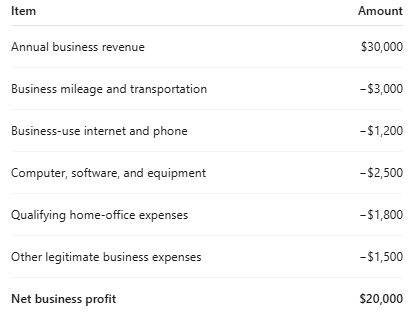
Instead of reporting $30,000 in business profit, you would generally report $20,000 before other applicable tax adjustments.
That $10,000 difference could substantially reduce income tax and self-employment tax.
Remember: These must be actual, eligible expenses supported by records. Spending money solely to obtain a deduction does not automatically make financial sense.
2. Earn a Modest Income? You May Qualify for Thousands in Refundable Tax Credits
One of the most valuable federal tax benefits for working families is the Earned Income Tax Credit (EITC).
The EITC helps qualifying low- and moderate-income workers, especially families with children.
Unlike ordinary tax deductions, this credit can be refundable. That means eligible families may receive money even if they owe no federal income tax.
For tax year 2026, maximum EITC amounts are:
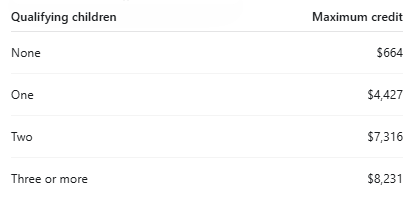
The actual amount depends on income, filing status, qualifying children, and other requirements.
Example: A married Nepali couple with two qualifying children and modest combined earnings may be eligible for a substantial tax credit.
Some families miss this opportunity because they assume that having a full-time job makes them ineligible.
Important: EITC has income limits, investment-income restrictions, Social Security number requirements, and other eligibility rules.
Sajha Tip: Check whether your state also offers an Earned Income Tax Credit. In some states, eligible families can receive both federal and state credits.
3. Have Children? Claim the Child Tax Credit and Childcare Benefits
Raising children in America can be expensive, but several tax benefits may help.
For 2026, eligible families can claim a Child Tax Credit of up to $2,200 per qualifying child under age 17, subject to eligibility rules.
A family with two qualifying children could potentially receive up to $4,400 in credits.
There are also benefits for eligible childcare expenses.
For example, the Child and Dependent Care Credit can help qualifying working parents who pay for daycare, after-school care, or certain other childcare services.
Some employers offer Dependent Care Flexible Spending Accounts, which allow eligible childcare expenses to be paid using pre-tax money.
Sajha Tip: Ask your employer about dependent care benefits during annual benefits enrollment.
4. Paying for College? You May Qualify for a $2,500 Education Tax Credit
Many Nepali parents spend years saving for their children's college education.
Fortunately, the federal government provides education-related tax credits.
American Opportunity Tax Credit (AOTC)
Eligible families may receive up to $2,500 per qualifying student, generally during the first four years of higher education.
Lifetime Learning Credit
Eligible taxpayers may receive up to $2,000 per tax return for qualifying educational expenses.
Income limits and other restrictions apply. You cannot claim both credits for the same student in the same year.
Example: If your child attends college and you pay qualifying tuition and educational expenses, you may qualify for a credit that directly reduces your federal income tax.
Also consider 529 education savings plans, which may offer state tax benefits and tax-free withdrawals for qualified education expenses.
5. Contribute to Retirement Accounts and Reduce Your Taxable Income
Many Nepalis focus heavily on paying off mortgages or saving cash but overlook retirement accounts as tax-planning tools.
Contributing to a traditional 401(k) can reduce your current federal taxable income while helping build long-term savings.
For 2026, the regular employee contribution limit is $24,500, with additional catch-up contributions available to eligible older workers.
Example:
If you earn $100,000 annually and contribute $15,000 to a traditional 401(k), your federal taxable wages generally decrease by $15,000.
At a 22% marginal federal income tax rate, this could save approximately $3,300 in current federal income tax.
Other retirement options include traditional IRAs, SEP IRAs, and solo 401(k)s for eligible self-employed individuals.
Sajha Tip: If your employer matches 401(k) contributions, review whether you are contributing enough to receive the full available match.
6. Have Health Insurance? An HSA Could Reduce Your Taxes
A Health Savings Account (HSA) can be particularly valuable for families enrolled in eligible high-deductible health insurance plans.
For 2026, the HSA contribution limits are:
- Individual coverage: $4,400.
- Family coverage: $8,750.
- Additional $1,000 catch-up contribution for eligible individuals age 55 or older.
HSAs provide three major tax advantages:
- Eligible contributions reduce taxable income.
- Investment growth within the account can be tax-free.
- Withdrawals for qualified medical expenses are tax-free.
Example: A qualifying family contributing $8,000 to an HSA could save approximately $1,760 in federal income tax at a 22% marginal rate.
Unlike many Flexible Spending Accounts, HSA funds can remain available in future years.
Sajha Tip: Check your health insurance plan's HSA eligibility before contributing.
7. Own a Home, Donate to Charity, or Work Overtime? Check Additional Tax Benefits
There are several additional opportunities worth reviewing.
Mortgage interest and property taxes: Homeowners may benefit from itemizing deductions if their eligible deductions exceed the standard deduction. For 2026, the standard deduction for married couples filing jointly is $32,200.
Charitable contributions: Starting in 2026, eligible taxpayers taking the standard deduction may deduct up to $1,000 in qualifying cash charitable donations, or $2,000 for married couples filing jointly.
Overtime compensation: Certain qualifying overtime pay may be eligible for a federal income tax deduction under rules applicable to 2026. The deduction generally concerns the qualifying overtime premium, not all overtime earnings.
Tip income: Workers in qualifying tipped occupations may be eligible for a federal deduction on certain qualifying tips.
State tax benefits: Depending on where you live, you may qualify for state-level credits or deductions related to children, housing, education, or retirement savings.
These benefits have different requirements, and not every worker or homeowner qualifies.
Three Costly Tax Mistakes Nepalis Should Avoid
1. Not reporting cash or side-business income
Cash payments, freelance income, and earnings from payment apps can still be taxable even when you do not receive a W-2 or 1099.
2. Claiming personal expenses as business deductions
A family vacation, personal grocery shopping, or ordinary commuting does not become deductible simply because you operate a business. Maintain accurate records and claim only legitimate expenses.
3. Assuming money sent to Nepal is tax-deductible
Sending money to parents or relatives in Nepal is common, but these personal remittances generally do not qualify as U.S. income tax deductions.
Also remember that U.S. tax residents generally must report worldwide income, and certain foreign financial accounts may trigger additional reporting obligations.
Final Thoughts: Don't Pay More Taxes Than You Legally Owe
Many Nepali immigrants work multiple jobs, operate small businesses, and make significant sacrifices to support their families.
But working harder is not the only way to improve your financial situation. Understanding the tax system is equally important.
A person earning $70,000 who understands available tax credits and deductions may sometimes have a lower tax burden than someone earning the same amount who overlooks them.
The goal is not to avoid taxes. It is to make sure you are not paying more than the law requires.
Before filing your next tax return, review your side-business expenses, family tax credits, retirement contributions, education expenses, and other potential benefits.
A knowledgeable CPA or enrolled agent can help determine which deductions and credits actually apply to your situation.
Disclaimer: This article provides general educational information about U.S. federal taxes for tax year 2026. Eligibility, income limits, state laws, and individual circumstances vary. Consult a qualified tax professional before claiming deductions or credits.
Sajha Community Question: What is one tax deduction or credit you discovered that helped you save money? Share your experience in the comments. It might help another Nepali family.
Official resources:






-
Store Clerk FeaturedAllston, MA ·
-
salem, NH ·
-
Aesthetician NewEast Boston, MA ·
-
Malden, MA ·
-
Boston, MA ·
-
 Room Available for Rent – Everett, MA USD 900.00Everett, MA, MA ·
-
 Malden, MA ·
-
 Spacious 2-Bedroom Basement for Rent USD 2,200.00Aldie, VA ·
-
 Manassas, VA ·
-
 Apartment for Rent/ Wakefield USD 1,600.00Wakefield, MA ·