















Abdul El-Sayed: A New Political Star in America — Could He Become a Future U.S. President?

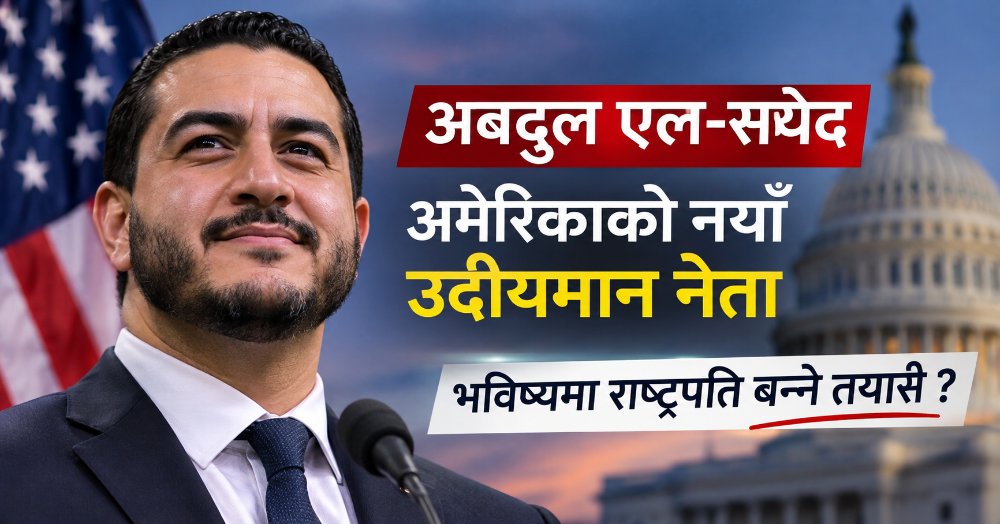
Abdul El-Sayed: A New Political Star in America — Could He Become a Future U.S. President?
From relative obscurity to a historic Senate victory, the 42-year-old Muslim American is attracting national attention. Could he become one of the Democratic Party's future presidential contenders?
For many Americans, particularly those outside Michigan, Abdul El-Sayed was hardly a household name before the November 3, 2026, midterm elections. Today, his name is increasingly part of the national political conversation.
His victory in Michigan's U.S. Senate race was historic. The 42-year-old Democrat defeated Republican Mike Rogers, becoming the first Muslim elected to the United States Senate.
But could this victory be the beginning of something much bigger?
Who Is Abdul El-Sayed?
Born in Michigan to Egyptian immigrant parents, Abdul El-Sayed is a physician, public health expert, and progressive Democrat.
He previously served as Detroit's health director and unsuccessfully sought Michigan's Democratic gubernatorial nomination in 2018.
His political platform emphasizes:
- Universal healthcare through Medicare for All.
- Reducing the influence of billionaires and corporations in politics.
- Making everyday life more affordable for working families.
- Challenging established political power structures.
- Pursuing a more critical approach to American foreign policy, particularly regarding Israel.
His message has resonated with progressive voters, including younger Americans frustrated with traditional politics.
After losing the 2018 Democratic primary for governor to Gretchen Whitmer, El-Sayed started a podcast, wrote a book and became a regular presence on YouTube and television, slowly building a following. Before this race he had never held elected office. He was born in Michigan to Egyptian immigrant parents, studied medicine at Columbia and earned a doctorate at Oxford. At 30 he became head of Detroit’s health department. Michigan's 2026 Senate race: What to know about Abdul El-Sayed vs Mike Rogers +3
His real breakthrough came in the August primary. He beat Rep. Haley Stevens despite nearly $65 million in outside spending, and the Democratic establishment had rallied around her. His platform centered on Medicare for All and taking money out of politics. He was backed by Bernie Sanders, Alexandria Ocasio-Cortez and the United Auto Workers. nbcmiaminbcnewyork
His rise drew sharp attacks. He has called Israel’s actions in Gaza genocide and has urged an end to U.S. military aid. Republicans also pointed to his appearances with the streamer Hasan Piker, and he drew criticism for a comment after a synagogue attack in Michigan. Trump and others accused him of ties to the Muslim Brotherhood. FactCheck.org examined one such allegation by Rogers and found no evidence for it. Many Democrats and religious leaders criticized the attacks as anti-Muslim. El-Sayed has denied the allegations.
Why Is His Victory So Significant?
Michigan is one of America's most politically competitive states. Donald Trump won the state in the 2024 presidential election.
Yet just two years later, El-Sayed, running on an openly progressive platform, won its U.S. Senate race.
His victory demonstrated that a candidate with immigrant roots, a Muslim identity, and policies outside the Democratic establishment's traditional comfort zone could win statewide in a major political battleground.
Even more remarkably, El-Sayed overcame opposition from influential figures within his own party during the Democratic primary.
This makes his victory more than a personal achievement. It raises questions about the future direction of American politics.
Is He Being Prepared for the 2028 Presidential Election?
[Speculation] Could Abdul El-Sayed be emerging as a future presidential candidate?
It is an intriguing possibility.
American political parties constantly search for leaders capable of energizing new voters, communicating effectively, and winning competitive states.
El-Sayed has demonstrated several qualities that could make him attractive as a future national candidate: a compelling personal story, strong public-speaking skills, progressive policy positions, and an ability to win in a politically divided state.
His victory also comes at a time when Democrats are debating whether their future lies with moderate establishment politicians or a new generation of progressive leaders.
However, there is currently no verified evidence that Democratic Party leaders are grooming El-Sayed for the presidency or that he intends to run in 2028.
In fact, his success against establishment-backed opposition suggests that his political rise has not followed a conventional party-sponsored path.
A presidential campaign in 2028 would also come very early in his Senate career.
Nevertheless, his name could become increasingly relevant in discussions about the Democratic Party's longer-term future.
What Does His Rise Mean for Nepali Americans?
For Nepalis living in the United States, El-Sayed's political journey offers an interesting perspective on immigrant participation in American democracy.
His victory demonstrates that political leadership in America is not necessarily limited to individuals from traditional political families or longstanding political establishments.
A candidate whose parents immigrated to America, whose religious identity differs from that of most Americans, and whose political positions challenge powerful interests has now won a major statewide election.
For Nepali Americans, particularly younger generations considering public service, this is a development worth watching.
Could America Elect a Muslim President?
The United States Constitution does not require a president to follow any particular religion.
A Muslim American can legally become president, provided the individual satisfies the constitutional eligibility requirements.
Whether American voters would elect a Muslim president is a different question, involving political attitudes, religious prejudice, candidate qualifications, and public trust.
El-Sayed's victory is an important milestone, but winning a presidential election would require building a much broader national coalition.
A Name Worth Remembering
Just a few years ago, Abdul El-Sayed was primarily known within Michigan's progressive political circles. Today, he is a U.S. senator-elect whose victory is helping reshape discussions about the Democratic Party's future.
[Speculation] It may be premature to call him a future president, but it is not unreasonable to consider him a potential national political figure.
American political history has repeatedly demonstrated how quickly new leaders can emerge.
Barack Obama went from being a relatively little-known Illinois state senator to winning the presidency within a few years of entering the U.S. Senate.
Could Abdul El-Sayed eventually follow a similarly remarkable political trajectory?
Only time will tell.
One thing is certain: his historic 2026 election victory has given Americans a new political figure to watch.
What do you think? Could Abdul El-Sayed become a serious presidential contender, or is America still far from electing its first Muslim president? Share your thoughts on Sajha.
Editorial note: The suggestion that El-Sayed is being prepared for a presidential campaign is political speculation, not an established fact. His election victory and political background are documented; his future presidential ambitions remain unconfirmed.

-
Store Clerk विशेषAllston, MA ·
-
salem, NH ·
-
Aesthetician नयाँEast Boston, MA ·
-
Malden, MA ·
-
Boston, MA ·
-
 Manassas, VA ·
-
 Apartment for Rent/ Wakefield USD 1,600.00Wakefield, MA ·
-
 Room for rent USD 600.00Herndon, VA ·
-
 malden, MA ·
-
 Private room USD 750.00Everett, MA ·