Bijaya Poudel of Vishwa Sandesh: If political parties unite for the national cause, the country will develop very soon
Bijaya Poudel is a very familiar name in Nepalese community in New York City. He is a founder President and Chief Editor of Vishwa Sandesh that began it’s publication over 4 years ago from Jackson Heights, New York and today has world wide readers both online and offline. Poudel is well known for his terse writing and straight-talk in his articles when it comes to political and social matters. Once established only as a monthly newspaper, Vishwa Sandesh has become a weekly newspaper with hard work and tremendous efforts of it’s chief editor Bijaya Poudel. Bijaya Poudel not only writes but personally handles the financial aspects of the newspaper including obtaining advertisements and support from its readers and the business community. Nepalese community is just growing in the field of business and Vishwa Sandesh has had to expand its reach among other business communities too to continue its publication and expand its market. Bijaya Poudel also informed us that soon Vishwa Sandesh is going to be daily newspaper and is going to expand its reach among Nepalese communities all over the world including Australia. Poudel also envisages expanding publication among Nepalese community all across the world. Besides running newspaper, Poudel also runs other distribution outlets and a beauty salon with the help of his wife. He credits his wife Samjhana for all the success he has had. Poudel exemplifies the active and energetic Nepalese youths who are spreading their influence all across the globe with their actions and charisma. Poudel is also a writer of several books like “Nirankustako Kalo Kartut” and “Rajgaddi” which created a tremendous sensation in Nepalese political arena during the later part of last decade. An INTERVIEW: 1.Sir,tell us little bit about yourself. –I think of myself as an independent writer and a journalist. I am also a businessmen here living and operating currently from New York City. I have also done modeling for several music videos in Nepal about 12 years ago. In USA, I am known as a journalist who began Vishwa Sandesh in a Nepali community which is just growing. I am known for establishing this media despite thousands of hurdles involved. I pride myself in being able to serve the Nepalese community in many ways through Vishwa Sandesh . It is not an easy task to run a media on a weekly basis in a struggling community such as Nepalese in New York but we have been able to do so successfully for 5 years consecutively. There is much to be done but I consider whatever I have done a great achievement. 2. You were running several businesses in Nepal and working as a journalist there, how did you get involved with Nepalese community in New York? –In 2007, similar to many other Nepalese, I arrived America with an intention to visit and see this land of opportunities with my own eyes after travelling to many other nations in Europe, Canada, Hong Kong, Singapore, Malaysia, China etc. Before coming to US, I had traveled to many of these nations in business trip and some for pleasure. At the time I arrived here, I had no intention to stay. During 2008, the political instability started increasing and the situation of the nation started becoming worst and worst economically. At the time when King Gyanendra seized all the power, I wrote a book called ” Nirankustako Kalo Kartut” and ” Raj Gaddi” mentioning the evils of absolutely monarchy and actions of then King. I also wrote several articles condemning the actions of the King. Due to the worsening business conditions, security reasons due to my involvement with political parties and as a journalist , I moved to United States in 2008. At that moment, my family was not positive about us moving to United States. 3. How do you like it? –Everything else is same for me here in US except that I haven’t gotten a chance to sleep more than 4 hrs in a day.( Laughs) In the beginning, I missed friends and families back in Nepal but started getting used to everything after few months. The world is now a “Global Village” and you can operate from any part of the world in my kind of profession. In Nepal, I was just a writer for other papers. I used to contribute and write what I felt but after coming here, I began my own publication which is a completely different experience. I miss my sleep though. One thing for sure, lack of sleep causes some health problems. 4. Why do you sleep so less? –In Nepal, I used to sleep over 8 hrs. Here, I have to begin the work with my publication from 7 am in the morning. By the time, i am done with phone calls, interviews, writing articles and editing, it’s over 1 am in the morning. Due to the lack of resources, we can’t hire many people. So, I have to do most of the work and I will tell you it’s no joke publishing 32-page newspaper every single week for over 5 years. 5. Do you have suggestions for young Nepalese-Americans growing up here for a great future ahead? – It all depends upon the person you are talking about. Unlike other nations, our country have 3 different geographical areas and economically they are very different from each other. The suggestion I would give to one coming from Himalayan region of Nepal would be very different from one coming from rich neighborhood of Kathmandu. In general, anybody who comes here, i think, should work hard for 3-4 years in whatever job he can get, then open some business of his own whether it be big or small and run his own enterprise. I think that’s what American dream is all about. 5. You have accomplished so much at such a young age. What’s your long term plan? – I try to follow the Sanskrit maxim “Santosam Param Sukham”. I do not have any lofty goals and ideals. I try to spend one day at a time. I try to be happy with what I have. Presently, I am busy with getting Vishwa Sandesh published daily and start some new business in next 2-3 years. Financially, I want to be independent in next 4-5 years. In next few years, I want to open a hospital in Nepal between Naubise and Malekhu along Prithvi Highway. I want to be devoted in social causes as much as I can than for my own personal benefit. 6. Tell us few special moments that make you cry or make you smile from within. – In 2008, I was in Nepal to celebrate Tihar. Myself along with a few friends decided to go to Malekhu for fishing and celebrate Diwali with some nice fish dishes. On the way, we stopped at a local restaurant to freshen up. I noticed a girl covered up in a thick blanket in such a hot weather. After a lot of inquiries, I found out that she suffered from the blocking of 2 valves of her heart and was rejected by a hospital in Kathmandu for operation due to lack of Rs. 3 lakhs. I felt that she was ignored by her own family being a girl. Her affliction was not important to anybody there. I felt an obligation and promised that I would arrange her operation. People didn’t believe me. Later, i tried to get in touch several times from Kathmandu but they did not want to get in touch with me. May be they just did not believe that I was sincerely. I tried to contact them till the day of my departure back to New York. After getting to New York, I raised Rs. 100000 and arranged the rest of the money for her operation. My friends at LION CLUB got her back to Kathmandu and finished her operation with the help of Dr. Bhagwan Koirala. Parvati Upreti of Dhading is now well. I also helped her go to boarding school for several years. She is currently studying at a government school there. Jenish Gurung in New York helped me a lot in collecting the fund for her cure. When I go back there, people cry seeing me. I am planning to see her again soon when i get back to Nepal. 7. You have been living in Queens, NY for a while. How do you like it? What’s the best thing about Queens? –I personally like peaceful and serene places. Even in Nepal, I used to go and spends hours alone at places like Kakani, Dhulikhel, Nagarkot. It’s just the opposite here in Queens but due to the work related with my newspaper, I have to live here where the Nepali community is accessible. Moreover, I am getting used to noise and disturbances these days. The best thing about living here in Jackson Heights, Queens is that it is like Kathmandu. Wherever you go, you meet friends. We get to chit-chat over a cup of tea or a coffee. It just feels like home. That’s whats special about this small neighborhood. It’s a “little Nepal.” 8. What kind of positive developments would you like to see in Nepal in next 2-5 years? –There’s been a lot of progress in NEPAL since 1990. Lot of schools have opened. Nepal is producing her own doctors, nurses, pharmacists etc. Several small banks have opened up in villages to help poor people in village areas running small level businesses. 1. We can take a lot of advantages from neighboring big giant nations like India and China if we take them positively. 2. If the Nepalese politics becomes stable, the nation with progress automatically. The nation has never been stable since 1990. 3. If political parties unite for the national cause, the country with develop very soon. 4. Nepal is rich in natural resources which can be utilized to develop with the wave of change happening all over the world in 21st century. Without a miracle or a birth of a new leader, situation of Nepal will remain the same even in next 20 years. 9.Who inspires you the most? –My father Atmaram Poudel was a local leader at a grass-root level. My interest in political started increasing with my father’s activities and people coming to my home. The political discussions at tea incited me to write later on about politics in the newspapers. My wife Samjhana Khanal is also a major source of my inspiration. She has always supported me in everything I have been doing even in America. She has never nagged over anything I do. Her complete support and dedication has been the major part of all my recent successes and achievements. She is a hero in my life. 10. What makes you come alive? – When I write an article on a subject matter I am very much interested in, publish it and read it, I feel more happy and satisfied than might be in making millions of dollars. 11. What do you think about the current situation in Nepal? – It’s very bad out there in Nepal. People at least had a hope that nation would move up after establishing a constitution. Jestha 14th was darker than the “Kalo Raat” in the history of Nepal. If the constitution can not me made in such circumstances, there is no more hope among Nepalese for a constitution anytime soon. The nation is going down the path of division on the basis of caste and ethnicity which is even worse. 12. What have you achieved so far in a English speaking nation by running a Nepali newspaper? – A person can not forget his own nation and language. After coming to Nepalese community in Jackson Heights, i felt the need for a Nepali newspaper dedicated to be published for a long term. The labor costs are high here and people did not believe that we would continue since the tendency to start new newspaper and shut down in next couple of years existed. It is very hard to co-ordinate between people in Nepal and USA. The technology has definitely helped. Email and internet have been crucial in us running Vishwa Sandesh so far. It has definitely made the world a “Global Village.” 13.What is your vision for your organization? – Vishwa Sandesh is now a public organization. It is demanded highly among Nepalese community and we are planning to go daily with additional pages in next few years. We began it from Nepal. We have ceased in Nepal for few months now due to technical problems. We are planning to come out in Australia and Texas in next few months. Our long term goal is to publish it from every part of the globe where Nepalese community resides. 14. What are 5 things you suggest Nepalese government and Nepalese Americans do to contribute for the well being of Nepal? –Nepalese politicians look at citizens abroad very badly. Nepal is heavily depended upon the remittances that come from Nepalese abroad like UK, Canada, USA etc. Nepal Government must find alternatives to attract the investment from abroad. In my opinion, Nepalese abroad love Nepal more after being so far from family and the nation. Huge number of productive Nepalese have are abroad these days and if they are not embraced in the system, Nepal is going to lose a lot. Nepalese Americans are willing to invest and establish several businesses in Nepal but due to the lack of policies, they are scared. Policies change by days. People want to invest but the situation is bad. If the policies to encourage foreign investments and attract Nepalese Americans are placed, they are more than willing to devote themselves for the benefit of their motherland. 15. What do you think CONSISTS of a successful man? – Each and everyone is successful in his own way. A single person can not succeed in all areas of life. In journalism, I consider Anderson Cooper a success. In the field of engineering, I consider Steve Jobs a great success. In politics, I consider Mahatma Gandhi a success. Each person should try his best but there is no limit of success. It’s a journey not a destination. 16. Tell us little bit about your journey that made you a journalist. – Every person that writes is a writer. Every person who can write for the benefit of the nation and community is a journalist. I kept on doing the same. Later on i came out with books. In Nepal, journalism is considered 4th part of the government. Now, I have my own publication. I studies political science in school. Moreover, i saw the interaction between politicians and people from my childhood. Despite all this, I consider myself more of a writer than a journalist. 17. Do you think what you are doing is your real calling in life? – Definitely, it is so. I believe in destiny. I think what I am doing is a part of the divine plan. Whatever I do in this life will always be something related to journalism. I am doing my best and believe that I am contributing to the society to the best of my ability. 18. How do you want to be remembered (after you are gone from this world)? – As a good person. 19. Your message to Nepalese Americans: – The division in Nepalese community is prominent. Just in New York, there are more than 51 Nepalese organization. I encourage then to be united for the good of all. Nepalese leaders in all community want recognition. I would encourage people to devote themselves in helping people than getting their own name and recognition in the public stage.
whistleblower · Aug 21, 2012 1:08 AM · 200 views
This conversation is preserved exactly as it was on the original Sajha.com and can't accept new replies.
Start a New DiscussionYou might be interested in...




-
Room Available for Rent USD 850.00Melrose, MA ·
-
One bed room available for rent USD 1,300.00Germantown, MD ·
-
Malden, MA, United States · Reposted Originally posted
-
Big Room with Parking Next to bus stop USD 1,100.00Everett, MA ·
-
Rooms Available for Rent USD 2,700.00Reston, VA ·
-
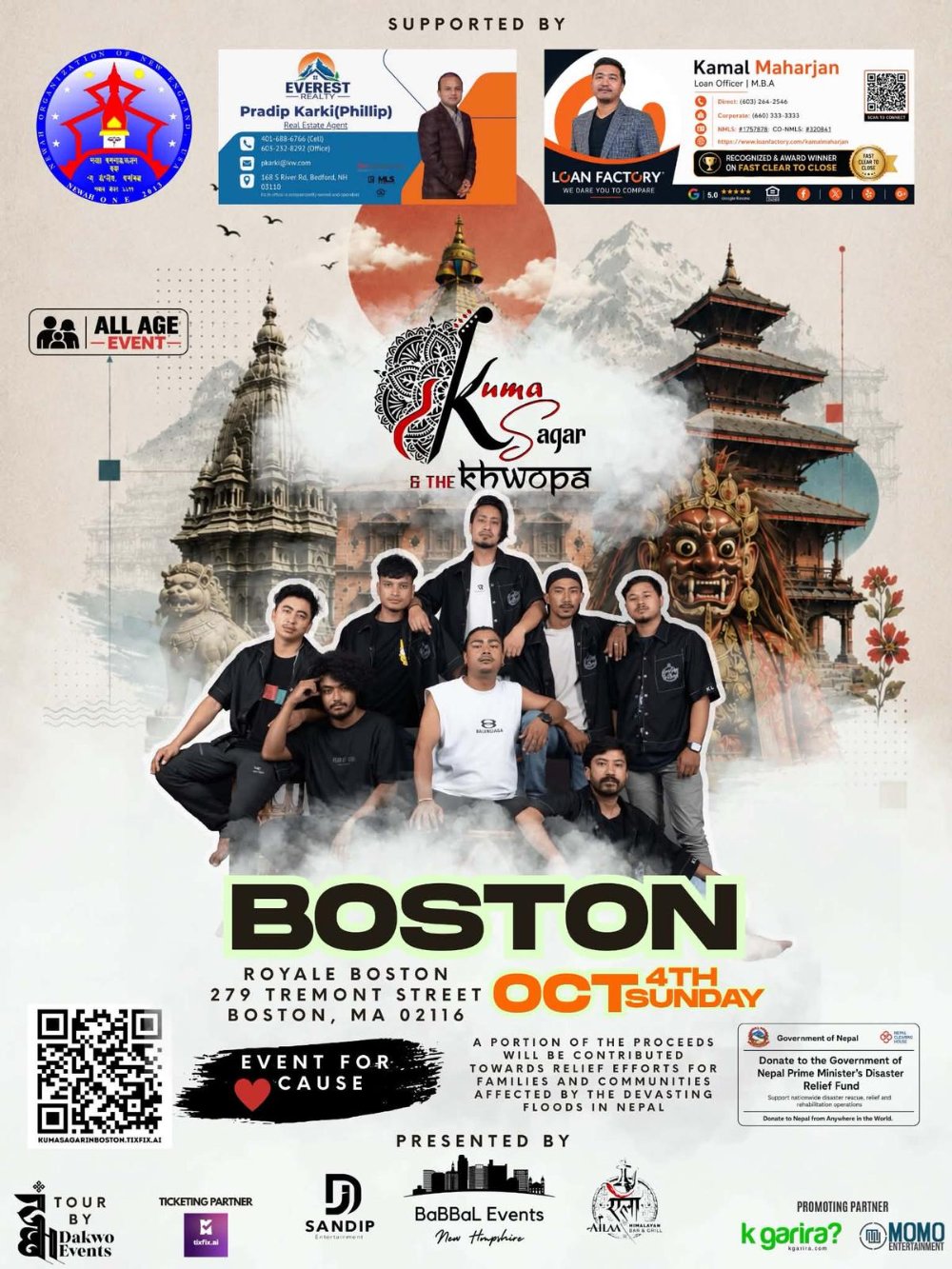 Oct 4, 2026 7:00 PM · Boston / New England · 518 views
 -
 Nepal Festival Perth 2026 FestivalOct 10, 2026 10:00 AM · Perth / Western Australia · 227 views
 -
 Grand Dashain Mela 2026 FestivalOct 10, 2026 11:00 AM · Bay Area / Northern California · 215 views
 -
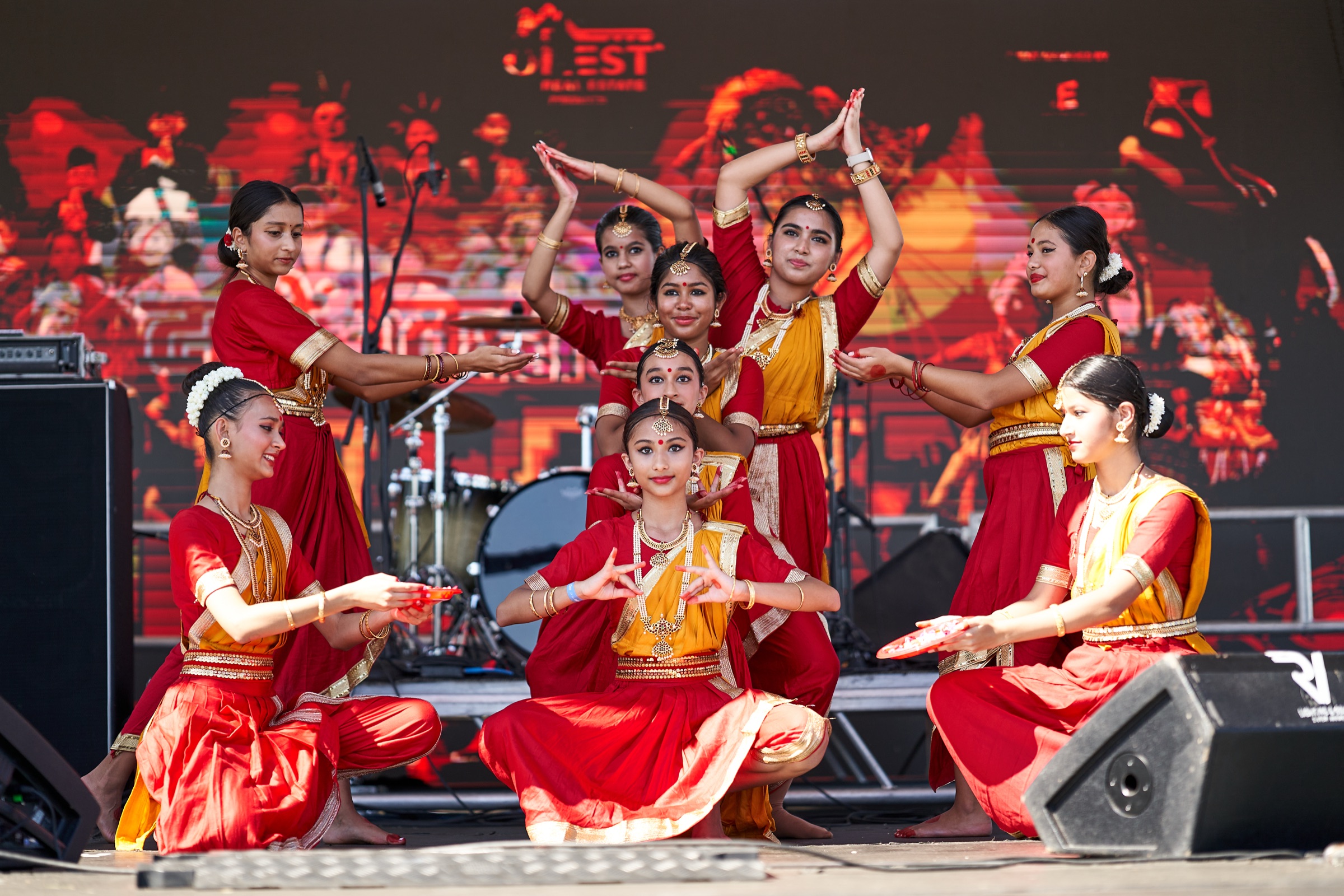 Oct 11, 2026 11:00 AM · DMV / Greater Washington · 228 views · Dashain
 -
 Dashain Festival Fulpati PartyOct 17, 2026 10:00 PM · Greater London · 189 views · Dashain
-
✓Vianet Communications OtherKathmandu · · 287 views
-
Aama Lama RestaurantMalden, MA · · 244 views
-
Ailaa Himalayan Bar & Grill RestaurantStoneham, MA · · 247 views
-
Ailaa Himalayan Bar & Grill RestaurantBedford, TX · · 222 views
-
Annapurna Curry & Sekuwa House RestaurantManchester, NH · · 225 views