Which model of gonvernance would you vote for?
Major or minor? from eKantipur: The report submitted by a majority of the State Restructuring Commission--backed by Malla K Sundar, Bhogendra Jha, Stella Tamang, Krishna Hacchethu, Surendra Mahato and Chairman Madan Pariyar--that proposes an 11-state model has 19 Articles. However, the separate report forwarded by the minority group that pitches for a six-state model has 17 articles. In the report prepared by the majority, the first article is the preamble, which states that Nepal would be a federal set-up which strives to eliminate all forms of discrimination, including ethnic and class. The preamble also states that there would be autonomous and self governance with powers vested in the centre. The second article defines the federal set-up. 'Federal' implies the unit at the top. 'Province' implies area separated from the federation. 'Local level' implies village and city councils. 'Special structure' implies autonomous and special areas. 'Protected area' implies areas for minority and endangered groups in provinces. The third article talks of restructuring of state and forms of state powers. The fourth article states about levels of government. It advocates two tiers of government--central and provincial. The province would have local units comprised of villages and city councils. Under the special structure, there would be autonomous areas, special areas and protected areas. Likewise, at the local level there would be village council and city council whose number and area would be determined by the provincial government. Article 8 states that there would be a special structure for a community or an ethnic group. Clause 10 of Article 9 gives residual power to either the centre or the province depending on where the problem arises. The minority group demands that the residual power rest at the centre. Article 11 states that in order to resolve disputes among federal units there would be an inter-provincial council headed by the prime minister of the federation whose members would be central home and finance ministers along with heads of provincial governments. Article 12 provisions right to self determination to indigenous, ethnic Madhesi groups. Article 13 talks of political priority rights for the dominant group at the level of the special structure. Article 15 dwells on rights for Dalits and calls for ensuring them jobs at governmental, semi-governmental and industrial units. The article demands modernisation of their traditional occupations. Article 18 seeks ensuring rights of the minority group through legal provisions. Article 19 requires reviewing the reservation policy every 10 years. To the centre, the report gives 30 rights, including control of the Army, central police and central bank. To the list, the minority group's report adds, among other things, national labour policy, legal administration, and international treaty. The minority faction--comprising Ramesh Kumar Dhungel, Sarbaraj Khadka and Sabitri Gurung--stresses that there should be six provinces and a three-tier structure--federal level, state level and local bodies. The majority faction, backed by Chairman Madan Pariyar, has recommended a two-tier structure and placing local bodies under the provinces. In its note of dissent, the minority group has suggested three tiers of government--federal, provincial and local--with equal rights. They have stressed that the current set-up of local bodies be continued until new structures are finalised by the state government. The three members have recommended that there should be districts, municipalities and Village Development Committees at the local level and they should be created within a year of electing the state government. The majority faction has recommended political priority rights for dominant ethnic groups in the special structures within a federal set-up for once at least. Dhungel, Khadka, Gurung and Bhogendra Jha have expressed serious reservations that the provision of priority rights is against the principle of competitivie politics. Dhungel, Khadka and Gurung have objected to the recommendation of right to self determinism for indigenous nationalities, Madhesis, Dalits and other marginalised groups arguing that the provision could provoke unnecessary disputes. Majority members have recommended that indigenous and local communities should have right to self determinism on politics, culture, religion, language, education, information, health, migration, social security, employment, mobilisation of resources and land, among others. The commission has recommended formation of an Inter-State Council headed by the prime minister to resolve disputes between the federal units. Commission member Stella Tamang has registered a note of dissent demanding participation of at least two women ministers in the dispute resolution mechanism. Members of the commission have suggested that the head of the government, on the recommendation of the federal government, can dissolve any state government or state legislature if it acts against territorial integrity, sovereignty and ruins the law and order situation. The dissolution would be invalid if not endorsed by the federal parliament with a two-thirds majority within 35 days, reads the dissenting proposal. Meanwhile, the minority group has recommended Dhankuta, Kathmandu, Pokhara, Janakpur, Surkhet and Ghorahi as provincial headquarters in their six-state federation. Bhojpur, Dhankuta, Ilam, Jhapa, Khotang, Morang, Okahldhunga, Panchthar, Sankhuwasabha, Solukhumbu, Sunsari, Taplejung, Terhathum and Udayapur districts fall in the first state. The second state, whose capital will be Kathmandu, comprises Bhaktapur, Chitwan, Dhading, Dolakha, Kavrepalan-chowk,Kathmandu, Lalitpur, Makawanpur, Nuwakot, Ramechhap, Rasuwa, Sindhuli, and Sindhupalchwok districts. The third province includes Arghakhachi, Baglung, Gorkha, Gulmi, Kaski, Lamjung, Manag, Mustang, Myagdi, Palpa, Prabat, Pyuthan, Rolpa, Syangja, and Tanahu districts and the eastern part of Nawalparasi district. The western part of Nawalparasi, Banke, Bardiya, Dang, Kailai, Kapilvastu and Rupendehi make up the sixth province with Ghorahi as regional headquarters. Bara, Dhanusha, Mahottari, Parsa, Rautahat, Saptahari, Sarlahi, and Siraha districts are incorporated in the fourth province and Janakpur is recommended as the regional capital. Achham, Baitadi, Bajhang, Bajura, Dadeldhura, Dailekh, Darchula, Dolpa, Doti, Humla, Jajarkot, Jumla, Kalikot, Kanchanpur, Mugu, Rukum, Salyan and Surkhet are incorporated in the fifth province
Stiffler · Feb 2, 2012 11:10 AM · 2,701 views
I guess Governance isn't the right choice of word. Read it as which model of restructuring of states do you prefer.
Stiffler · Feb 2, 2012 11:13 AM
झ्याउरेहरुले जे भनेनी भो नेपाली पोलिटिक्स मा छिर्ने जो पनि त्येही पैसाको लागि हो कुन दिन कुर्सि मा पुग्छु र टन्न गांठ बनाउछु भनेर कुरिरहंछ सबै जय देश
Bad Boy · Feb 2, 2012 3:01 PM
I don't think there is any alternative way to settle down the current political turmoil of Nepal without agreeing on ethnic federalism. We blindly supported political parties for mutiparty system aganist monarchy, we blindly supported maoist for whatever political system against multiparty system and residual monarchy, and now we are blindy supporting this model of ethnic federalism. Everytime we did this with high expectation of massive change in our economic status but the result was void. This time also we are doing the same thing for the same resaon but under the different banner name. And this is not going to get out of people's head until they see no significant change in their life standard. 1. I never understand how it wil be example of inclusive federalism when you are going to build a state in the name of one particular ethnic group? How it will be inclusive state for rest of ethinc groups? And how can you guarantee that other ethnic groups will not feel insecure? 2. If you are reserving positions for ethinic groups and minorites in every governemnt office, how this is going to be fair for other applicants who have better academic and technical skills? Is it going to be good example of so called inclusive system if you are not taking any highly qualified person in the office just because he/she is not from certain ethnic groups? Are you going to create efficient bureaucracy by recruiting people from ethnic groups and minorities even they don't meet the required qualifications? I never understand why they don't believe on educating people at first and then getting them trained before hiring. I have seen enough examples of 'if you are opening any industry or any plant in our area then you have to take care of everything for us'. 3. I am not sure what is the criteria for that 2nd model of federalism but I don't think by grouping bunch of present day districts based on geographic proximity will give us better model. Is this model prepared based on the distribution of economic resources? How will you balance the uneven distribution of economic resources in Nepal so that each and every state will have financial independency to implement whatever development plan they want? It doesn't matter how many arguments I present against ethinc federalism or even against federalism. The bottomline is polictical deadlock of Nepal is not going to end unless the ethnic federalism is given. नपढेका भेडाहरु भन्दा पढेलेखेका भेडाहरु झन् एकोहोरो हुदारहेछन. However, this model of federalism is not going to last for long. This will definitely suffer from another major revolution.
Geology Tiger · Feb 3, 2012 7:59 PM
This conversation is preserved exactly as it was on the original Sajha.com and can't accept new replies.
Start a New DiscussionYou might be interested in...



-
Room Available for Rent USD 850.00Melrose, MA ·
-
One bed room available for rent USD 1,300.00Germantown, MD ·
-
Malden, MA, United States · Reposted Originally posted
-
Big Room with Parking Next to bus stop USD 1,100.00Everett, MA ·
-
Rooms Available for Rent USD 2,700.00Reston, VA ·
-
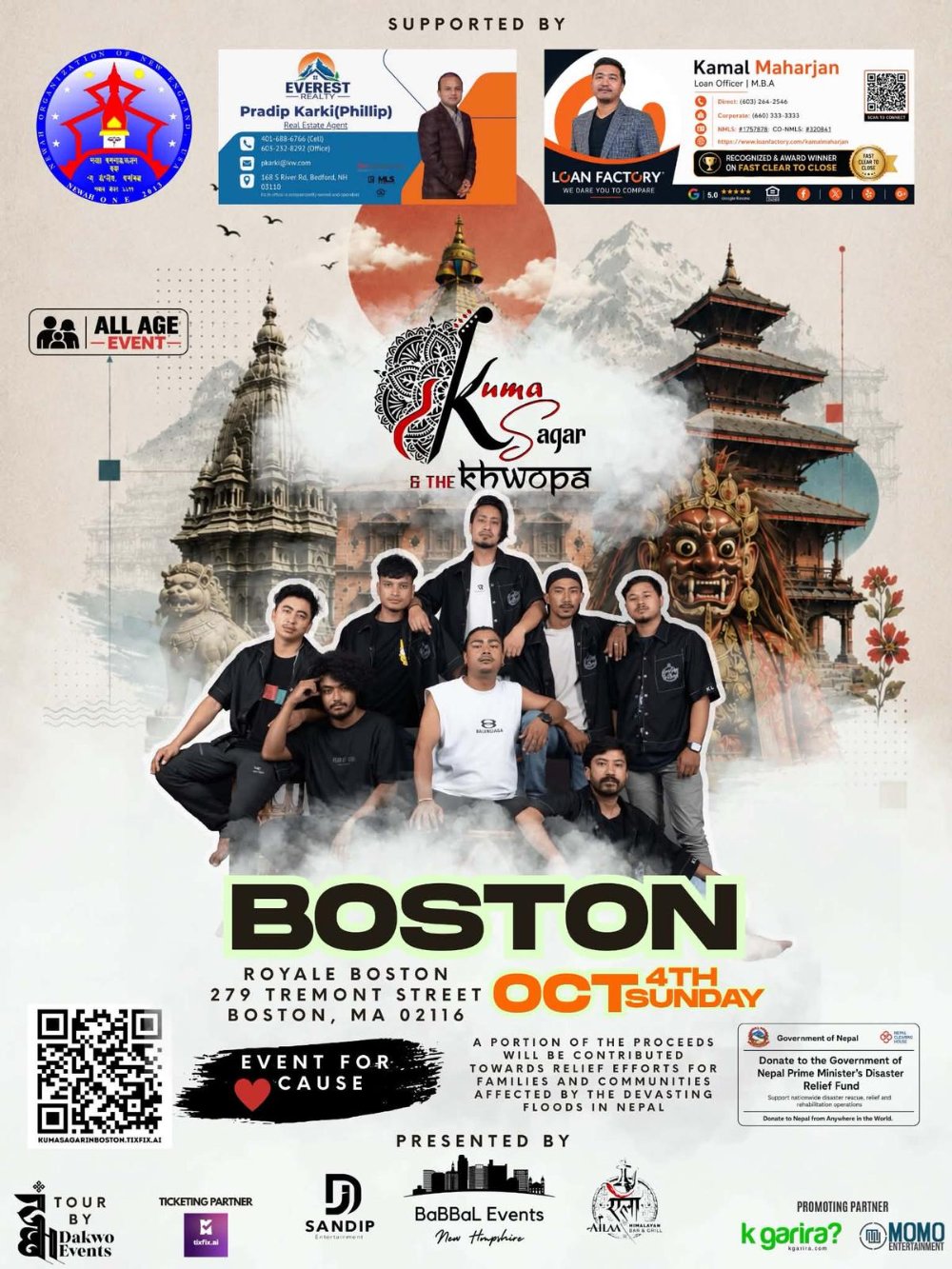 Oct 4, 2026 7:00 PM · Boston / New England · 507 views
 -
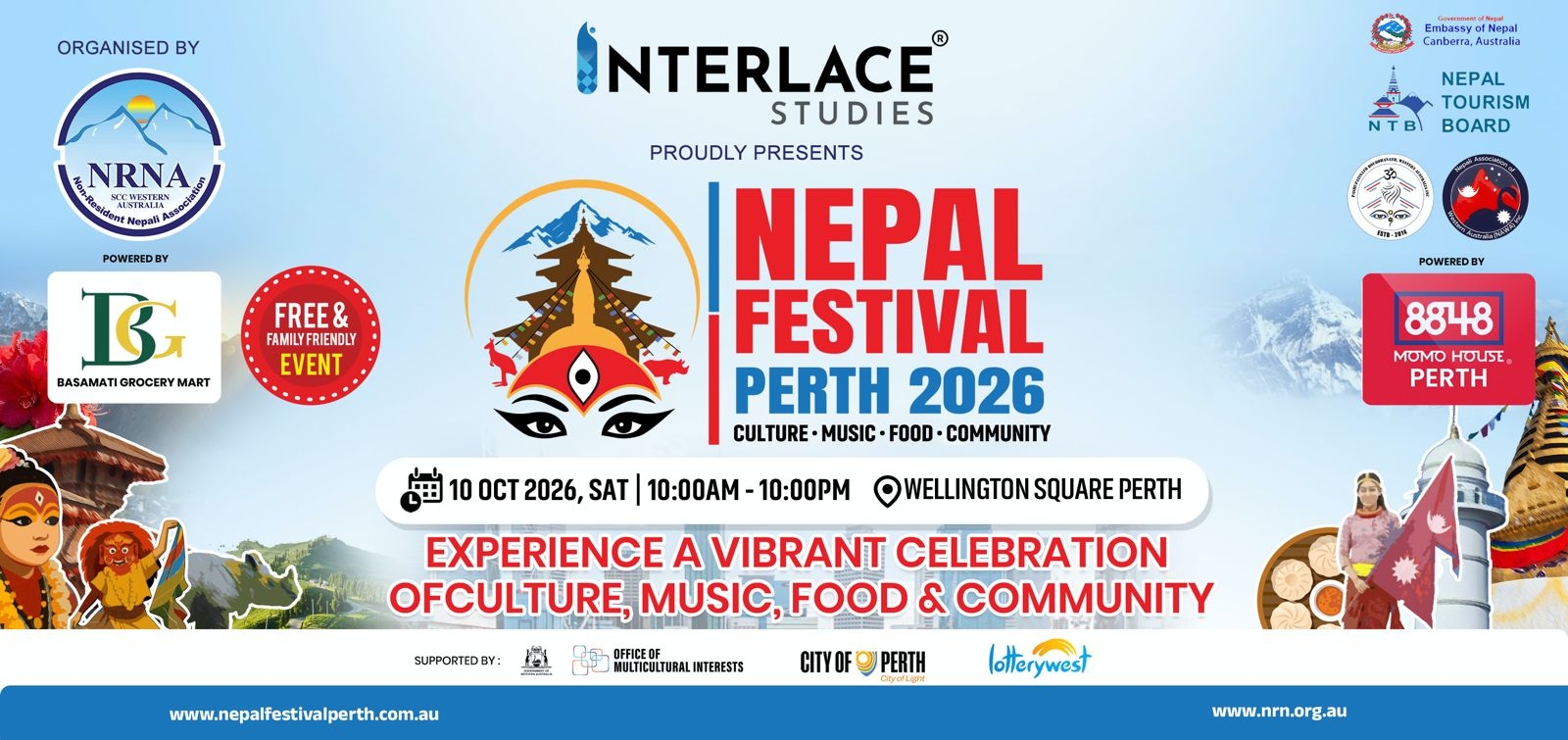 Nepal Festival Perth 2026 FestivalOct 10, 2026 10:00 AM · Perth / Western Australia · 220 views
 -
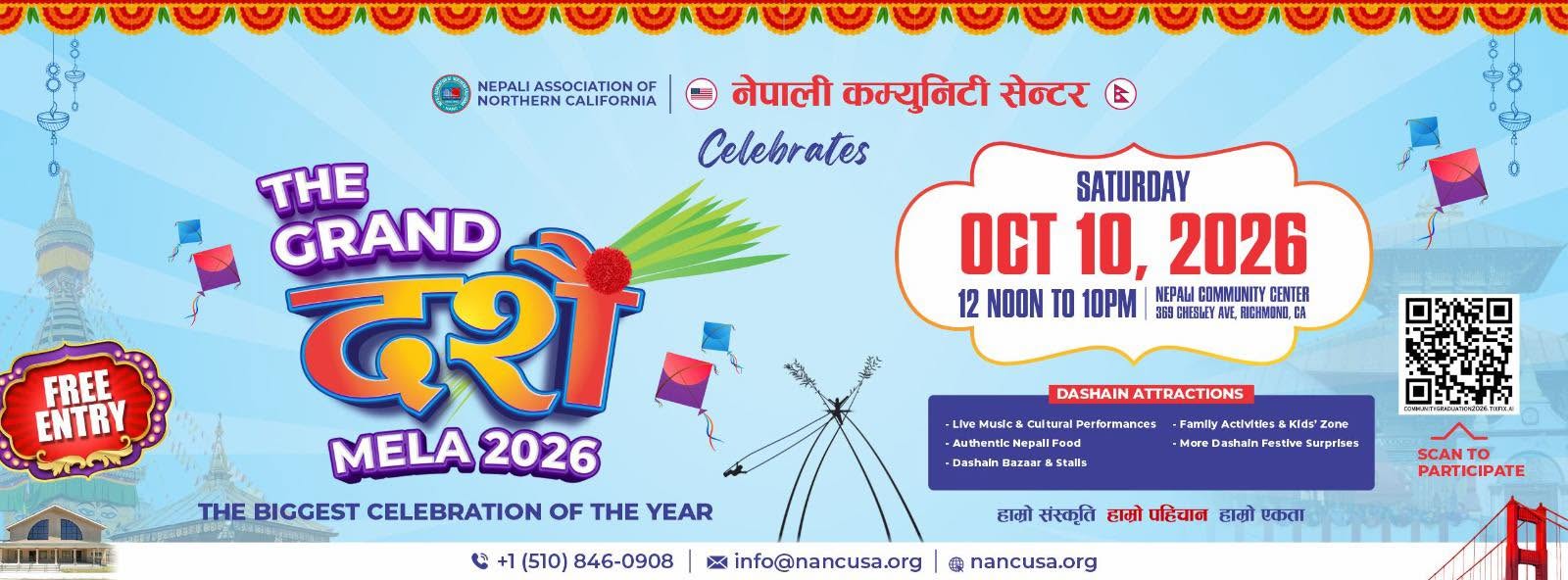 Grand Dashain Mela 2026 FestivalOct 10, 2026 11:00 AM · Bay Area / Northern California · 209 views
 -
 Oct 11, 2026 11:00 AM · DMV / Greater Washington · 221 views · Dashain
 -
 Dashain Festival Fulpati PartyOct 17, 2026 10:00 PM · Greater London · 183 views · Dashain
-
✓Vianet Communications OtherKathmandu · · 280 views
-
Aama Lama RestaurantMalden, MA · · 238 views
-
Ailaa Himalayan Bar & Grill RestaurantStoneham, MA · · 239 views
-
Ailaa Himalayan Bar & Grill RestaurantBedford, TX · · 214 views
-
Annapurna Curry & Sekuwa House RestaurantManchester, NH · · 218 views