The Last King of Nepal (second re-write)
I have re-written this story based on your excellent feedback from this thread: http://sajha.com/sajha/html/in... The Last King of Nepal Crimson roses bunched up and weighted by the bulk of their own petals, bowed down involuntarily. Their smiling features wrapped around the green of the plants that bore them, formed an opening. It was through this floral gate that Gyanendra stumbled through, blinking, as if awakening from sleep. He shaded his face, rubbed his eyes and squinted. What was all this? Where did this come from? Seven women, golden necklaces and ringlets around their noses, bowed their heads at him, in one fluid motion. They touched the tips of their right hand to their heads in greeting. Smiling, they waved him in towards the heavenly gardens. Like a practiced dance, all of their left hands pulled their colorful sarees to the side as their right hands extended out greeting him to the rhythm of tablas and vinas. Gyanendra Shah, smiled awkwardly and amused. He picked his forefinger up to say something, but stopped himself, choosing instead to watch. His steps were halting, as if debating on the direction. Branches filled with the heaviness of orange mangoes bashfully turning red at the tips. They hung insolently like tottering breasts aching to be picked. Bees playfully buzzed about nuzzling and rolling and teased the popping yellow pollen of violets shyly open. Other trees with aqua-marine guavas on the verge of turning yellow reached for puffy clouds in the airy blue sky. Two birds flew to nest underneath the shelter of the higher branches. The clouds looked uncomfortably full, holding their blackish stomach in so as not to leak the rains from their thick baggy white pajamas. Sitting on top of a royal red carpet with golden threaded swirly patterns, three musicians in blue turbans and green kurtas rocked their heads, eyes closed, playing the tabla, harmonica and vina. A dancing girl with a tiny waist but heavy red top jiggled her neck a top her body as she spun around in a shear yellow dress. As faster she twirled the more her dress flew up to reveal tight blue cotton pants that came down to her ankles. Anklets chimed as feet beat to the cadence of the tabla with the pinky of her left hand tossing an imaginary bird away. Gyanendra his eyes wide open, pointed wildly around him “What is all this? Where am I?” “Sire, I'm sorry to inform you...but you have died...and this is heaven,” One of the apsaras, Sushila said, closing both her eyes softly with a sympathetic nod. Gyanendra held his arm out to grasp something--anything. He looked troubled. “Me? I Died? Is that what you’re saying?” Sushila, smiled, being used to these reactions from the new comers to heaven. The news always, naturally, came as a bit of a shock to them. All the living on earth know that death was inevitable. But it’s a whole other deal realizing that it’s behind you when you spent your whole life avoiding thinking about the fact that it’s in front of you. Cushioning the shock of a lifetime of denial is where Sushila and her other associate apsara’s came in. Their job was to make the transition from human life to heavenly life as smooth as possible. Gyanendra Shah was the latest candidate for their welcoming committee to address. Sushila postrated in Namaste. She was a fair lady with rich brown hair tied in a bun. A few stray hairs waved in the breeze as she revealed a tray of fine cut teeth when she grinned, “Sire, as you have read in the Bhagavad-gita, for the soul there is no birth or death at anytime. It simply moves from body to body based on its karma. You, sir, have simply assumed a heavenly body because your body made of matter stopped functioning.” Gyanendra dropped his head trying to understand. “But I don’t understand,” Bewildered, he shook his head. “I was just fine. I was staying with my wife, Komal at the Nagarjun Palace….Paras and Hemani were visiting from Singapore…I was preparing for…” Gyanendra’s voice trailed off as his eyes groped for the horizon. How could he have been there just a few days ago and now find himself in this place? He stared around him, fixating on one person and then the next. He looked like he wished someone would wake him up. Oh what he would give to grasp the familiar comfort of his bedpost in Nagarjun right now. What wouldn’t he do to, for the last time, look at his children and grandchildren. Sushila nodded her head understandably. “You had a heart attack that night. It was in your sleep. You went peacefully.” His jowls became more pronounced as he tried to use his hands to steady his swaying head. His face darkened with gravity, slowly forcing himself to accept what he couldn’t change. But his life had prepared him for this. He was a man who had been forced to accept many things that his royal tongue had never wanted to taste. Gyanendra looked at the grass at his feet, wearing his famous frown, his face drawn in creases. “I understand what you are going through, Sire. Most people who leave their homes on earth go through what you’re going through. But don’t worry, it will pass. Now it is time for you to enjoy the benefits you performed in your human life. Yes, it certainly will take you a little time to adjust into your new situation in the heavens. But rest be assured we will do everything at our disposal to make your stay in the heavens as pleasant as possible. For now allow us show you your temporary quarters as we make a permanent arrangement for you,” Sushila said. The next few days, the apsaras got him a mini-palace and flowing light pastel colored clothes, as is the fashion in the heavens. They wanted to make sure he acclimatized himself as quickly as possible. Sushila knew the previous Shah kings living in the heavens were antsy to meet Gyanendra. They had been belligerent in insisting to talk to Gyanendra immediately. But Sushila, her eyes closed, her palm held up, firmly but calmly, had held her ground. “Gyanendra needs some time for getting used to the fact he is dead and now in heaven, like all of you did when you first arrived. And he is going to get that space.” Of course the Shah king’s weren’t thrilled with her answer. They hemmed and hawed. They, who were used to getting their way from their subjects, back when they were ruling Nepal, now, had to follow the guidelines of the apsaras in the heavens. It really cramped their style. Threats, sulking, none of it worked here. Grumblingly, they were learning how things worked up here in the heavens. It sure wasn’t easy being just another citizen in the heavens when you were used to bossing a whole nation around on a whim. After a week, when Sushila felt Gyanendra had adjusted to his new ethereal life up here in the heavens, she made arrangements for him to meet the other Shah Kings. She decided that the meeting would be out under the sun, in the Rose Garden. The Rose Garden was surrounded by lush green thickets, blossoming with roses. Yellow, red, black, purple and even some navy dark blue roses curled their curvy petals as they bloomed, hanging lazily off of evil looking thorny branches. Serbet was to be served in golden goblets poured from a silver pitcher. The pitcher was studded with green and blue stones. It was all arranged on top of a black granite table. Benches were arranged in a circle around this large table. Up above, the sky was blue with puffy clouds drifting about and birds gazing down at the party unfolding underneath them. Gyanendra Shah walked into the garden, accompanied with Sushila. The Shah Kings stood up to greet the latest member of their family who had arrived in the heavens. Tribubhan, Mahendra and Birendra who knew Gyanendra most intimately, got up to open their arms in greeting him. After all the niceties and pleasantries with everyone, they all sat down. Everyone looked at at Prithvi Narayan Shah. Gyanendra looked around him to see jaws stiffening and backs adjusting to sit up straight. Some kings propped themselves on the colorful pillows on their seats. The faces were suddenly serious. The other kings were used to Prithivi Narayan Shah, being the oldest amongst them, generally spoke first in these meetings. Prithvi Narayan scowled, his moustache drooped down. He ran his forefinger and thumb over the drooped moustache as if debating how to drop the poison that filled his mouth. The rest of the Shah kings looked on pensively and hesitatingly, wondering what Prithvi Narayan was going to say. The guy was somewhat unpredictable. Sometimes he could be the shrewdest statesman, cutting the other king’s arguments with a single zip of his lip. On other days, his coarse speech made the others ashamed to call him grandfather. “You know, it wasn’t easy, conquering all those kingdom’s and consolidating them. Most of the rest of you Shah king’s, my decendants, had it easy, because I busted my tail, consolidating all those lands,” Prithvi Narayan started speaking in a low voice. He looked into each of their eyes. “Yes, I’m sure you heard about all those tales about Gorakhnath’s blessing and how that sealed my fate. But I also know that having ruled a kingdom, you know the price one has to pay to hold onto power. I know that none of you are naïve. Do you think that just because Gorakhnath blessed me that I did not have to expend sweat and blood? Do you think in the middle of all those battles I didn’t have to conquer my fears? Do you not think that it shred my heart to pieces to see all those men loyal to me dying left and right just to bring my vision of a united Nepal alive?” Some of the kings looked at Prithvi Narayan without blinking. They could swear they saw the hint of tears in the old man’s eyes. Prithvi Narayan gripped the handles of the bench he was sitting on and gazed far in the distance. “Even courage is not always enough. I had to muster all the cunning and diplomacy for me to execute my strategies.” They knew what he was hinting at. The Shah Kings shifted uncomfortably in their seats. Each looked at the other’s faces, trying to find the words to say. None came. The unspoken words were that the other Shah descendants had taken life too easily and had failed Prithvi Narayan’s vision of a rock solid Nepal. Mahendra, feeling out the silence in the garden, adjusted his black Nepali topi on top of his head, preparing to speak. His gaunt cleanly shaven face reflected the light from the sun. Turning to Prithvi Narayan and bowing slightly, he said, “There is no doubt that you consolidated Nepal into what it became. And all the rest of us Shah king’s never let the Nepalese people forget the unique contribution that was yours alone.” Mahendra paused, letting his words sink in. Some of the king’s nodded in his direction, encouraging him to continue. “And it is true we even lost some of the initial consolidation between what you and Bahadur Shah had achieved. That was unfortunate. We shouldn’t have lost that land to India. “For what it’s worth, I did try to position Nepal in a stronger light internationally. I tried hard to raise Nepal’s status. I wanted to engrave some real national pride into the breast of every Nepali. I tried to learn as much as I could from the historical example of all of you,” Mahendra said, his arms open, gathering all of them up. “But I learn’t most from you grandfather,” He said, looking directly at Prithvi Narayan. “I had to do a lot of what you did, in terms of consolidating power. You did it by conquering kingdoms. Me, I did it, in a large degree, by tightening my grip on civil society. Try to understand that it wasn’t easy. We don’t live in times like yours, grand father, where you pull out the sword to settle all debates. It just doesn’t work like that anymore.” “The world has become a lot more civil. Western societies are spreading democracy everywhere. Even the starving have access to media and are informed. Being a poor country, our people are more susceptible to the big dreams Westerners paint for them about what Nepal should be and what it could be. Birendra, sitting across from Mahendra nodded at these words. Mahendra continued, “I, for my part, did all I could to protect the poor and illiterate from letting their imaginations get the better of them. I tried to keep as tight grip on what was said and by who in Nepal. I know I was hated by the democratic political parties for it. When I threw some of them out of the country they went to India and did their shenanigans. Trouble makers, the whole lot of them. In the end, I think the Nepali people look back on me and see me as a strong, if shrewd king, who did what he needed to in order to maintain stability and civility in society.” Prithivi Narayan nodded to Mahendra, “I know the work you did Mahendra. We are all proud of what you achieved, considering your father had been a virtual prisoner in his own country. You learn’t a lot by witnessing a huge transition in our countries history. You were a good student with an astute sense of politics. I wish many of the other kings had your brains, will power and personality. Nepal would be a different kind of country if every king had your strengths.” Mahendra closed both his eyes simultaneously, accepting the compliment, but cautiously, so as not to offend the other kings. “For one thing,” Prithvi Narayan continued, “We would not have lost power and lived in our own palaces as puppets of the Rana’s. This was disgraceful.” Prithvi’s lips curled in distaste, almost ready to spit. He leered around the circle of Kings, spotting the culprits.. The Shah Kings that had simply served a ceremonial purpose during the Rana rule, cringed and looked down at the drink in their hands. Some of them gulped, trying to be small in their seat. They never understood why Prithvi Narayan was always such a bore in these parties. Why couldn’t he have some light hearted fun, toss a few drinks, flirt with some of the heavenly girls and go back to his chamber? Why did every one of these get-togethers have to be about bashing them up? Couldn’t they all just get along? This was why some of them tried to avoid these meetings all together. Why did Prithvi have to go on and on about it? It wasn’t like they had fun being kings during a time when the Rana Ministers had power. Did Prithvi Narayan think that they enjoyed being kings during a time when they had little to no power? Why couldn’t he understand how humiliating and emasculating it was for them being crowned a king with no say over their own people? Tribubhan, button nosed and with his foppish hair peeking out of his white and red Nepali cap, eased in. “No grandfather you’re right. It was not easy being a King during the Rana rule. As a final desperate solution, as you all well know, I took refuge at the Indian Embassy, along with Mahendra and Birendra. We needed action. We had been plotting long enough. Otherwise we could see the Rana’s going on ruling indefinitely. They showed no sign of releasing their grip of power.” Tribubhan nodded his head to his son and grandson flashing a smile. Both Mahendra and Birendra tipped their heads back to Tribubhan. Tribubhan said, “I don’t need to tell you all about how the Rana Ministers finally relinquished their positions in the 1950’s. We all saw it. It was a great win for Nepal that day when I stepped off the airplane from Delhi to be greeted by my people. The people’s wish was answered.” Tribubhan got misty-eyed. “I can’t tell you what I felt that day to be embraced by all the Nepali people like that. I wish everyone of you during your rule felt that at least once. It would have gained you a different respect about what the heart of a Nepali is made of.” Quizzical looks, pursed lips and slowly nodding heads tried to appreciate where Tribubhan was coming from. A few hands went up to sip from golden cups. The apsaras busied themselves bending over to refill empty cups. One tray disappeared to be replaced by another one full of crumpets, pastries and tangerines peeled out of their skin. Purple grapes spilled over from a bowl, bouncing on the table, scattering. “Where does that bring us now?” “All that hard work, all that hope. My dream. Look at us all now. We have lost everything.” Prithvi Narayan said. All eyes locked in on Gyanendra, and then glanced away to different corners of the garden. Some King’s sorted their clothes. Others toyed with their drink. One even tried to whistle to himself until he saw eyes glaring at him. Mahendra picked his hand up to slowly shield his face from the other kings. For all his audacity and boldness, tact was definitely not one of Prithvi Narayan’s strengths. Mahendra tried to look at Gyanendra through his fingers. He felt for his son, sitting there, the judgment of all his ancestors upon him. In one lifetime, this boy had seen the highs and lows that the kingdom had gone through. As a father, Mahendra wished he could scoop him up from the bench that Gyanendra was sitting on and give him a big embrace. There was a part of Mahendra that still saw Gyanendra as that five year old that was enthroned. He wished that he could bend down, pat Gyanendra on the head and whisper words to let him know that no matter what the other king’s thought, Mahendra would always support Gyanendra. Gyanendra, his mouth suddenly dry, wiped his brow and brought his trembling sherbet goblet to his lips, sipping it. He looked around and strummed the flesh on his neck and then cleared his throat. “Yes…,” he stuttered. “Yes I understand how you all must feel….” He sighed, his voice and the bags around his neck sagging. “I…I in some ways anticipated that you would want to meet and talk to me once I arrived here. I come here with a heavy heart. This has been a great source of stress for me even when I was living at the Nagarjun Palace with my wife, Komal,” he said slowly. He picked up his drink to put it to his lips, had second thoughts about it and put it back on his lap. “I am not proud that we have lost our dynastic rule.” Gyanendra paused. His face darkened. His chin drew inwards under the pressure of the stares. He cocked his head to the side a bit trying to take the heat of the accusatory glances that burned his face. Birendra, generally one of the quietest of the kings, exhaled explosively. “It’s a lot easier to tell other people who are exercising power how to handle it then it is to do your own negotations, huh Gyanendra? When I was king, you and Aishwarya were one of the most vociferous about exercise power more boldly as king of Nepal. You even turned Dhirendra against me and got him to tell me on his way to London that he would return back to Nepal when there was a man sitting on the throne. What do you have to show today for all your bold display of strength? Do you still see me as a weak king? What did your arrogance and your strong handed exercise of power buy you? Bhai, in your rush for golden eggs, you killed the goose that lays the eggs.” Birendra, leaning forward during his whole speech, panted and sighed. He slowly reclining back on the bench, the strain of his vociferousness clearly taxing him. The drink in his hand spilled through his trembling fingers as he brought it to his lips. The strain of being this verbal clearly marked the face of the otherwise reclusive king. Birendra looked away to stare at the sky, only to return every once in a while to see how Gyanendra was soaking his words. Glaring at his younger brother, Birendra’s famous black moustache under his glasses drooped in disapproval. “Well,” said Mahendra raising his hand up in reconciliation. “Well, I guess I kind of understand where Gyanendra was coming from.” Mahendra nodded in Gyanendra’s direction. “You were used to my style of governance.” Gyanendra looked up at Mahendra, his eyes flooded with memories growing up in Narayanhiti palace. It was a time of great power and pride in the palace. “Yes,” sighed Mahendra, reflecting back with the twist of his mouth what he saw confirmed in his second son’s gesture. “Yes, I know. That was a different era. It was a different time. Even I could not exercise that kind of power in today’s political environment without being labeled a despotic tyrant by the international media. Those firangis would have painted me as another North Korean Kim Jong Il.” Mahendra looked around as if to say ‘I know you’ll all agree with this,’ his hand helping along the conversation, “The further back you go in the history of Nepal, the kings could get away with things that the modern kings like Birendra and Gyanendra simply could not.” Mahendra laughed. “What to speak of king’s? Nepali fathers back then could talk to their sons in a certain way and chastise them back then, that Nepali fathers don’t dare talk to their sons in that way today.” All the Shah kings chuckled. Even Gyanendra, managed to sigh and laugh, shaking his head, thinking of all the troubles he had to go through with his only son, Paras. He could never get that boy to follow his authority. “I wouldn’t talk too much about obedient sons if I were you Mahendra,” Tribhuvan said, looking at Mahendra from the corner of his eyes. Tribhuvan smilingly, said, “I couldn’t get you to even budge when you were insistent on marrying Ratna Rajya, explicitly against my wishes.” Mahendra flashed his father a grin, knowing this was coming. Birendra brought the conversation back on topic, “Times have changed. And for us to have remained in power over the long run, we had to change accordingly. Of course, who knows how long our rule would have lasted even then? The Shah kings could have ruled with all the shrewdness and guile that we could muster. But, it wouldn’t have hidden the fact that we are still a poor country. The survival of our nation depends on many other nations. All that would need to happen was for us to feel an economic squeeze, and most Nepalese, in their desperation for self-survival, would start to be rebellious with the monarchy. Isn’t that precisely what happened in the 1990’s? That was when the first revolution for democracy happened under my rule.” The Shah king’s who generally underestimated Birendra’s oratory powers or his wisdom, were surprised at his burst of eloquence. They looked at him with open eyes, lips bent down in admiration. Birendra, suddenly feeling sheepish at the gazes of admiration upon him, looked down, a gentle smile on his face. “Look, I’m sorry,” Gyanendra whispered. He looked around, blinking soft tears in his eyes. “The last thing I wanted to do in my life was to disappoint all of you.” The kings looked at Gyanendra. It hurt their ears to hear Gyanendra speaking in this way. No king should have to explain himself in this way to anyone else. They knew the pride he had in his heart. At times it bordered on arrogance. It couldn’t have been easy to let the reigns of Nepal slip, from beneath his thumbs. Gyanendra was there, his body propped up, ready to take the pummeling and heat of their words. Did he not fear being embarrassed in front of all them, being judged for losing what all of them valued so much? Each of the kings had gone through his challenges and had made his mistakes. But no one had lost the kingdom in their rule. Gyanendra had. And now it was all over. Gyanendra would be the last king from Nepal to sit in this circle in heaven. The circle had closed for ever. Prithvi Narayan stood up breaking the stares that had locked on Gyanendra’s face. Gyanendra was sitting very still. It was almost like he was holding his breath. Prithvi Narayan walked behind Gyanendra. He put his hands on Gyanendra’s shoulders. And gently massaged them. Prithvi Narayan could feel the tension on his descendant. Prithvi Narayan looked around at all the kings assembled there today. They reciprocated his gesture. “It’s ok, Gyanendra. It is ok. We all saw what happened. Perhaps it was inevitable. Yes, I will admit it. It is sad that what much blood, sweat and tears had been spent over, namely for preserving the throne, has been now lost.” “But it is not all ominous,” Prithvi Narayan paused, took a deep breath, and started speaking again. “After all, how many people, coming to the heavens, can boast, that they were, in their earthly life, a king, right?” He looked around at the other king’s. Some of them picked up their cups in a toast. “Us here, we all in this group were kings. So let us thank Lord Pashupatinath for the opportunity that we got to serve the people of Nepal as kings. Let us hope that we did the best that we could when were in power. And let us, today, pray for a better Nepal. Perhaps the Nepali people will be able to provide themselves a better future than we could, despite our best efforts as kings. For all of us in heaven, all we can do from here on, is to watch and pray to Lord Pashupatinath. Yesterday, we were judged. Today, we will see how the people do also, now that they have the power. We up here know better than anyone else how easy it is to judge other people exercising power than to exercise it yourself.” All the kings, stood up and clapped at Prithvi Narayan’s words. Gyanendra remained seated, but looked up at them, light filling his eyes. Perhaps he wouldn’t be ostracized during his whole stay in the heavens like how he thought he would be. The other kings came to give him a pat on his back, welcoming him in to their circle. Sushila and the other apsaras walked in with a banquet on their trays and proceeded to serve out samosas and kachoris. The harmonium and tabla started a wail to a beat and one of the apsaras in a tight tunic bowed and started to dance. Last edited: 05-Oct-11 11:08 AM Last edited: 05-Oct-11 01:26 PM
Homeyji · Oct 5, 2011 12:35 AM · 18,491 views
Homeyji Thanks for nice chapter. Every action has its time. No action can be evergreen.
_____ · Oct 5, 2011 11:22 AM
A Fantastic read I must say, and alike all good articles in sajha, I am a little dissappointed that this was almost going to get unnoticed. I am simply amazed how well you've controlled your writing and the choice of words is immaculate. To be honest, I did not quite like the first paragraph, assuming all you'd write would be the niceties and redudant details that readers no longer wish to read. But I was in complete awe as the story unfolded, the suspense added more to it. Kudos.
behoove_me · Oct 5, 2011 11:28 AM
Thank you for your feedback guys. Appreciate it. What about in terms of accuracy? Do you think that if all the Shah Kings of Nepal sat down to have a conversation like above...that this is how it would go? How about how they feel about Gyanendra and how they would feel about the present state of Nepal. What do you think the previous kings would have to say about both? Last edited: 05-Oct-11 09:43 PM
Homeyji · Oct 5, 2011 9:43 PM
It was a totally awesome read. I am glad you took time to invest energy by considering feedback from readers. Kudos to you. But in terms of accuracy, I don't think I would agree. Why? Most of us are brainwashed since childhood into thinking about so called "glorious history of shah kings." Even if you don't like those kings, you tend to develop a soft corner for them for no apparent reason. But even those history books often refer the dysfunctional nature of some of our kings. For e.g. Prithvi narayan shah, a short-tempered dynamite gave order of execution of soldiers that didn't salute him -- do we take that as a disciplinarian or an authoritarian. It is also well known that during the reign of rajendra, Surendra and so on...the madness that engulfed their royal auras. Their gathering seemed a misfit in your writing ;). Strictly my opinion of course.
Pulsar_Beat · Oct 5, 2011 9:56 PM
Ha ha ha...great feedback Pulsar Beats. Thanks. Please, feel free to tell me about the quirks of Rajendra and Surendra or any of the other kings. I'll see where I can work it into the story. I'm serious. I want this story to be both accurate and entertaining. In many ways, I guess I am almost writing this story not for our generation or even my son's generation but rather for my grandson's generation and afterwards. I am trying to capture the mood that guys like you and I feel today about Nepal and the king's of the past. In many ways, Pulsar beats, Nepali guys like you and I are witnessing a very dramatic transition in Nepal's history today--end of monarchy and beginning of democracy. Nepal will never go back to being a monarchy again. I am trying to capture the unique mood that we are living today in this story so that the Nepalese who come generations after us might get as accurate picture as possible of both the past history of Shah Kings, but also of the opinion of guys like you and I and how we saw the Kings of the past. Certainly our view point today in the year 2011 of the Shah Kings will be as important for the children 50 to 70 to 100 years from now to know. Is it not so my friend? Over time history is lost because facts that are not recorded are lost. So it is up to guys like you and I to document whatever quirks and idiosyncracies about the historical figures of our time. To the degree that Nepalese of the past took the time to do that, you and I have a knowledge of history. And to the degree that you and I take the time to write history as accurately and entertainingly as possible, the future generations of Nepalese will have knowledge of their identity and roots. Is it not so my friend? My aim through this story is to be able to do my little part to contribute towards making Nepal's history a little more accessible to coming generations. I don't know how successful I will be in this aim. But I am trying. And with blessing and support of guys like you, I know I will be able to do at least something little for my country. And if I can do that, I will be able to hold my head a little higher in calling myself a Nepali. Jaya Nepal!
Homeyji · Oct 5, 2011 11:06 PM
I agree with you Homiji! But how are we going to assess the facts of history. Again, sorry for bringing the great prithvi narayan shah again - I remember reading in history books in school how the visionary leader decided to make KTM the capital instead of Gorkha, thus forever uniting Nepal. But then the same visionary leader ordered the slashing of nose of every Kirtipurian. Would this be the action of a visionary leader trying to unite nepal together. The slashing was not limited to men, but also to women and children, even toddlers. Some pages of diary of a missionary was posted right here in sajha few years ago documenting this horrific event in history. but then again, we have a softer corner for kings more than any time in history. It is unfortunate that we always have to depend on independent foreigners to learn about our own history!
Pulsar_Beat · Oct 6, 2011 9:48 AM
I hear what you are saying Pulsar Beats. We can only do our best. Meanwhile, do you have any information about Rajendra and Surendra or any of the other kings not mentioned in the story?
Homeyji · Oct 6, 2011 1:24 PM
This conversation is preserved exactly as it was on the original Sajha.com and can't accept new replies.
Start a New DiscussionYou might be interested in...





-
Room Available for Rent USD 850.00Melrose, MA ·
-
One bed room available for rent USD 1,300.00Germantown, MD ·
-
Malden, MA, United States · Reposted Originally posted
-
Big Room with Parking Next to bus stop USD 1,100.00Everett, MA ·
-
Rooms Available for Rent USD 2,700.00Reston, VA ·
-
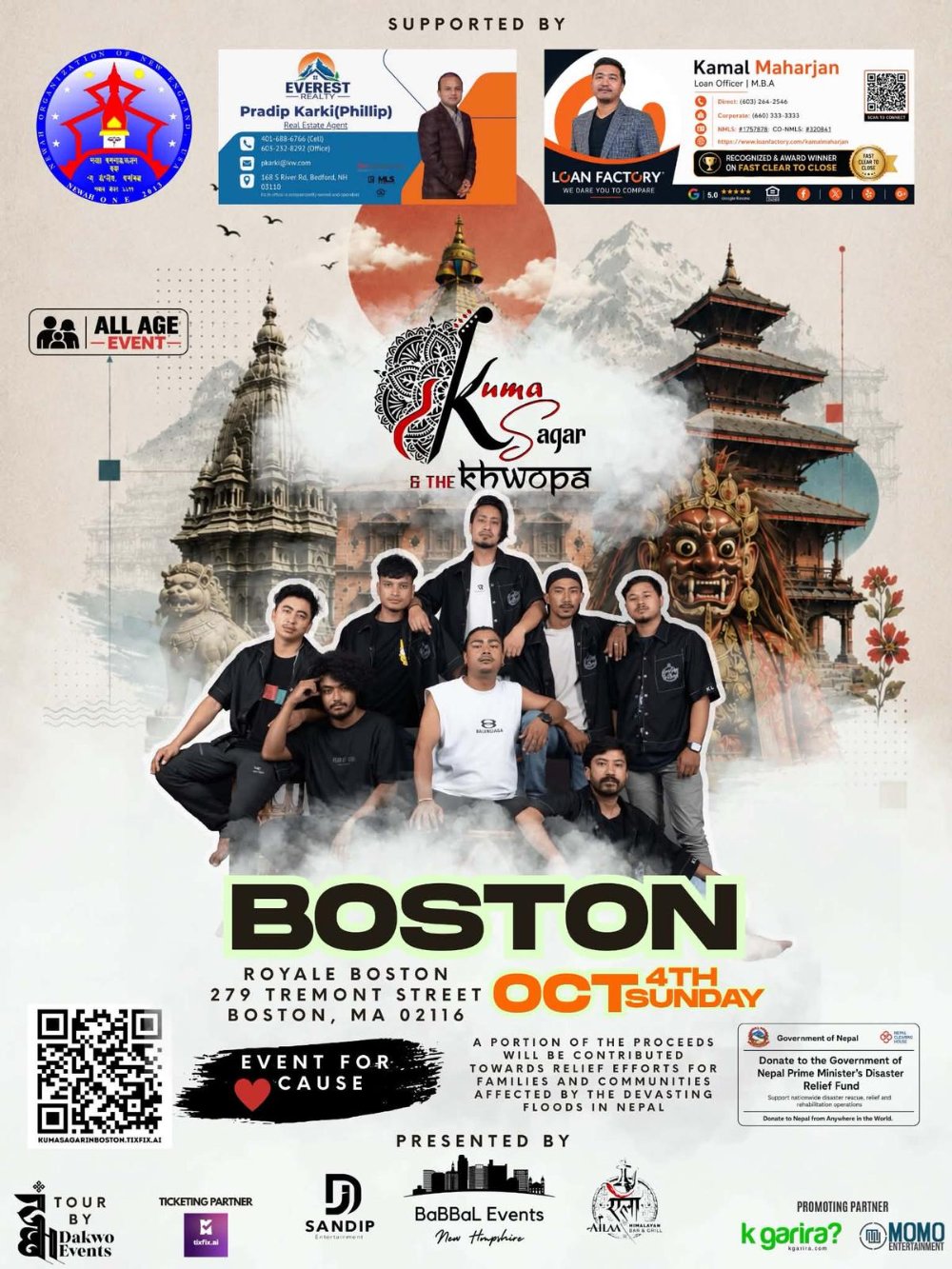 Oct 4, 2026 7:00 PM · Boston / New England · 515 views
 -
 Nepal Festival Perth 2026 FestivalOct 10, 2026 10:00 AM · Perth / Western Australia · 225 views
 -
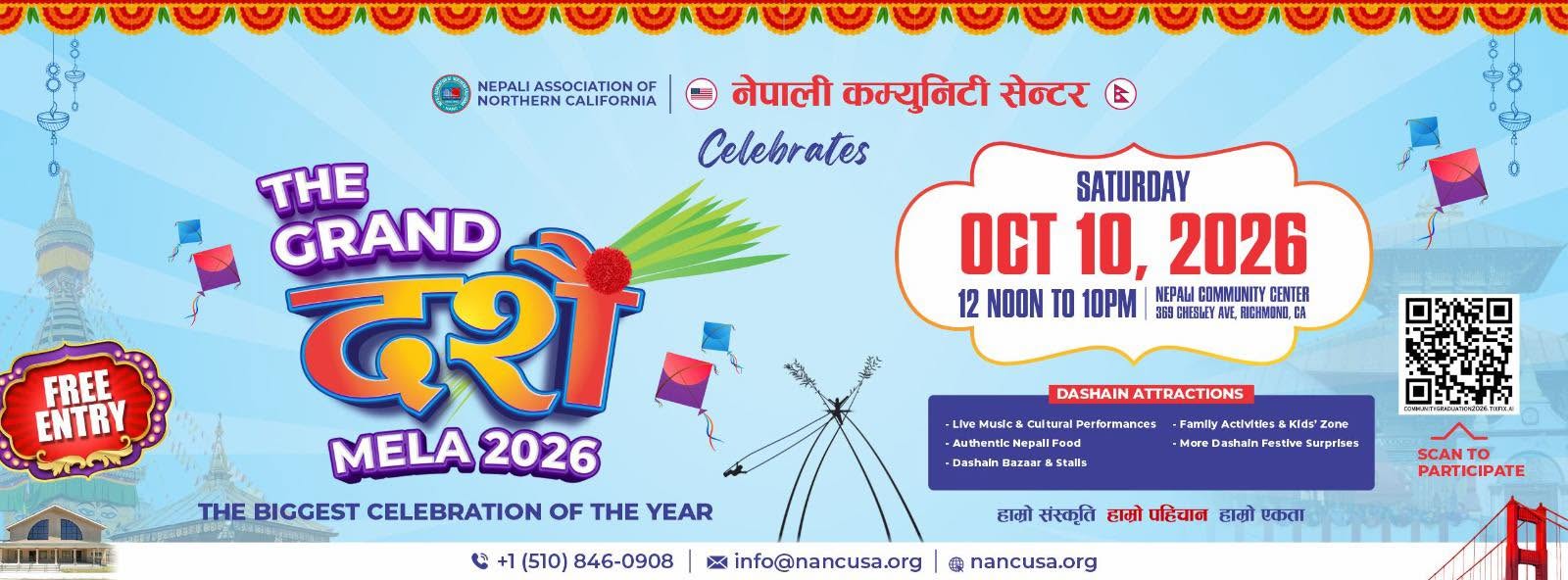 Grand Dashain Mela 2026 FestivalOct 10, 2026 11:00 AM · Bay Area / Northern California · 214 views
 -
 Oct 11, 2026 11:00 AM · DMV / Greater Washington · 227 views · Dashain
 -
 Dashain Festival Fulpati PartyOct 17, 2026 10:00 PM · Greater London · 188 views · Dashain
-
✓Vianet Communications OtherKathmandu · · 285 views
-
Aama Lama RestaurantMalden, MA · · 243 views
-
Ailaa Himalayan Bar & Grill RestaurantStoneham, MA · · 244 views
-
Ailaa Himalayan Bar & Grill RestaurantBedford, TX · · 221 views
-
Annapurna Curry & Sekuwa House RestaurantManchester, NH · · 223 views