Hinduism
I have a speech to give about hinduism in local high school,,, what would make the speech impressive ????? What should i mustly include ???? Thanks
rajeshdai · Sep 27, 2011 9:32 PM · 12,315 views
Its a way of life..not a religion as understood by judeo-christian terms. The way of life is Sanatan Dharma= Eternal Righteous Way of Living. The British gave the term for the way of life as belonging to the people of Indus River valley civilization, thus the name came about. These are some basics I would not forget to mention..
PaulinaDidi · Sep 27, 2011 9:46 PM
Pliz more , its part of my project
rajeshdai · Sep 27, 2011 10:19 PM
The term hinduism was coined some hardly 100 years ago during british raj in India. Before it did not have any name. In any religious texts and vedas no word HINDU is mentioned. As Paulinadidi said it's a way of life. World's oldest formulations of life developed by one of the oldest civilization. It believes in polytheism and the beauty of this is every living being is an adobe of goodness. Believes in basudaiba kutumbakam, that means whole universe as a family. Women and female of a species deserve respect. No fanatical and intolerant belief. Gives you sense of freedom eg. no compulsion to visit holy shrines unlike other religion. God is ubiquitous so you can remember god from where you are. Though oldest can be considered as the most scientific religion. In biblical texts earth is described as flat and stationary while in vedic hindu texts earth is regarded as CHALAYAMAN/ gatisheel. You can describe concept of aeroplane ----Pushpak chand Biman of Rawan Chaurasi juni and concept of incarnation ------ theroy of evolution (krama bikas ko sidhanta) Kunti conceived from sun and Indra ----- In vitro fertilization Albert Eienstein ---- Conversant of 4 vedas " Paschima darshan ka pustak ka theli ma bhanda hindu dharma ko euta panna ma dherai darshan bhetincha" ---Sopenhauer (German philosopher) You can give examples of hindu turned celebrities from west: George Harrison of Beatles......... You search little about Swami Vivekananda and Prabhupaad....you will get many meaty points... My writing is not very organized.....get its excerpt in organized way... Last edited: 27-Sep-11 11:16 PM Last edited: 27-Sep-11 11:17 PM Last edited: 27-Sep-11 11:37 PM
NALAPANI · Sep 27, 2011 11:13 PM
Wow. Nalapani. You are amazingly brilliant in everything. I have learned a lot from you already. Keep it up and keep posting!! The in vitro fetilization of kunti was a superb info!!
PaulinaDidi · Sep 27, 2011 11:17 PM
Rajeshdai, here it is. This is copy and paste article hai. Don't submit as it is otherwise feri palgiarism ko charge lagchha HINDUISM A general introduction Name of the religion: This religion is called: Sanatana Dharma, "eternal religion," and Vaidika Dharma, "religion of the Vedas," and Hinduism -- the most commonly used name in North America. Various origins for the word "Hinduism" have been suggested: It may be derived from an ancient inscription translated as: "The country lying between the Himalayan mountain and Bindu Sarovara is known as Hindusthan by combination of the first letter 'hi' of 'Himalaya' and the last compound letter 'ndu' of the word `Bindu.'" Bindu Sarovara is called the Cape Comorin sea in modern times. 1 It may be derived from the Persian word for Indian. It may be a Persian corruption of the word Sindhu (the river Indus) It was a name invented by the British administration in India during colonial times. Early history of Hinduism: Beliefs about the early development of Hinduism are currently in a state of flux: The classical theory of the origins of Hinduism traces the religion's roots to the Indus valley civilization circa 4000 to 2200 BCE. The development of Hinduism was influenced by many invasions over thousands of years. The major influences occurred when light-skinned, nomadic "Aryan" Indo-European tribes invaded Northern India (circa 1500 BCE) from the steppes of Russia and Central Asia. They brought with them their religion of Vedism. These beliefs mingled with the more advanced, indigenous Indian native beliefs, often called the "Indus valley culture.". This theory was initially proposed by Christian scholars in the 19th century. Their conclusions were biased by their pre-existing belief in the Hebrew Scriptures (Old Testament). The Book of Genesis, which they interpreted literally, appears to place the creation of the earth at circa 4,000 BCE, and the Noachian flood at circa 2,500 BCE. These dates put severe constraints on the date of the "Aryan invasion," and the development of the four Veda and Upanishad Hindu religious texts. A second factor supporting this theory was their lack of appreciation of the sophisticated nature of Vedic culture; they had discounted it as primitive. 2 The classical theory is now being rejected by increasing numbers of archaeologists and religious historians. The originators of the theory were obviously biased by their prior beliefs about the age of the earth and the biblical story of the flood of Noah. Emerging theory: The Aryan Invasion view of ancient Indian history has been challenged in recent years by new conclusions based on more recent findings in archaeology, cultural analysis, astronomical references, and literary analysis. Archaeologists, including Jim Schaffer and David Frawley, have established convincing arguments for this new interpretation. 3 Archaeological digs have revealed that the Indus Valley culture lasted from about 3500 to 1800 BCE. It was not "destroyed by outside invasion, but...[by] internal causes and, most likely, floods." The "dark age" that was believed to have followed the Aryan invasion may never have happened. A series of cities in India have been studied by archaeologists and shown to have a level of civilization between that of the Indus culture and later more highly developed Indian culture, as visited by the Greeks. Finally, Indus Valley excavations have uncovered many remains of fire altars, animal bones, potsherds, shell jewelry and other evidences of Vedic rituals. "In other words there is no racial evidence of any such Indo-Aryan invasion of India but only of a continuity of the same group of people who traditionally considered themselves to be Aryans...The Indo-Aryan invasion as an academic concept in 18th and 19th century Europe reflected the cultural milieu of the period. Linguistic data were used to validate the concept that in turn was used to interpret archeological and anthropological data." 2 "There was no invasion by anyone." 7 During the first few centuries CE, many sects were created, each dedicated to a specific deity. Typical among these were the Goddesses Shakti and Lakshmi, and the Gods Skanda and Surya. Sacred texts: Hindu sacred texts are perhaps the most ancient religious texts still surviving today. Some appear to be millennia older than the Hebrew Scriptures (Old Testament) which conservative Christians date to circa 1500 BCE and liberal scholars date to circa 900 BCE. The primary sacred texts of Hinduism are the Vedas: the Rig Veda, Sama Veda, Yajur Veda and Atharva Veda. The Vedas contain hymns, incantations, and rituals from ancient India. 4 The Rig Veda (a.k.a. Rigveda) may be the oldest of the four. Estimates of its date of composition in oral form range from 1500 BCE to 4000 BCE. The Yajur and Atharva Vedas refer to the vernal equinox having occurred in the Pleiades constellation -- an event dating from about 2500 BCE. The date when the Vedas were placed in written form is unknown. Various dates from 600 to after 300 BCE have been suggested. The Upanishadas deal with Vedic philosophy and form the conclusions of each of the Vedas. "They elaborate on how the soul (Atman) can be united with the ultimate truth (Brahman) through contemplation and mediation, as well as the doctrine of Karma-- the cumulative effects of a persons' actions." 4 An important text is the Ramayana. Various sources have dated it to: The first century CE in written form, based on oral traditions dating back six or seven centuries earlier. 4 4th century BCE in written form, based on oral traditions dating back to 1500 BCE. 6 4000 BCE in oral form, based on astronomical constellations and other features mentioned. 6 It is "a moving love story with moral and spiritual themes that has deep appeal in India to this day" 6 concerning the exploits of the hero Rama who is viewed as an avatar of Vishnu, and as "...a principal deity in his own right." 7 The written form has been attributed to the poet Valmiki. The Mahabharata is a group of books attributed to the sage Vyasa. They have been variously dated as having been composed between 540 and 300 BCE, between 200 BCE and 2000 CE, the to the 15th century BCE. They record "the legends of the Bharatas, one of the Aryan tribal groups." The Bhagavad Gita is the sixth book of the Mahabharata. It is a poem describing a conversation between a warrior Arjuna and the God Krishna. It is an ancient text that has become a main sacred text of Hinduism and other belief systems. Other texts include the Brahmanas, the Sutras, Puranas, and the Aranyakas. Many of these sacred texts are available online. 4 One web site has a search engine available. 5 Hindu beliefs and practices: Categorizing the religion of Hinduism is somewhat confusing: Hinduism has commonly been viewed in the west as a polytheistic religion - one which worships multiple deities: gods and goddesses. Although a widespread belief, this is not particularly accurate. Some have viewed it as a monotheistic religion, because it recognizes only one supreme God: the panentheistic principle of Brahman, that all reality is a unity. The entire universe is seen as one divine entity who is simultaneously at one with the universe and who transcends it as well. Some view Hinduism as Trinitarian because Brahman is simultaneously visualized as a triad -- one God with three persons: Brahma the Creator who is continuing to create new realities Vishnu, (Krishna) the Preserver, who preserves these new creations. Whenever dharma (eternal order, righteousness, religion, law and duty) is threatened, Vishnu travels from heaven to earth in one of ten incarnations. Shiva, the Destroyer, is at times compassionate, erotic and destructive. Strictly speaking, most forms of Hinduism are henotheistic; they recognize a single deity, and recognizes other gods and goddesses as facets, forms, manifestations, or aspects of that supreme God. Most urban Hindus follow one of two major divisions within Hinduism: Vaishnavaism: which generally regards Vishnu as the ultimate deity Shivaism: which generally regards Shiva as the ultimate deity. However, many rural Hindus worship their own village goddess or an earth goddess. She is believed to rule over fertility and disease -- and thus over life and death. The priesthood is less important in rural Hinduism: non-Brahmins and non-priests often carry out ritual and prayer there. Hindus believe in the repetitious Transmigration of the Soul. This is the transfer of one's soul after death into another body. This produces a continuing cycle of birth, life, death and rebirth through their many lifetimes. It is called samsara. Karma is the accumulated sum of ones good and bad deeds. Karma determines how you will live your next life. Through pure acts, thoughts and devotion, one can be reborn at a higher level. Eventually, one can escape samsara and achieve enlightenment. Bad deeds can cause a person to be reborn as a lower level, or even as an animal. The unequal distribution of wealth, prestige, suffering are thus seen as natural consequences for one's previous acts, both in this life and in previous lives. Hindus organize their lives around certain activities or "purusharthas." These are called the "four aims of Hinduism," or "the doctrine of the fourfold end of life." They are: The three goals of the "pravritti," those who are in the world, are: dharma: righteousness in their religious life. This is the most important of the three. artha: success in their economic life; material prosperity. kama: gratification of the senses; pleasure; sensual, sexual, and mental enjoyment. The main goal for the "nivritti," those who renounce the world. is: moksa: Liberation from "samsara." This is considered the supreme goal of mankind. Meditation is often practiced, with Yoga being the most common. Other activities include daily devotions, public rituals, and puja, a ceremonial dinner for a God. Hinduism has a deserved reputation of being highly tolerant of other religions. Hindus have a saying: "Ekam Sataha Vipraha Bahudha Vadanti," which may be translated: "The truth is One, but different Sages call it by Different Names" Source
Nas · Sep 27, 2011 11:20 PM
So your are doing it in high school..hmm.. full of testosterone and progesterone. So dont forget to talk about Kamasutra and thousand Aasan (positions) to keep those brats keep awake and You are a sure hit bro!
mangale · Sep 28, 2011 12:12 AM
Here are some links you can use as a resource: 1. http://www.slideshare.net/hier... 2. https://docs.google.com/viewer... You are giving a presentation to highschool students so make sure you don't have too much info on the same slide. You gotta be funny if you want them to follow you so you can use kamasutra,yoga in the middle of presentation. Good luck dude and keep in mind, you are the ambassador of us and our culture!! Make us proud!! Last edited: 28-Sep-11 12:23 AM
busenitz · Sep 28, 2011 12:23 AM
This conversation is preserved exactly as it was on the original Sajha.com and can't accept new replies.
Start a New DiscussionYou might be interested in...



-
Room Available for Rent USD 850.00Melrose, MA ·
-
One bed room available for rent USD 1,300.00Germantown, MD ·
-
Malden, MA, United States · Reposted Originally posted
-
Big Room with Parking Next to bus stop USD 1,100.00Everett, MA ·
-
Rooms Available for Rent USD 2,700.00Reston, VA ·
-
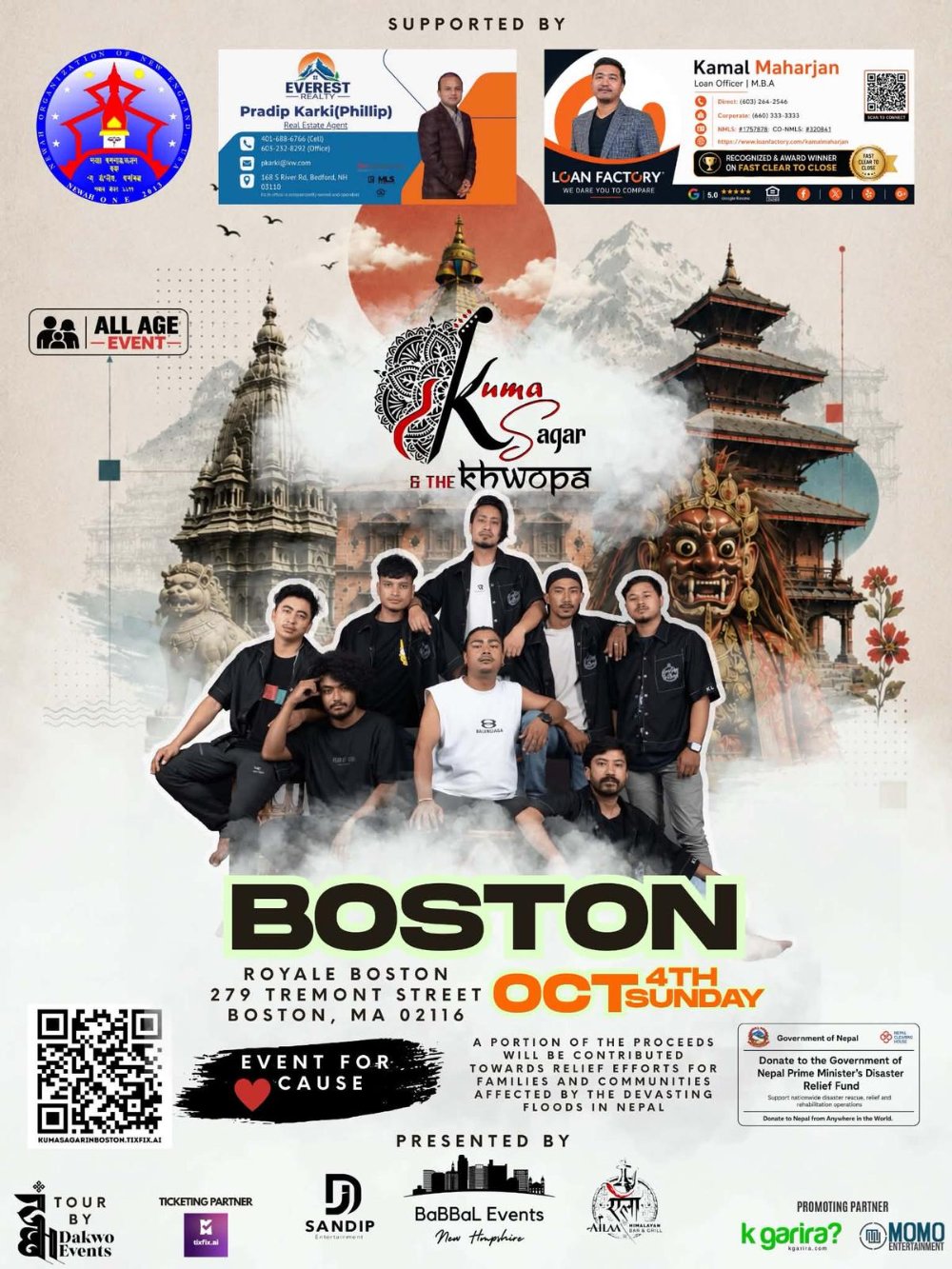 Oct 4, 2026 7:00 PM · Boston / New England · 515 views
 -
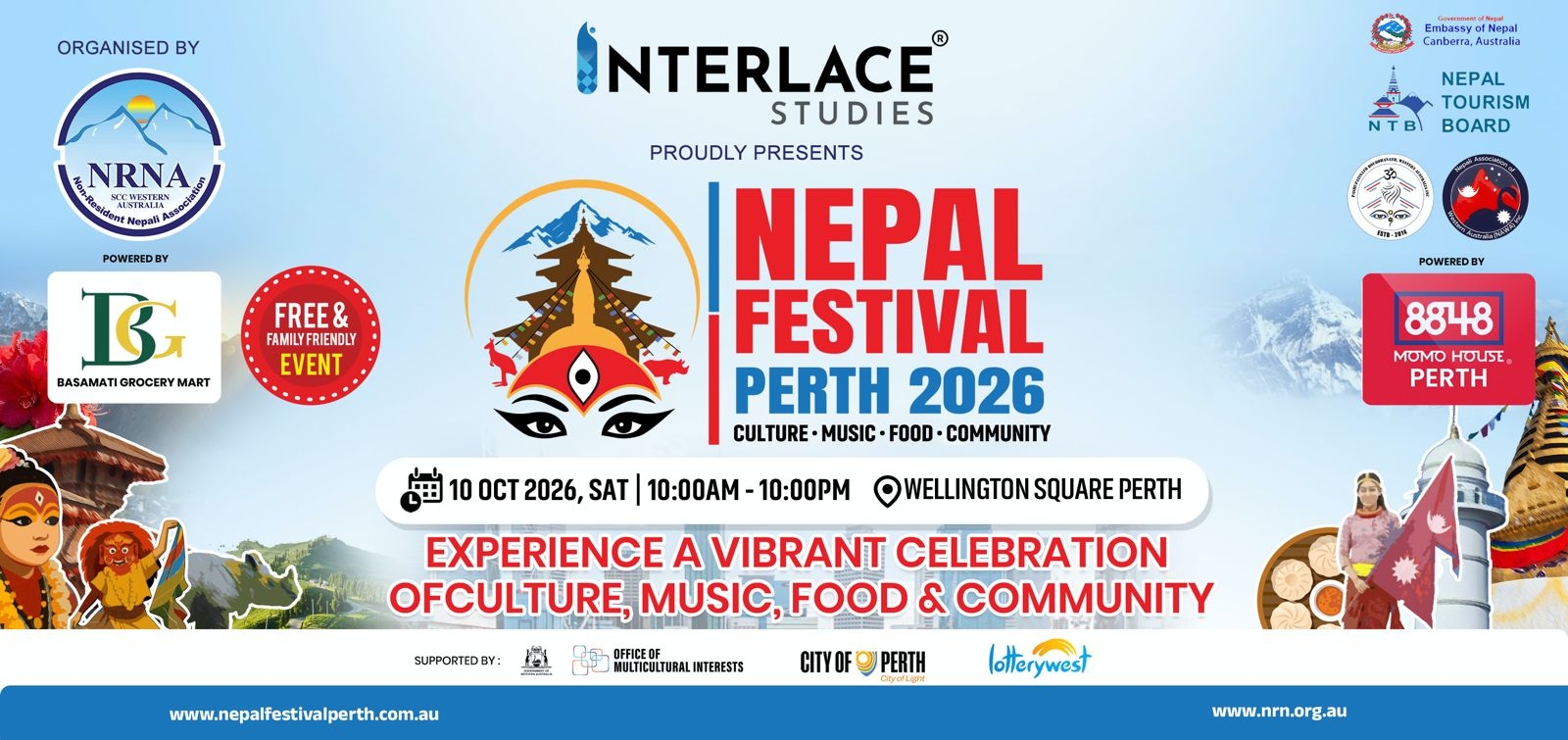 Nepal Festival Perth 2026 FestivalOct 10, 2026 10:00 AM · Perth / Western Australia · 225 views
 -
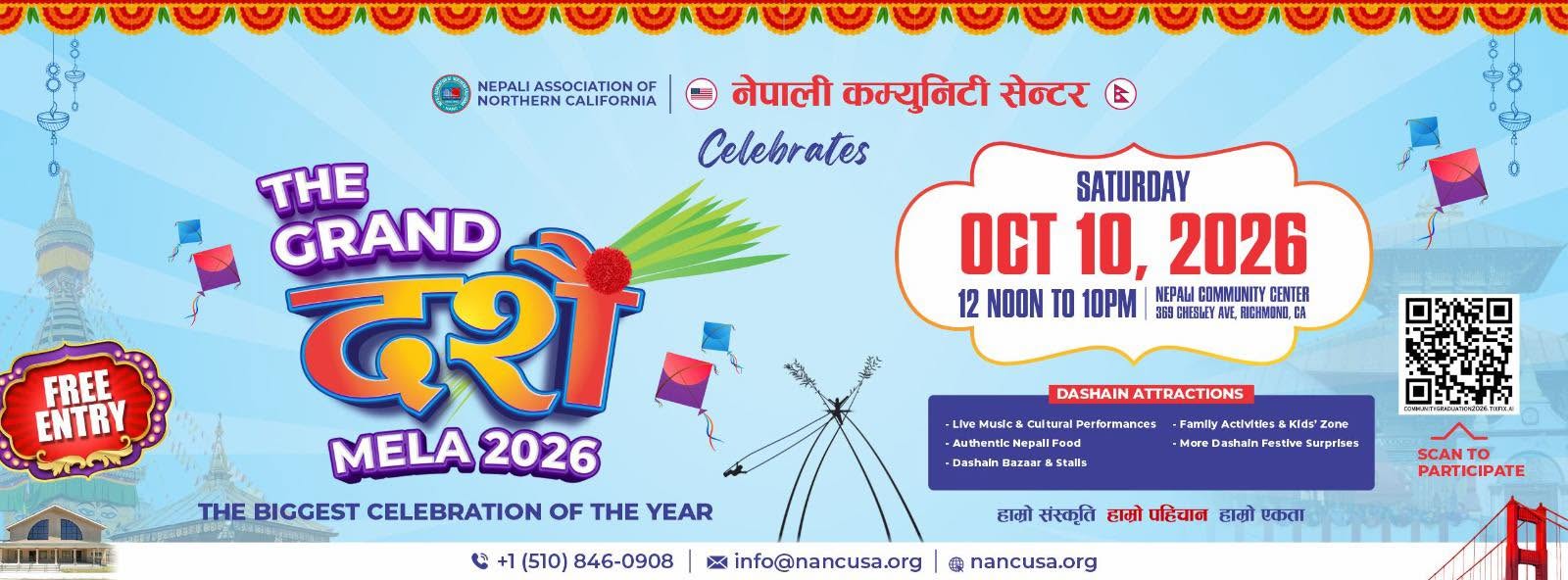 Grand Dashain Mela 2026 FestivalOct 10, 2026 11:00 AM · Bay Area / Northern California · 214 views
 -
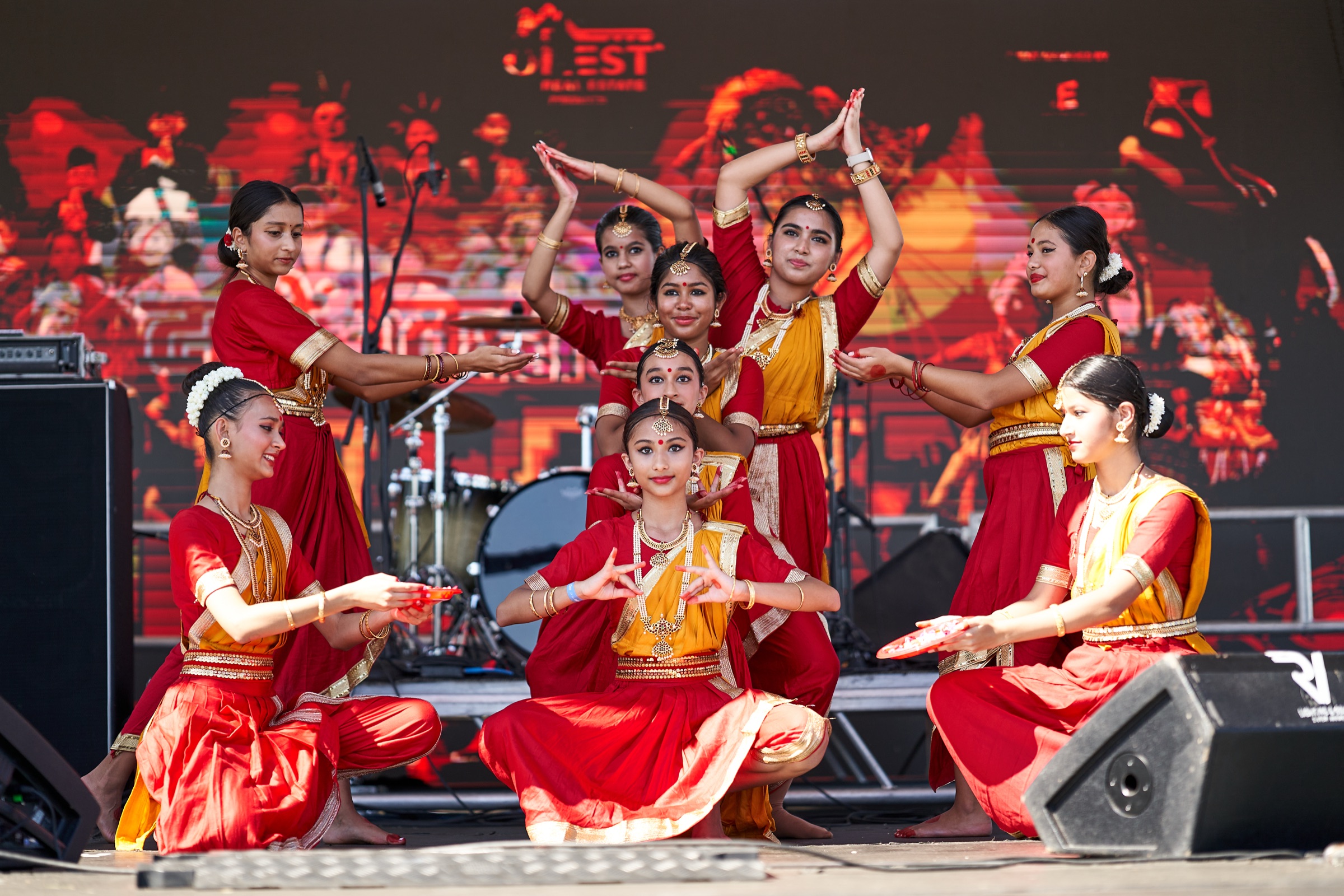 Oct 11, 2026 11:00 AM · DMV / Greater Washington · 227 views · Dashain
 -
 Dashain Festival Fulpati PartyOct 17, 2026 10:00 PM · Greater London · 188 views · Dashain
-
✓Vianet Communications OtherKathmandu · · 285 views
-
Aama Lama RestaurantMalden, MA · · 243 views
-
Ailaa Himalayan Bar & Grill RestaurantStoneham, MA · · 246 views
-
Ailaa Himalayan Bar & Grill RestaurantBedford, TX · · 221 views
-
Annapurna Curry & Sekuwa House RestaurantManchester, NH · · 223 views