History book revisited II: Who are KHAS??
Title: An Account of the Kingdom of Nepal Description * Francis Hamilton Buchanan (1762-1829) was a Scottish-born explorer, naturalist, and physician, employed by the British East India Company in a number of capacities from 1794 to 1815. He conducted surveys of Mysore in 1800 and Bengal in 1807-14. This work, published after his return to Scotland, is based on his 14-month stay in Nepal in 1802-03. Buchanan drew upon his own observations and conversations with hereditary chiefs, Buddhist priests, scribes, and others in an attempt to provide a comprehensive account of the country as he found it before the Anglo-Nepalese War of 1814-16. Buchanan also drew from an earlier work by Colonel William Fitzpatrick, An Account of the Kingdom of Nepaul, published in London in 1811. In addition to maps and engravings, Buchanan’s book includes two noteworthy scientific supplements: a register of the weather from February 1802 to March 1803 and an attempt by Buchanan’s colleague, Colonel Crawford, to calculate the height of several Himalayan peaks. Creator * Hamilton, Francis (1762-1829) Date Created * 1819 Publication Information * A. Constable and Company, Edinburgh Language * English Place * Central and South Asia > Nepal Time * 1800 AD - 1849 AD Topic * History & geography > History of Asia > South Asia; India Type of Item * Books Physical Description * vii, [1], 364 pages including illustrations, tables, frontispiece, plates, folded map; 28 centimeters Institution * Library of Congress Online web address if you want to read it. http://www.gutenberg.org/catal... The Real book as it was printed : http://www.wdl.org/en/item/237... Starting page 11 In giving an account of the tribes now occupying the dominions of Nepal, I shall first commence with these Hindu colonists, as having acquired the predominance; but I must premise, that very considerable differences prevail in their customs in different parts, and especially that those in the countries east from the Kali differ much from those who live west from that river. I shall commence with the former, with whom I am best acquainted. The language spoken by the mountain Hindus in the vicinity of Kathmandu, is usually called the Parbatiya basha, or mountain dialect; but west from the capital, it is more commonly known by the name of Khas basha, or dialect of the Khas country, because it seems to have been first introduced into the territory of that name. I have lodged in the Company’s library a copious vocabulary of this dialect, from whence the learned may judge how far it is probable that it came from Chitor; for there can be no doubt, that it is a dialect of the Hindwi language, and it is making rapid progress in extinguishing the aboriginal dialects of the mountains. The character in which this language is written is evidently derived from the Nagri, and may be found in Colonel Kirkpatrick’s Account of Nepaul, opposite to page 220; and in the twenty-eight following pages may be seen a short vocabulary. East from the Kali, the Brahmans, who are of pure birth, are only few in number, there being no means for their subsistence, as they confine themselves mostly to the duties of the sacred order. They are of the Kanoj nation, and the sect of the Saktis, following chiefly the doctrine of the books called Tantras. Where the chiefs who pretend to have come from Chitaur settled, many of them were men of great learning. In other parts, very few have made any sort of progress in grammar, law, or philosophy; but they are considered as profound astrologers. Although very few have taken service either from men or in temples, they contaminate themselves by uncommon liberties in the gratification of their appetites. They are divided into three ranks that do not intermarry. The highest are called Jayurbedi, from the sacred book which they profess to follow, and they assume the title of Upadhyaya. These are the instructors (Gurus) and priests (Purohits) for Brahmans and Rajputs, and eat goats, sheep, and some kinds of wild fowl, but abstain from venison. The two lower orders are called Kamiya and Purubi, and act as instructors and priests for the lower orders. These not only eat the same animals as those of the highest rank, but many of them rear fowls and swine for their tables. The sixteen principal festivals observed by the mountain Hindus have been described by Colonel Kirkpatrick, {17} nor have I any additional information to offer. All the Brahmans may keep widows of their own class as concubines, and the spurious offspring of such connections are called Jausis. These, having betaken themselves to agriculture and commerce, have become exceedingly numerous, and are reduced to perform every kind of drudgery. Among the poor people whom I observed coming to the markets in the Gorakhpur district, loaded with goods even from the distant hills of Malebum, at least a half stated themselves to be of this class. These, although of illegitimate extraction, are not called Khas; but, until the present dynasty seized on the government, were considered as entitled to all the immunities and privileges of the sacred order, as were also the children of Brahmans by widows of their own rank. The descendants of Brahmans by women of the lower tribes, although admitted to be Khas, or impure, are called Kshatris or Khatris, which terms are considered as perfectly synonymous, and have now formed two tribes, Pauriyal and Sili; but some proper Khatris, called Dewkotas and Lahauriyas, from Bareli and Lahaur, have settled in the country, and intermarry with the Pauriyal and Sili, all of whom wear the thread, and are considered as belonging to the military tribes. The Rajputs that are, or that even pretend to be, descended of the colony which came from Chitaur, are very few in number; but the families of the mountain chiefs, who have adopted the Hindu rules of purity, and even some who have neglected to do so, are now universally admitted to be Rajputs; and the Chitaur family have so often married the daughters of the former, that several members of it have acquired the Tartar countenance, while some of the mountain families, by intermarriages with pure but indigent Rajputs, have acquired oval faces and high noses. Not only the colony, therefore, from Chitaur, if the Palpa family be such, but all the descendants of the hill chiefs, are now called Rajputs; and, until the absorption of all power in the Gorkha family, the Rajputs held all the principal civil and military offices of the petty states into which the country was subdivided. It would also appear, that, when the princes of the mountaineers were persuaded to follow the doctrines of the Brahmans, many of their subjects or clans were induced to follow the example of their chiefs, and thus have established tribes called Thapas, Ghartis, Karkis, Majhis, Basnats, Bishtakos, Ranas, and Kharkas, all of whom are called Khasiyas, or natives of Khas, but they wear the thread, and live pure like Kshatris, and, in fact, are included among the fencibles or military power of the country, and are very much employed in the government of the family of Gorkha, under which some of them enjoy the highest dignities of the state; for Bhim Sen, who is now vested with the whole power of the kingdom, is by birth a Thapa, as is also Amar Singha Karyi, who commands the army beyond the Yamuna. Among those called Khasiyas, thus adopted into the military order, there may be many others, of which I did not hear; but it would not appear, even when they adopted fully the rules of purity, that the whole of these tribes obtained so elevated a rank, which is almost equal to that of the sacred bastards. The Thapas, for instance, are of two kinds, Khas and Ranggu; yet the latter, although they live pure, and have pure Brahmans to give them instruction, and to perform their ceremonies, are not permitted to wear the military badge, nor to intermarry with those who enjoy this privilege. The Ghartis, also, are of two kinds, Khas and Bhujal. The former are admitted to the military dignity; but the latter wallow in all the abominations of the impure Gurungs, and do not speak the Khas language. The Ranas, also, are divided into two kinds, the Khas and Magar. The latter are a branch of the Magar tribe, and totally neglect the rules of Hindu purity. It is not even, as I have said, all the Rajputs that have adopted the rules of purity, and some branches of the same families were pure, while others rejected the advice of the sacred order, and eat and drank whatever their appetites craved. All these military tribes, including the Khasiyas, descended of Brahmans or Khatris, who are more numerous than all the others, the Rajputs, Thapas, etc. have again had children by widows of their own cast, and by concubines of lower tribes, and these children are also called Khasiyas, who, although they live equally pure, and observe equally the laws of the Brahmans, are not permitted to wear the thread of distinction; but must toil in ignoble professions. They are considered as of so little consequence, that, of whatever descent they may be by the male line, they may all freely intermarry. They speak the Khas language. The low tribes, which also speak this language, are all supposed to form part of the colony from Chitaur; but here there is a considerable number of a tribe called Khawas, who are slaves, and accompanied the chief as his domestic servants, having been in slavery at Chitaur. They are reckoned a pure tribe, and their women are not abandoned to prostitution like the slaves of the mountain tribes called Ketis. The Khawas adhered to the chiefs of the Chitaur family, and were employed in confidential offices, such as stewards; while these chiefs soon indulged in the luxury of having mountain slaves round their persons. Next in rank, in the following order, are, 1. Nai, or barbers. A Brahman may drink their water. 2. Karmi, who build and thatch houses, and Chunra, or carpenters. These have degraded Brahmans as instructors. 3. Kami, miners and workers in iron and copper; Sarki, tanners and shoemakers; Damai, tailors and musicians. All these are vile, and have no priests but of their own cast. Any Musulman or Christian, however, who should cohabit with a Damai woman, would suffer death, and the woman would be severely punished; but, according to the Hindu law, a female, however low in rank, cannot for any crime be deprived of life. When any woman has been discovered with a Musulman, the whole kingdom is thrown into confusion. Even if she has been of the lowest cast, she may have given water to some person of the cast immediately above her own. He may again have given it to a higher, and thus the whole inhabitants may have been involved in sin and disgrace. This can only be expiated by a ceremony called Prayaschitta, in which the prince washes in the river with great ceremony, and bestows large sums on the Brahmans, who read the expiatory prayers proper on the occasion. The expense of an expiation of this kind, which was performed during our stay in this country, was, by my Brahman, estimated at two thousand rupees; but the natives alleged that it amounted to ten times this sum. Colonel Kirkpatrick {21a} mentions the Dhewars as husbandmen and fishers of the western district, from which circumstance we may conclude that they belong to the Hindu colony; but I did not hear of them, as my account of the Parbatiya tribes was chiefly derived from the central parts. From the condition of similar tribes on the plains, these Dhewars probably belong to the third of the ranks above enumerated, although the Majhis, (Mhanjhees,) whom Colonel Kirkpatrick joins with the Dhewars, were represented to me as a tribe of original Khas, which has been converted by the Hindus, and admitted into the military order. Colonel Kirkpatrick then states, {21b} “That Nepaul, having been ruled for many centuries past by Rajput princes, and the various classes of Hindus appearing in all periods to have composed a great proportion of its population, we are naturally prepared to find a general resemblance in manners and customs between this part of its inhabitants, and kindred sects established in adjacent countries; accordingly, the differences are so faint as to be scarcely discernible in a single instance.” Now, I must here observe, that Nepal, in the proper sense of the word, when Colonel Kirkpatrick wrote, had not been governed for half a century by chiefs, who even pretended to be descended of a Hindu colony, for the Rajas of Nepal were Newars, who deny this extraction. They indeed called themselves Rajputs, that is, the descendants of princes, but so does the king of Ava, although no one ever imagined that he is descended of the Rajputs in Hindustan. I shall afterwards have occasion to show, that the various classes of Hindus, that is, of the natives of India, who have adopted the Brahmans for spiritual guides, have not in all periods composed a great proportion of the population, nor have even entered any part of the country as residents. At present, indeed, in most parts of the kingdom, except in Nepal itself, they, or converts to their doctrine, form a large proportion of the inhabitants; and the more recent the importation, I should expect the greater resemblance between the colonists and the inhabitants of the plains of India; but, in fact, the resemblance, though strong, is not so complete as Colonel Kirkpatrick’s short stay amongst them induced him to suppose, as will appear from what I shall afterwards state. These mountain Hindus appear to me a deceitful and treacherous people, cruel and arrogant towards those in their power, and abjectly mean towards those from whom they expect favour. Their men of rank, even of the sacred order, pass their nights in the company of male and female dancers and musicians, and, by an excessive indulgence in pleasure, are soon exhausted. Their mornings are passed in sleep, and the day is occupied by the performance of religious ceremonies, so that little time remains for business, or for storing their minds with useful knowledge. Except a few of the Brahmans, they are, in general, drunkards, which, joined to a temper uncommonly suspicious, and to a consciousness of having neglected the conjugal duties, works them up to a fury of jealousy that frequently produces assassination. For this they are all prepared, by wearing a large knife in their girdle, and the point of honour requires them never to rest, until they have shed the blood of the man who has been suspected of a criminal intercourse with their wives. The jealous man watches his opportunity for months, and even for years, should his adversary be on his guard; and, having at length found a favourable time, with one stroke of his knife in the throat of his rival, he satisfies his revenge. This is considered as so commendable, that, at Kathmandu, the police, in other respects very strict, does not at all interfere, although the murderer is often actuated merely by suspicion. The higher ranks, whenever not compelled by the most urgent necessity, conceal their women; and their widows ought to burn themselves with their husbands’ corpse. Many, however, refuse, nor did I learn that force is ever used. The custom seems, however, more prevalent than in any part of India where I have been, the vicinity of Calcutta excepted. The appearance and dress of the lower orders of these Parbatiya Hindus is represented in the plate opposite to page 40 of Kirkpatrick’s Nepaul, where the figure, behind those seated, is a porter of this tribe. In these eastern parts of the dominions of Nepal, the mountain Hindus are far from having extirpated the aboriginal tribes, most of which, until the accession of the Gorkha family, enjoyed their customs and religion with little or no disturbance, and they are still numerous and powerful, as will be afterwards mentioned; but, west from the Kali river, there is a great difference. The whole people in Kumau, and Garhawal at least, as well as their language, are called Khasiyas, as having settled in the Khas country; but all pretend to be descended of colonists from the south, and disclaim every connection with the original impure barbarians. West from Garhawal, the term Khas is altogether rejected, and it is pretended that this impure race never held the country. Each cast, west from the Kali, preserves its race with the utmost care; nor are widows of the high cast permitted to become concubines. Except in a very few places, near the passes through the snowy mountains, the aboriginal inhabitants are alleged to have been obliged entirely to conform to the rules of Hindu purity, and to reject their ancient forms of worship; for I hope that the colonists from the south are not so bad as they pretend, and that religious zeal has not had such a victory over humanity as they allege; for the fear of being thought in any degree contaminated by the infidel Khas, would make them carefully conceal whatever indulgence humanity may have wrung from intolerance. To such a height is caution on this subject required, that the people, who have settled near the passes in the snowy mountains, although acknowledged as of the same tribes with those nearer the plain, and although they use the same language and manners, are called Bhotiyas, and are no longer permitted to intermarry with the people who can have no intercourse with these impure infidels. On account of this strictness, the Rajputs of the western districts are as much courted by those of the plains, as those east from the Kali are scouted. Last edited: 15-Jan-10 04:06 PM
confused_soul · Jan 15, 2010 3:33 PM · 4,561 views
I would never read all this...too long man.
Rodiohead · Jan 15, 2010 4:18 PM
Finally I agree with you Radiohead. Too long ..anyway I dont have time to read crap
rahashya · Jan 15, 2010 5:11 PM
This conversation is preserved exactly as it was on the original Sajha.com and can't accept new replies.
Start a New DiscussionYou might be interested in...





-
Room Available for Rent USD 850.00Melrose, MA ·
-
One bed room available for rent USD 1,300.00Germantown, MD ·
-
Malden, MA, United States · Reposted Originally posted
-
Big Room with Parking Next to bus stop USD 1,100.00Everett, MA ·
-
Rooms Available for Rent USD 2,700.00Reston, VA ·
-
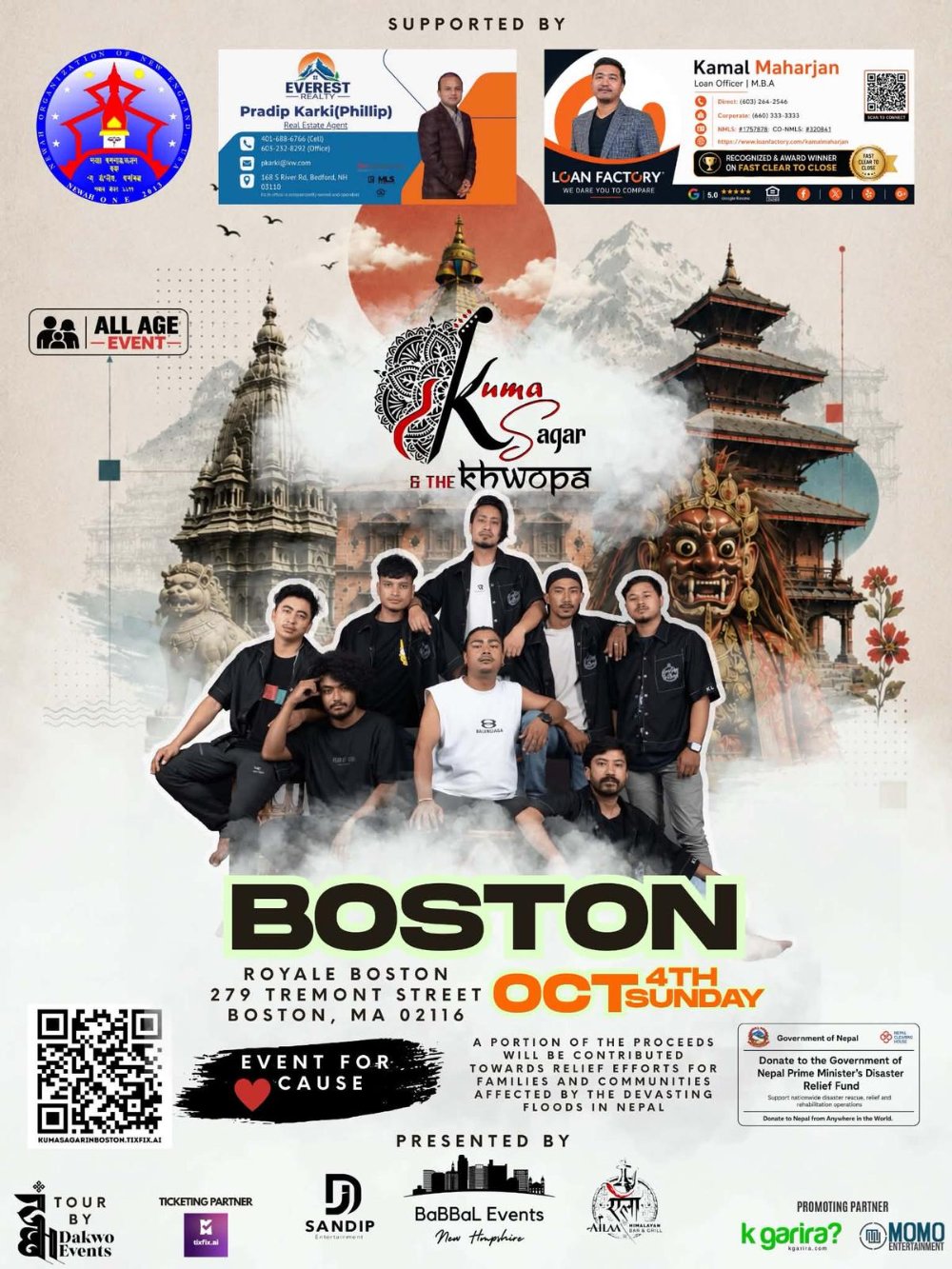 Oct 4, 2026 7:00 PM · Boston / New England · 511 views
 -
 Nepal Festival Perth 2026 FestivalOct 10, 2026 10:00 AM · Perth / Western Australia · 225 views
 -
 Grand Dashain Mela 2026 FestivalOct 10, 2026 11:00 AM · Bay Area / Northern California · 214 views
 -
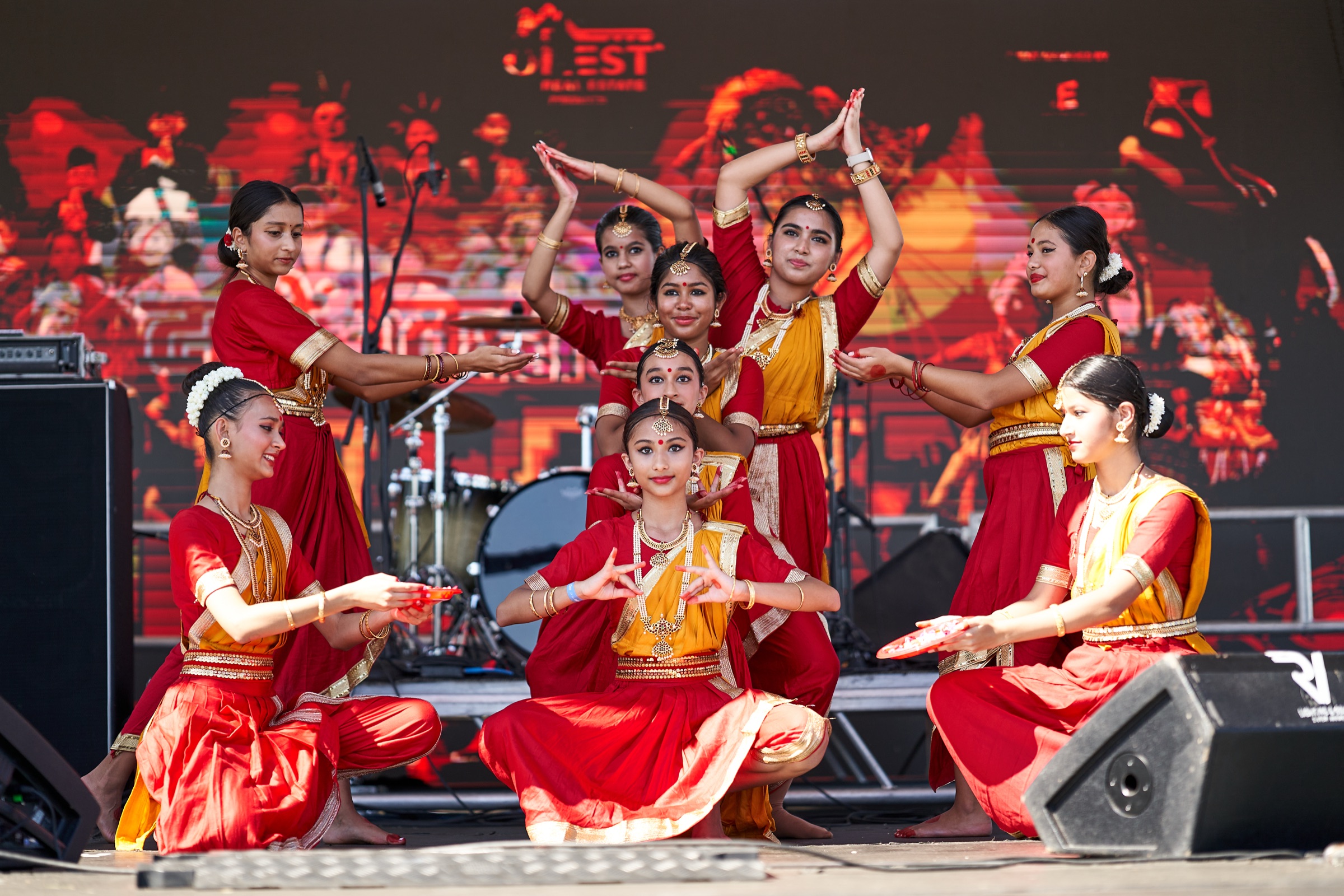 Oct 11, 2026 11:00 AM · DMV / Greater Washington · 227 views · Dashain
 -
 Dashain Festival Fulpati PartyOct 17, 2026 10:00 PM · Greater London · 188 views · Dashain
-
✓Vianet Communications OtherKathmandu · · 285 views
-
Aama Lama RestaurantMalden, MA · · 243 views
-
Ailaa Himalayan Bar & Grill RestaurantStoneham, MA · · 244 views
-
Ailaa Himalayan Bar & Grill RestaurantBedford, TX · · 220 views
-
Annapurna Curry & Sekuwa House RestaurantManchester, NH · · 223 views