History book revisted :Everybody must read
An account by Austrian journalist, Dr. Hans Georg Behr in his book titled “Nepal Geschenk der Götter (Nepal Gifts of the Gods)” written in German reveals an unknown part of our history how the Newah Kingdoms fallen to Gurkhas. The account by Dr. Behr, who was born in Vienna, Austria but lives in Hamburg, Germany, translated into English by Chakana Nepahmi and a Nepal Bhasa version by Binod Saymi “Ala” have brought these untold episodes of the history into light recently. Either many of our historians were not aware of the episodes or reluctant to convey to us the events what led to the fall of Newah kingdoms in the Nepal Mandala in the 18th century. The account therein contradicts the conventional account of unification story of Nepal. Hamburg, Germany - Since 1716, Gorkha’s (ruler) Narabhupal Shah had been sitting on his throne made of mud. He found his throne very uncomfortable, and wanted to change it with the silver throne of the Kathmandu Valley at any cost. With this aim in mind, he married many times to widen his territory and built alliances. But he was not successful At the end, he changed his tactics. In 1732, he sent his 10 year old son Prithvi Narayan to stay with the king of Bhaktapur (Ranajit Malla). In a covering letter, Narabhupal Shah requested the king of Bhaktapur to raise his son and provide him a good education which was only possible in Nepal. But his real intention was to place his son in the palace so that he could spy on it and gather vital information. The Malla king of Bhaktapur took in this young prince of Gorkha with friendship and treated him as the guest. Prithvi Narayan Shah had an excellent memory that he remembered everything he saw. After five years, he returned to his hometown Gorkha He had gathered much information about the reasons behind the quarrels among the valley kings, the exact quantity of military equipments and the strategic locations in Nepal. Prithvi Narayan Shah was sure that he could conquer the pass of Nuwakot, so in the same year he sent his Gorkha soldiers to attack Nuwakot. The young prince had miscalculated or his father had underestimated the Mallas. The Malla kings banded together and their armies beat the Gorkhas very badly. Since then, the Gorkha launched an attack on the valley every year right after the monsoon in order to possess its wealth. But they were failed. The Gorkhas came punctually at the end of September, but they never made any headway. This went on till 1764. Prithvi then sent a peace message to the valley. The Mallas received his message with joy. The endless war was a strain on their resources, and it was also disrupting their business. But Prithvi Narayan Shah’s message was a clever deception; he really didn’t seek peace. The Mallas came to know that it was only a ploy when the Gorkhas blocked the northern trade route. Another thing that worried the Mallas was that the Gorkhas had come into possessions of excellent arms and lots of money with which to prosecute the war. The Mallas didn’t know from where the Gorkhas had got them. The British government had supplied the weapons to the Gorkhas, but this fact has been kept hidden in Nepal’s history books. The secret treaty which was signed is still preserved in London in the archives of East Indian Company. The pact was signed by Captain Ceane and the Gorkhas. The British government agreed to supply the weapons and advice; and in return, the Gorkhas had to destroy the old trade routes between India and China. The Moguls of India had a flourishing business relationship with the Mallas of Nepal, and this trade accounted for 30 percent of the wealth of the Moguls. The British wanted to get their hands on the riches. According to the accord, Prithvi Narayan Shah received 800 muskets along with 21 British advisors. And in 1766, armed with British weapons and intelligence, the Gorkhas attacked Kirtipur. The people of Kirtipur could not resist the superior arms, and two third of them were killed. The cruel Gorkhas cut off the noses of the survivors. Till today, this place is known as the “Village of the noseless”. The Mallas then realized that the situation had become precarious. Jaya Prakash Malla, the king of Kathmandu, was an intelligent ruler. He wrote a very touching letter to the East India Company appealing for assistance against the Gorkhas. The East India Company subsequently sent 15 very strong men under the command of a captain named Kinlock to help the Mallas. This captain was quite fond of drinking alcohol. When the British arrived at the hills leading to the Kathmandu valley, they faked being defeated by the Gorkhas. The Gorkhas pretended to hit them and they acted as if they were wounded. (Like we say in Nepal Bhasa “Chhan daye then ya, jin khwaya then yaye.”)The British wanted the Mallas to think that the Gorkhas were too powerful to fight with. Jaya Prakash Malla then looked to religion for support. A priest he trusted told the king that the future of Nepal depended on the Kumari (Living Goddess). And so in 1768, the festival of Indra Jatra was celebrated with fervour. The Nepalese (the Newar people) drank lots of rice beer during the festivities, especially on September 13 on the day of the chariot festival. They did not notice that the Gorkhas had entered the city until they had surrounded the Kumari’s chariot. Pandemonium broke out that Jaya Prakash Malla jumped down from the royal chariot with his two wives and escaped to Lalitpur. Prithv Narayan Shah stepped in front of the bewildered crowd and shouted, “I’m now your king. Carry on with your drinking.” Prithvi Narayan Shah was a that time 46 years old. Many Newars drank rice beer because they were terror-stricken. Th Gorkhas put their swords to the necks of the Newars who refused to accept the new king, so they had no choice but to obey. In the following winter, the Gorkhas also conquered Lalitpur without any opposition. The Mallas then gathered at the palace in Bhaktapur. The palace was well defended. And following the advice of his British advisors, Prithvi Narayan Shah imposed a blockade. After three years, Bhaktapur’s food stock ran out. And one night, some illegitimate children of the Mallas opened the gates to the city. The valley’s three kings were arrested in their bedrooms. Jaya Prakash Malla committed suicide. To show his big-heartedness, Prithvi Narayan allowed Jaya Prakash to be brought to Pashupatinath for the final rites. Bhaktapur’s king Ranajit Malla, who had given shelter to Prithvi Narayan, was not killed; instead his eyes were blown up to blind and banished to the Hindu city of Benaris. Tej Narasingh of Patan did not want to exchange any words with Prithvi Narayan. Tej Narasingh was imprisoned in a vault and walled up. A small hole was left open to pass food to him. And for two days, a bowl of rice was left near the hole. When they saw that Tej Narasingh had not touched the food, the hole was bricked up. Prithvi Narayan Shah did everything according to Captain Ceane’s suggestions. He said to Prithvi Narayan, “The people of Nepal are very hard working and intelligent. That is why they are very dangerous. We need to strike terror into their hearts in order to control them. Do not let them come to power even after many centuries. We need to obliterate from their minds the idea of rising up to seize power. This can only be achieved through harsh laws and violence.” Accordingly, Newars were not allowed to read, write or repair their houses. If they broke the law, they faced the dealth penalty. In 1770, two and half thousand Newars were killed. The second generation was thoroughly intimidated, and gave up. The third generation started to forget. After Prithvi Narayan Shah took control of the valley, the old cities began to stagnate even though so much money was pouring into the country. The only changes in the cityscape that occured were the result of earthquakes. The British naturally benefitted greatly from their cruel plan. In 1776, the Mogul Empire became bankrupt and was forced to become a colony of Britain. The whole of central Asia suffered after Prithvi Narayan Shah took over Nepal and closed the old trade routes. Tibet’s economy too was negatively affected. The depressed economy forced monasteries to become financially self-reliant. This was how feudalism emerged as a shadow in the land of the Buddha. There was a negative effect even in China. The British were also not very happy with the Gorkhas. The Gorkhas had tasted the blood, and did not give up violence. In this way, they conquered all the hill states. The Gorkha turned the country into a “forbidden land”. As long as the country remained closed up, the British were not disturbed. But in 1789, the Gorkhas became crazy and went to war with China and England. Britain’s General Ochterlony said, “We have to keep the Gorkhas busy so that other things besides conquest come to their minds.” Lord Hastings wrote in his diary in 1817, “To bring peace in Nepal, the Gorkhas must be kept busy and far from their country.” This policy led to the recruitment of Gorkha soldiers into British army. The Nepal government took one-third of the money sent home by the Gorkhas. It was an important source of income for the government of Nepal. After the Gorkhas began leaving Nepal, there was peace on the frontier as well as within the country. But there was no peace in the king’s palace. The Shahs fought among themselves. They didn’t care about the country or the people. They remained engrossed in their own interests. Then came the Kot Parwa, and the Jung Bahadur Rana took over power from the Shah king.
confused_soul · Jan 11, 2010 4:57 PM · 37,423 views
Google nai satya ho...yedi kunai kura Google ma chaina bhane it is lie....Google is the only truth in this world. Thus, everything else is false.
deshbhaktanepali · Jan 15, 2010 4:10 PM
this is too long bro cant understand!
Rodiohead · Jan 15, 2010 4:16 PM
very interesting stuff..I want to read this book.
balat_carey · Jan 16, 2010 5:19 PM
Sounds very interesting, logical to some extent but due to lack to credibility, can't just rely fully on this article. We should think critically, if it's true would be a milestone in Nepali History. P.S. OMG Things that we learnt in Grade 8,9,10 is just a conspiracy ?? WTF (If This is True)
dalle_momo · Jan 16, 2010 8:37 PM
^^^ deskbhaktanepali See this Google Fan : Just for Fun
dalle_momo · Jan 16, 2010 8:42 PM
The source where this article is found, http://www.nepal-lipi.com/cmsp... (as stated earlier), and other posts by confused_soul clearly states his intention. This is not the kind of soul we need to bridge the divide between the Nepali Community. (Not talking about the article but the intention of the originator in general)
namaskaar · Jan 16, 2010 9:43 PM
This conversation is preserved exactly as it was on the original Sajha.com and can't accept new replies.
Start a New DiscussionYou might be interested in...





-
Room Available for Rent USD 850.00Melrose, MA ·
-
One bed room available for rent USD 1,300.00Germantown, MD ·
-
Malden, MA, United States · Reposted Originally posted
-
Big Room with Parking Next to bus stop USD 1,100.00Everett, MA ·
-
Rooms Available for Rent USD 2,700.00Reston, VA ·
-
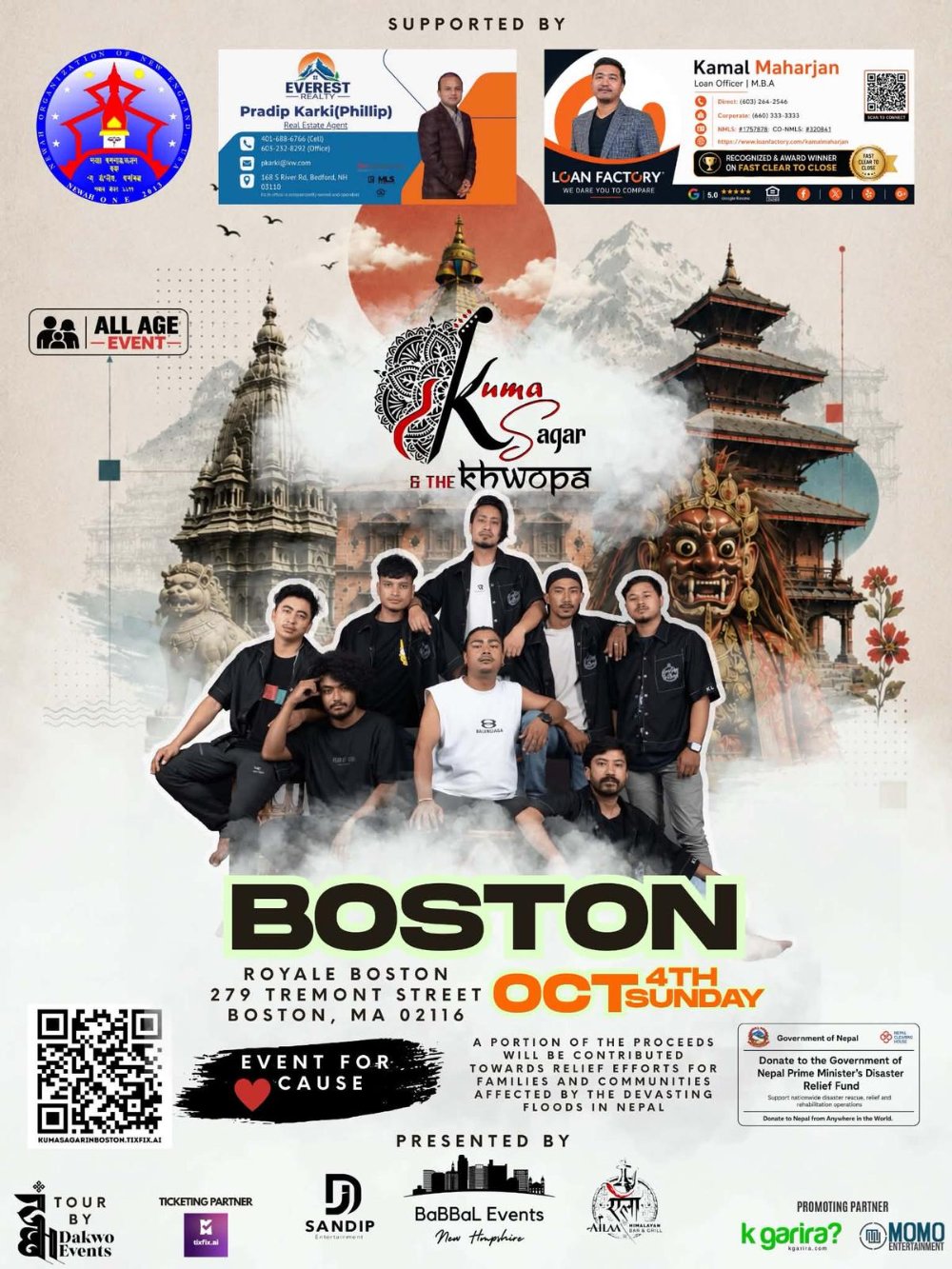 Oct 4, 2026 7:00 PM · Boston / New England · 518 views
 -
 Nepal Festival Perth 2026 FestivalOct 10, 2026 10:00 AM · Perth / Western Australia · 227 views
 -
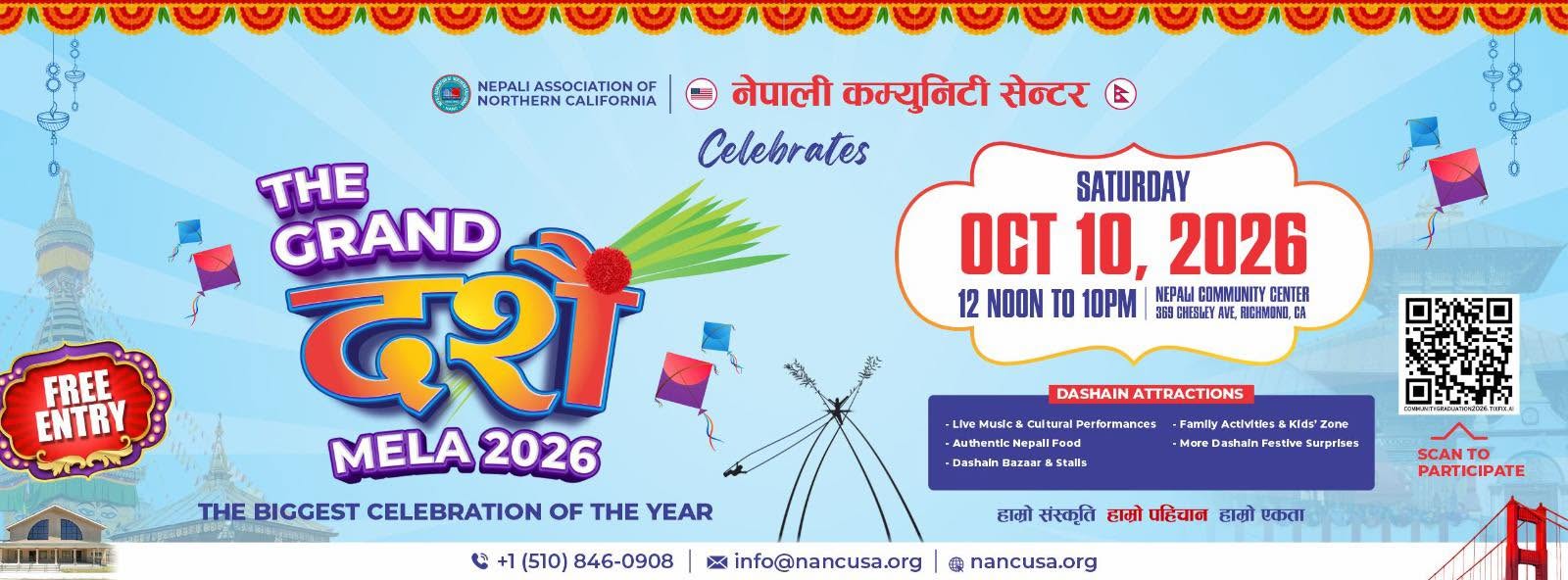 Grand Dashain Mela 2026 FestivalOct 10, 2026 11:00 AM · Bay Area / Northern California · 216 views
 -
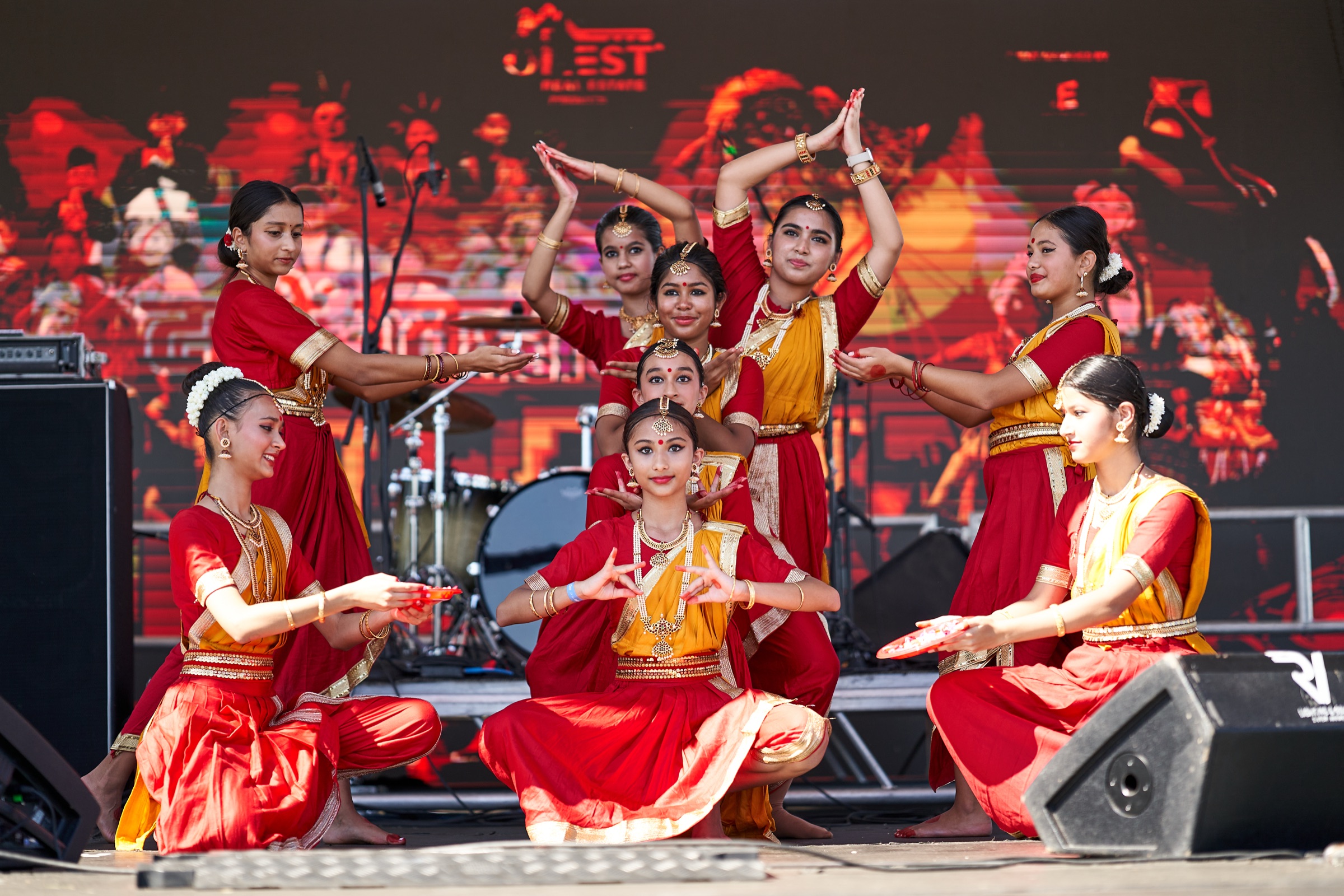 Oct 11, 2026 11:00 AM · DMV / Greater Washington · 229 views · Dashain
 -
 Dashain Festival Fulpati PartyOct 17, 2026 10:00 PM · Greater London · 190 views · Dashain
-
✓Vianet Communications OtherKathmandu · · 287 views
-
Aama Lama RestaurantMalden, MA · · 245 views
-
Ailaa Himalayan Bar & Grill RestaurantStoneham, MA · · 247 views
-
Ailaa Himalayan Bar & Grill RestaurantBedford, TX · · 223 views
-
Annapurna Curry & Sekuwa House RestaurantManchester, NH · · 226 views