Article by Hisila Yami
Normal 0 MicrosoftInternetExplorer4 /* Style Definitions */ table.MsoNormalTable {mso-style-name:"Table Normal"; mso-tstyle-rowband-size:0; mso-tstyle-colband-size:0; mso-style-noshow:yes; mso-style-parent:""; mso-padding-alt:0in 5.4pt 0in 5.4pt; mso-para-margin:0in; mso-para-margin-bottom:.0001pt; mso-pagination:widow-orphan; font-size:10.0pt; font-family:"Times New Roman";} Peace in pieces? By Hisila Yami Octogenarian Bharat Shamsher Rana (veteran radical Congress leader) had come to congratulate me and my party for achieving something which individuals like him, other parties and groups could not achieve for decades. He meant removing the king, going for federalism, secularism and democracy. These are some things he thought he would never get to see in his lifetime. Ironically, this remark came just after I had read a document brought out by the International Crisis Group entitled “Nepal’s future: In whose hands?” The Crisis Group has brought into sharp focus the actions of principal national and international stakeholders as against the secondary without becoming muddled in eclectic conclusions. The document has correctly assessed the strengths and limitations of the UCPN (Maoist), the main stakeholders in the peace process. While analyzing the Maoists, the paper seems to have missed a number of points. Yes, the problem of the Maoists is lack of experience and qualified personnel to lead and plead on their behalf while in government. The Catch-22 situation where the Maoists were too naive to run the government and where the other parties were waiting for them to fail has been correctly noted. This has led to denial of the transformation of both Maoist and non-Maoist forces thus allowing regressive forces within both forces to go back to conservative postures thereby endangering the peace process. Making things worse is the pending issue of integration of the Nepal Army (NA) and the People’s Liberation Army (PLA). However, it is equally important to note that the Maoists are good at taking the initiative. Their resigning from the coalition government not once or twice but thrice is a result of their own conscious actions. The first and the second resignations were related with the Constituent Assembly (CA) which brought them victory; but the third resignation which is connected with a strategic issue, namely democratization of the NA, is yet to come to fruition. These acts have strongly refuted the charge that the Maoists were being totalitarian as alleged by the Nepali Congress. Similarly, the document also missed pointing out how both national and international players had underestimated the Maoists’ strength during wartime and peacetime. During the war, the monarchical parliamentary forces underestimated the People’s War as a temporary clash which would soon subside. However, it turned into a full-fledged war lasting 10 years. During the peace period too, the Maoists overwhelmingly won the CA election with a whopping 40 percent of the seats much to the surprise of national and international forces. The confusion whether the Maoists are serious about the peace process is worth analyzing. Considering the fact that the Maoists need to change their way of organizing, delivering and planning during peacetime vis-à-vis wartime, and considering that there was a two-line struggle regarding how to move ahead during a legal struggle, there was bound to be confusion outside and inside the party. Those wanting to pursue the old way of fighting should realize that they had left their mission (to achieve a new democratic state) halfway to consolidate what they had been raising regarding federalism, democracy and a republican state. They should be reminded that neither the Royal Nepal Army nor the People’s Liberation Army could achieve a decisive victory against the other. And that the present line had been adopted unanimously by the party to prevent external intervention in the country. The Maoists’ commitment to the peace process can also be judged by their strong stand on the question of civilian supremacy. It is also important to note that the army has categorically stated in its recommendation for the future constitution that it is for a unitary and non-secular state, which is against the spirit of the Interim Constitution. Similarly, the details of what led to the Maoists’ resignation on the matter of military supremacy should be known. Fresh recruitment by the NA, extending the tenure of eight generals whose terms had expired, abrupt withdrawal of the NA football team from a national football tournament to avoid playing with the PLA team, hobnobbing with diplomats and political leaders by the Chief of Army Staff and undermining the authority of the prime minister even when called upon to explain a misconduct — all these amounted to military supremacy which had to be discouraged. One wonders why India (which should be proud of a long history of civilian control over the military) is seen backing military supremacy in Nepal. There is one confusion which needs to be clarified regarding the ideology of the UCPN (Maoist). It is interesting to note that while the Crisis Group says that they do not want to see another UML (meaning the Maoists turning into UML), they are also critical of the Maoist stand on anti-feudal and anti-imperialist forces. It is precisely this line which prevents the Maoists from becoming another UML. The nature of the NA and its conduct related to the Comprehensive Peace Accord (CPA) has been well portrayed. The hardcore within the NA has a consistent aversion to democratizing the NA and integrating the PLA into the NA. In relation to UNMIN, it is interesting to note that it pretended to cooperate with it while privately sowing doubts about its neutrality. Similarly, while India was seen keenly hobnobbing with them, particularly General Katawal, the U.S. was seen to be privately much more critical of the NA’s political involvement. What is equally interesting is seeing the Nepali Congress going out of its way to push for a strong NA when all four NC prime ministers have fallen victim to previous military interventions. Yes, it has rightly pointed out that growing military expenditure combined with induction of new recruits and procurement of military equipment has heightened the possibility of conflict. One of the best and boldest sections of the Crisis Group’s document examines India’s backtracking on its own plan, namely the peace agenda. India’s knee-jerk reaction to the electoral win of the Maoists has caused it to cling to the NA as the last bastion against Maoist influence. India took a long time to do away with the twin-pillar principle of consorting with both the monarchy and the parliamentary system and using one against the other. Today, they seem to be recreating the same dual authority — between the president and the prime minister — to check and balance each other in its favour. What the document has not revealed is that the COAS affair has given India a greater opportunity to make in-roads into the NA than before. Their short-term interest in the NA has gravely endangered the peace process and made them a lone wolf in the international arena. When I was minister, I remember making a statement during an official visit to Bihar in India in which I had said that we wanted to see Bihar rich. I had a point in making that statement. Nepal being surrounded by the most backward states of India and China (Bihar and U.P. in the south and Tibet province in the north) has led to a myopic view of Nepal. Had they been richer, may be a more tolerant large-hearted approach to Nepal’s problem would have been taken at the central level. However, the document misses one point, and that is India is not a monolithic state. It has a thriving multi-party system, and it has all kinds of liberals, hardliners and eclectic-minded politicians and bureaucrats. Hence, India should be seen from this perspective as well At the end of the day, the real fight is between New Nepal with the state being restructured and Old Nepal with the status quo being maintained. Similarly, the real issue is a new mainstream with a real republic without feudalism, real federalism that addresses the real ethnic and regional issues and real democracy that reaches the marginalized masses. Similarly, the question is also about understanding the spirit of the CPA, the 12-point understanding and the Interim Constitution whose mandate was for change as against the legalistic interpretation of the agreements which are often left vague. The document has urged unity across all parties to prevent external intervention which is worth noting. Similarly, its warning to India that insecurity in Nepal is hazardous for India should be noted by all the stakeholders who want to see Asia stable. During the old cold war days, Nepal was seen as a yam between India and China. Today, with rapid globalization and class, ethnic and regional issues being raised in Nepal, an all-out war embracing all these three issues will engulf India first (because of its open border with Nepal) before engulfing the rest of Asia if Nepal’s peace process were to fail. And the Communist Party of India (Maoist) will be more than happy to create a conducive environment for revolution in this region. India already has its share of conflict with a class war being waged by the Communist Party of India (Maoist), a regional war led by north-eastern separatist forces and a national war lead by Kashmiri insurgents. Do you want another country with all these conflicts at your doorstep?
nepalibir · Aug 31, 2009 9:53 PM · 14,371 views
why don't someone f**k this bitch?
daka · Aug 31, 2009 11:42 PM
Rather than using fowl language, why not take everything into perspective. Though the article is very much skewed to Maoist ideolism with a touch of scaremongering, I did like the manifestation of problem engrained in Nepali politics and the standard of English used (unlike some of the commentators in Sajha who can only use fowl language that any Tom, Dick and Harry can use; btw for your information Baburam is already doing what you are asking in your comment). Another thing I liked was that the article i.e. the auother, does admit the Maoists' impediments during their tenure. I only hope that people become more conscious and start supporting those who deserve to be supported rather than not listening to the opposition even though that might be for the good for the country. Time to get rid of the Nepali herd culture I suppose.
incrediblesuperbatma · Sep 1, 2009 4:09 AM
I thought it was a pretty good article. Daka dude, I think u should show some class here.
nepalibir · Sep 1, 2009 8:29 AM
After reading first 5 lines, took no longer for me to understand the redicule.A good crap at the horrendous situation of the country.
raju161 · Sep 1, 2009 8:40 AM
This article is not from a leader but from a teacher in a class teaching students how to write an essay. I would give 8 out of 10 for this essay in test. I am not sure why the development in Bihar/UP or Tibet is related with development of Nepal. Going by her logic, since New Delhi is neighbour to UP they must share similar mentalities. And since whole of India is controlled by New Delhi, the country as a whole should be like UP or Bihar. Well - Good luck with that. And about her warning to India because of insecurity at our home, India does not give a damn and neither does China. India can close this open border tomorrow and leave Nepalese to die of starvation and world will not even blink at this atrocity. Examples you need - Khalistan, Mizoram, Arunachal Pradesh, Manipur - you name it. Get real. If the house is strong, nobody can fiddle with it. But with such inconsiderate visions from the leaders, I do not have any hope.
Izzap · Sep 1, 2009 8:44 AM
India and China not giving a damn about Nepal can't be correct. Why would they be intervening with Nepali politics should they really don't care? Development of UP and Tibet having effect in Nepal is quite obvious. Just look at Eastern European countries being supported by developed EU neighbours, eastern asian nations developing because of developing or developed neighbours, Mexico's economy more or less being dependent on its developed neighbour USA. We can see several other clusters of rich countries in certain parts of the world and their neighbours reaping the benefits, unless the neighbouring regime has totally different ideology to the developed ones. If people and the region UP and Tibet do get highly educated and developed it surely will bring positive effect to Nepal. About getting real, no matter how strong Nepal becomes because of its unfortunate geographic poitioning, India and China will always fiddle with it, as we all know that Nepal will never be able to surpass them in strenght both economically and militarily. Example of this will be the forced changes in privacy laws brought about in Liechtenstein by Germany and other developed nations even though it is the richest country in the world in terms of per capita GDP.
incrediblesuperbatma · Sep 1, 2009 9:12 AM
This is a false assumption. Maoist have never taken a strong stand on civilian supremacy nor have any obligation to democracy loving Nepalese civilians as a whole. Lets stop all the big talks. Last edited: 01-Sep-09 09:35 AM
raju161 · Sep 1, 2009 9:34 AM
Yesta chikuwea haru ko pani lekh padne/// thukka... ganuame lekh ho yo.... i am not gonna waste my time.. anything written by these assssholees .. cannot be any better than shit.
Ved555 · Sep 1, 2009 7:18 PM
This conversation is preserved exactly as it was on the original Sajha.com and can't accept new replies.
Start a New DiscussionYou might be interested in...





-
Room Available for Rent USD 850.00Melrose, MA ·
-
One bed room available for rent USD 1,300.00Germantown, MD ·
-
Malden, MA, United States · Reposted Originally posted
-
Big Room with Parking Next to bus stop USD 1,100.00Everett, MA ·
-
Rooms Available for Rent USD 2,700.00Reston, VA ·
-
 Oct 4, 2026 7:00 PM · Boston / New England · 515 views
 -
 Nepal Festival Perth 2026 FestivalOct 10, 2026 10:00 AM · Perth / Western Australia · 225 views
 -
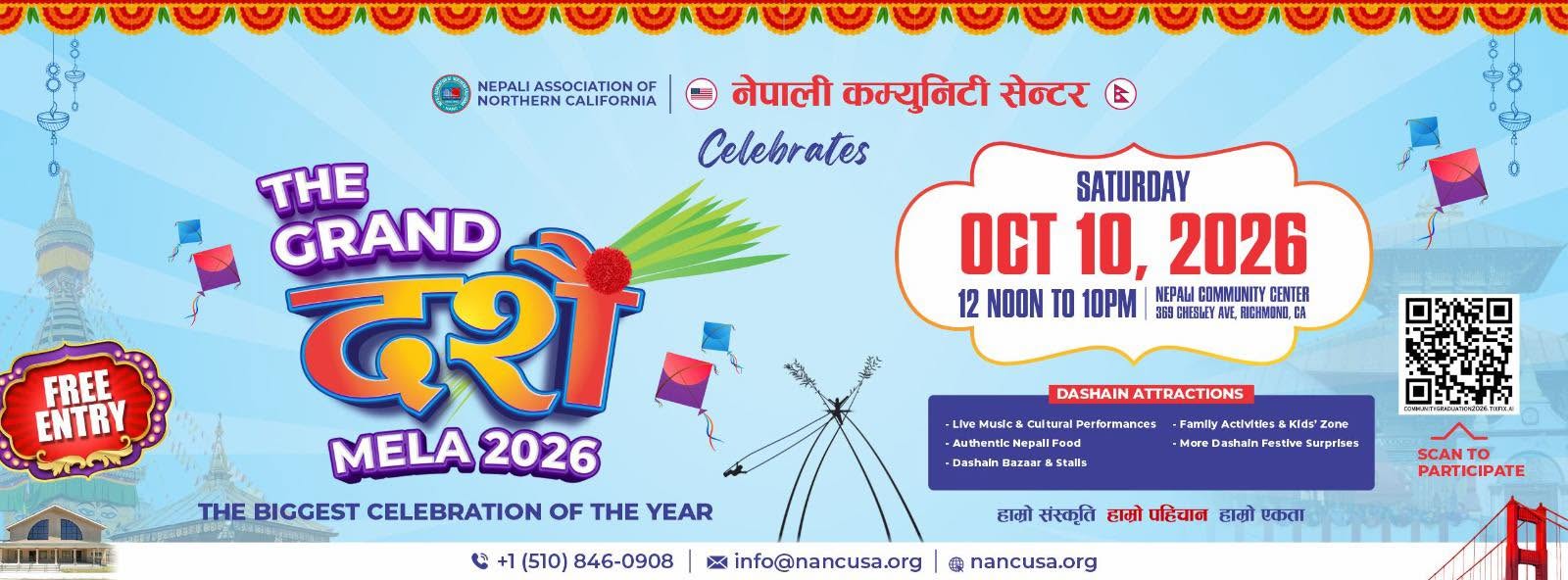 Grand Dashain Mela 2026 FestivalOct 10, 2026 11:00 AM · Bay Area / Northern California · 214 views
 -
 Oct 11, 2026 11:00 AM · DMV / Greater Washington · 227 views · Dashain
 -
 Dashain Festival Fulpati PartyOct 17, 2026 10:00 PM · Greater London · 188 views · Dashain
-
✓Vianet Communications OtherKathmandu · · 285 views
-
Aama Lama RestaurantMalden, MA · · 243 views
-
Ailaa Himalayan Bar & Grill RestaurantStoneham, MA · · 246 views
-
Ailaa Himalayan Bar & Grill RestaurantBedford, TX · · 221 views
-
Annapurna Curry & Sekuwa House RestaurantManchester, NH · · 223 views