Poll - What do you think about the expansion of Christianity in Nepal?
Power_Ranger · Jun 3, 2009 10:03 AM · 55,412 views
Hindu Deities, Sages and Saints Who were not Brahmins “The origin of Sages, Truth and Rivers are unknown”—Mahabharata This appendix lists some non-Brahmin or mixed caste great Deities, Saints and Sages of Hinduism. It will be apparent that these great men and women are responsible to a great extent for the development of Hinduism and that the title ‘Brahminism’ is rather a misnomer for our Dharma. 1. Sri Rama: He was a Kshatriya belonging to the Suryavamsa. His life is the theme of the popular Hindu epic Ramayana. He is considered the 7th incarnation of Lord Vishnu, who in turn represents the ‘Preserver’ aspect of God. He is considered an ideal son, an ideal king and so on. Hindu Utopia is often called ‘Ramarajya’, i.e., ‘the kingdom of Sri Rama’. 2. Sri Krishna: He to the belonged to the Yadava sub-caste. The Yadavas are currently enumerated amongst the ‘Other Backward Castes’ (OBC’s) in India. He is considered the most popular deity of Hindus, and revealed the ‘Bhagavad Gita’, which is the bedrock of modern Hinduism, and summarizes the philosophical teachings of all Hindu scriptures in a masterful manner. He is considered as the 8th incarnation of Lord Vishnu. 3. Lord Shiva: He is often termed as a ‘Kirata’ in the Puranas. The Kiratas would currently fall in the ‘Scheduled Tribes’ (ST) category in modern India. He is considered as a representation of the ‘Destroyer’ aspect of God and is one of the chief Hindu deities. He is the chief subject of numerous Hindu scriptures like the Shiva Purana, the Kurma Purana and so on. 4. Maharshi Aitreya Mahidasa: According to tradition, his mother was a maid named ‘Itara’. This Rishi is credited with the compilation of the Aitreya Brahmana and sections 1-3 of the Aitreya Aranyaka (the latter contains the Aitreya Upanishad- one of the 10 canonical Upanishads for Hindus) belonging to the Rigveda. 5. Rishika Lopamudra: She was a Kshatriya princess from Vidarbha, who married Maharshi Agastya. She is the Seer of some verses of the Rigveda. Several edifying dialogs between her and Sage Agastya are recorded in the Puranas. 6. Maharshi Vishwamitra: He was originally a Kshatriya named ‘Vishwaratha’. He is credited with revealing the ‘Gayatri Mantra’, the Hindu prayer par-excellence. He was elevated to Brahminhood because of his spiritual luster. 7. Maharshi Veda Vyasa: He was the son of a fisher-woman named Satyavati, from Rishi Parashara. Considered the greatest Rishi of classical Hinduism, he is believed to have give the 4 Vedas ( = the most authoritative scriptures of Hindus) their present form. He also compiled the Mahabharata and the Puranas, which are the mainstay of popular Hinduism. He also authored the Brahmasutras- a text considered as one of the triple canon of Vedantic Hinduism (the other two being the Gita and the Upanishads). His birthday is celebrated as ‘Guru-Poornima’ by Hindu monks every year. All Hindu monastic orders trace their lineage from him and a popular saying goes: “vyasocchishtam jagatsarvam” meaning that so great was the learning Rishi Veda Vyasa, that even his voluminous writings represent only the periphery of his knowledge. 8. Maharshi Matanga: He was the son of a Shudra mother and a Vaishya father. In fact, Chandalas are often addressed as ‘Matanga ’in passages like Varaha Purana 1.139.91 9. Maharshi Valmiki: He was descendant from Sages but had become a chandaala (= an outcaste) named Ratnakara, because he took to murder and highway robbery. He was reformed by Prajapati Brahma and was inspired by the divine Sage Narada to compose the Hindu epic par excellence- the Ramayana. 10. Rishika Sulabhaa Maitreyi: She was a Kshatriya lady who promulgated the Saulabha Shakha of the Rigveda. She is counted among the revered teachers of Rigveda to whom respects are offered in texts like the Kausitaki Brahmana. The Saulabha Brahmana is now lost but is mentioned in the Kashika- a commentary on the grammatical text named Ashtadhyayi. A dialog of Rishika SulabhA with King Janaka of Videha on spirituality is recorded in the Shanti Parvan (12th book) of the Mahabharata. 11. Mahatma Vidura: He was the son of Maharshi Veda Vyasa and a maid of King Dhritrashtra (the father of Kauravas in the Mahabharata). He is a wise man in the Mahabharata and counseled many towards truth. His teachings are collected in the ‘Viduraprajagar’ section of the Udyog Parvan (5th book) of Mahabharata. 12. Gautama Buddha: The founder of Buddhism belonged to a marginal Kshatriya tribe called Shakya. He lived and died as a Hindu, although his followers founded a new religion in his name. He advocated the supremacy of good ethics and morality over philosophical speculation and ritualism. He is considered the 9th incarnation of Lord Vishnu by devout Hindus. 13. Mahavira: The 24th and the last great Teacher of Jainism. He belonged to the Kshatriya Licchivi tribe of Bihar. He advocated vegetarianism and the centrality of compassion in Dharma. 14. Bhakta Nammalvar: The foremost of the Alvar Vaishnava saints, he was a Shudra by birth. His composition ‘Tiruvayamoli’, which is in the Tamil language, is considered at par with the Vedas by the Sri Vaishnava Hindus. 15. Sikh Gurus: All the Sikh Gurus, from Guru Nanak to Guru Gobind Singh, were Kshatriyas. The teachings of the first 5 and the 9th Guru are compiled in the Adi Granth- the Sikh scripture. In the face of Islamic persecutions, they revitalized the Hindu community of what is now Pakistan and parts of Northern India and preached the simple path of performance of good deeds, devotion to God by recitations of His names and singing of His glory and sharing of one another’s joys and sorrows without regard to caste. 16. Saint Kabir: He was brought-up by ‘Julaha’ couple. Julahas are a Muslim caste of weavers. He preached in the language of the masses and many of his verses are common proverbs in North India. 17. Narsi Mehta: He was born in a Vaishya family is a renowned Vaishnava saint of Gujarat. One of his compositions- “Vaishnava Jana” was a favorite of Mahatma Gandhi. According to some however, he was a Brahmin. 18. Saint Tukarama: He was a Vaishya who composed touching poems called the ‘Abahngas’ on devotion to God. These compositions are recited with great fervor by numerous Hindus, especially in Maharashtra by the members of the Warakari community. 19. Saint Ravidas: He was a cobbler, and therefore of Shudra origin. He advocated Bhakti and 16 of his compositions were incorporated in the Adi Granth- the Sikh scripture. 20. Saint Mira: She was a Rajput Kshatriya princess of Mewar and devoted her life to the service of Lord Krishna. Her beautiful poetical compositions addressed to Lord Krishna are recited with great fervor by Hindus down to this day. 21. Swami Vivekananda: One of the foremost reformers and teachers of modern Hinduism, he was of Kayastha subcaste of Bengal. He spread the message of Vedanta in the United States and Europe and his writings and speeches are contained in “The Collected Writings of Swami Vivekanand.” He founded the Ramakrishna Mission- a religious organization to propagate the teachings of his Guru Swami Ramakrishna Paramahamsa. In Bengal, Kayasthas are considered as Shudras. 22. Vatsa, a descendant of Kanva RV 6.1; 8.8 etc; was called a Shudra-putra (Panchavimsha Brahman 14.66). 23. Kakshivat, a Brahmavadin, was the son of Dirghatamas by a Shudra maid servant (Brihaddevata 4.24-25). 24. According to Mahabharata (Anushasana Parvan 53.13-19), Sage Kapinjalada was a Chandala and Sage Madanapala was the son of a boatwoman. 25. According to Mahabharata Shanti Parvan, King Sudas was also a Shudra. Sudas is one of the most celebrated kings of the Rigveda, being the hero of the Dasarajna war. Bibliography and References 1. S. Radhakrishnan; The Upanisads; Indus (Publishers); New Delhi; 1995 2. Jagdish Lal Shastri; Upanishatsagrahah; Motilal Banarsidass; Delhi; 1970 [This book gives the text of the Upanishad in Devanagari script] Links 1. Global Hindu Electronic Network [ http://www.hindunet.org ] http://dir.yahoo.com/Society_a... 3. The Caste System http://www.geocities.com/Capit... 4. The Himalayan Academy http://www.HimalayanAcademy.co... At this website, a search by ‘Caste’ will give several articles of interest. Hence i'm wondering why there is so much discrimination of Shudras and Dalits and to those who do not conform with Vedic teachings when some of the Hindu Deities, Sages and Saints were NOT Brahmins. The only problem one can see is that if you study Hinduism closely, it lies with the Vedic teachings which have almost incorporated all other religions into their Veda. Hinduism really is belongs to the aborigines and the low caste group. Therefore folks, learn to distinguish the True Hinduism. Learn to distinguish Pre-Vedic religions from Veda religions. Once we eradicate the bad elements that have come from Veda, Hinduism will continue to strive. Jai Mahadev. Last edited: 10-Jun-09 04:27 PM
JPEG · Jun 10, 2009 4:03 PM
Please Act now before Our Religion Hinduism becomes a minority or ends up in Museum. Churches mushroom in the land of temples, stupas and monasteries By Surendra Phuyal & Sharad Adhikari SIDDHAKALI, Sankhuwasava : It’s Sunday afternoon in this typical mountain village in eastern Nepal, and dozens of local people, elderly women and children among them, in their best attires are flocking towards a small mound near the bazaar called Pokhari. It’s a sunny day. The crowd grows thicker and thicker outside the Avenenger Church, which was established about nine years ago. But Pasang Sherpa, a Buddhist Lama who is waiting for devotees who would flock to the Shangang Chhoeling Monastery to celebrate the Lhosar festival, seems a bit worried. "In the past, old and young people from all the surrounding villages would come here to celebrate Lhosar," the Lama says, as he turns around to check whether devout Buddhists belonging to the Tamang and Sherpa communities have arrived. "But now a days, there is not much enthusiasm among our youngsters about gumbas." However, barely 25 meters away, at the foot of the same mound with terraces that have millet and barley crops, the crowd is thicker. And inside the one-storied hut locals call church, Shyam Krishna Rai the pastor, is preparing to baptise, or formally convert, five new aspiring bishwasis (followers) of Jesus Christ. Holding a thick book of Bible, which is written in Nepali, about 50 Christians who have squatted on the carpeted floor start following Rai the pastor, who is singing, "...kahile napharkane, kahile napharkane nirnaya hami gardachhaun (we decide never to return again)." The melodious chorus seems to enthral the entire neighbourhood, inhabited mainly by Brahmins, Chhetris, Rais, Limbus, Tamangs and Gurungs. Fascinated by the ‘miraculous healing power’ of God, and dissatisfied with the discriminatory practices and traditions of Hinduism and Buddhism, more and more Nepalis are converting to Christianity around the country - in the east, as well as in the west and south. Although rampant discrimination - such as the practice of untouchably - prevalent in the predominantly Hindu-Buddhist society is forcing many to look for greener pastors and better opportunities, the ‘miraculous healing power of God’ the missionaries preach and demonstrate seems to be fuelling the cult following. "I was a follower of Buddhism until not so long ago," says 60-year-old Lhamu Sherpa, who is wearing Bakkhu and the sort of ornaments that all Sherpa and Tibetan women wear. "I was ill, but prayers to Buddha didn’t help much. So I started believing in God. Now I am fine. There is no problem." Her eyes fixed on the Bible, Sherpa prays together with Tili Rai, 60, Padma Keshar Khatri, 56, and dozens of other youngsters mainly belonging to the ethnic groups. Then Rai the pastor calls in the new aspiring bishwasis - Dadhi Chandra Rai, Chandra Limbu, Krishna Tamang, Jiwan Limbu and Mana Maya Rai - near the alter, and tells them to sign in on the register. Then another prayer starts. "Now I have baptised them, they have become the members of our family," says a humble Rai the pastor, smiling. Followers mainly from the surrounding villages and as far as the village of Nundaki near Sankhuwasava-Taplejung border come to his church every Sunday. Asked whether he and the bishwasis also get monetary support, Rai says he has heard about a provision of monthly salary of about Rs 3,000 for pastors like him, who stay in far-flung areas. But not for the bishwasis. "Our main church in Kathmandu takes care of that," he says. "But I am least bothered about the money." Krishna Tamang, the young man in his early twenties who is probably among the newest converts in Nepal, says he was sick and tired of giving expensive medicines to his young wife. "That’s why I have started to pray, and giving it a try. I think my wife will soon be well again," he adds. Thanks to the open social and political atmosphere, guaranteed by the 1990 Constitution which, besides scores of other freedoms, provisions of religious freedom, more and more people are exercising religious freedom. In nearby village of Kharang, 54-year-old Basanta Rai, the retired Indian Reserve Police personnel, has set up his own church. The Cyprus Church, as it has been named, also attracts dozens of bishwasis from the surrounding villages. Among them are people belonging to the Rai and the Limbu communities and the Dalits, the Hindu outcasts who are looked down upon by high class Hindus as ‘untouchables’. "So depressed I had become that night that I nearly killed myself. But then God sent an angel for my rescue. And I became Christian now...I hate Hinduism, which promotes such vices as ganja-and-bhang addiction, and discrimination of human beings." Less than one percent of the population in the country are Christians, according to Census 2001. And from 15,000 in 1970 to an estimated 600,000 Christians today, Nepal has one of the fastest-growing Christian populations among the 3.6 billion people throughout Asia’s 51 countries, Christianity Today magazine says in a recent edition, quoting Christian missionaries. The genesis of conversion in Nepal dates back to the Malla era, which ended in the later half of 1700 A.D. But after King Prithvi Narayan Shah the Great, the founder of modern Nepal, conquered the Kathmandu Valley, he expelled a community of 57 Christian converts (Capuchin priests) to India. The situation remained unchanged in the world’s only Hindu Kingdom until 1950s, after which the country gradually started to open up. But now, with the estimated population of Christians crossing 600,000, the trend may look encouraging for missionaries and evangelists, who are said to be working to convert the whole of Asia by the end of the third millenium. And 48-year-old Bir Singh Gurung, who works as a porter - ferrying heavy rocks from the nearby river to build a stone-wall to safeguard the premises of Bishwabasi Mandali (a church) in Manebhanjyang these days, says that he will not return, come what may. Situated on the outskirts of Khandbari, the headquarters of Sankhuwasava district, Manebhanjyang is a day’s walk away from Siddhakali. It looks like, Bir Singh is among the staunchest followers of God in the country. "Sir, before I was a Hindu, now Christian. My two young sons are studying in monasteries " he says, as he heats his lunch under a shade outside the church. "But now, my spouse and myself follow Christianity. We trust in God, and my sick wife is well again. I will never return (back to Hinduism), no matter what. You can hit me with bullets. But never." (With inputs from Shyam Niraula in Khandbari)
JPEG · Jun 12, 2009 1:22 PM
Once your and my country is Republican, there should not be any issue of Religions. Who is growing and who is diminishing should not be an issue. If you are in favor of Hinduism, we do not have any organization to preserve and bring it to next level. You are Hindu by birth, all other are not welcomed as Hindu. Tell me how you preserve it, we have cast system and untouchable are 4th class citizen in society, they need recognition, how and who will recognize them. In India they are changing to Buddhism where cast and division do not exist, every year thousand of people change their name and religion. So does in Nepal but to Christianity because they are advantages and got recognition. Do not worry and let it go as corruptioon is part of out (we have given recongition, no on has done againest it), so why all of sudden you are worrying of being minority. Did you worry how the money came to your pocket and how your parents made it ? It is part of our life and let it go and move ahead. In another 7-10 years we will be minority againest hindi speaking population what you say about this and what you are thinking about it?????????????????????
बैरागिकाइलो · Jun 13, 2009 6:38 PM
Once your and my country is Republican, there should not be any issue of Religions. Who is growing and who is diminishing should not be an issue. If you are in favor of Hinduism, we do not have any organization to preserve and bring it to next level. You are Hindu by birth, all other are not welcomed as Hindu. Tell me how you preserve it, we have cast system and untouchable are 4th class citizen in society, they need recognition, how and who will recognize them. In India they are changing to Buddhism where cast and division do not exist, every year thousand of people change their name and religion. So does in Nepal but to Christianity because they are advantages and got recognition. Do not worry and let it go as corruptioon is part of our life (we have given recongition knowingly and unknowlingly, no on has done and raised voice againest it), so why all of sudden you are worrying of being minority?. Did you worry, how the money came to your pocket and how your parents made it ?Now it's part of our life and let it go and move ahead. In another 7-10 years we will be minority againest hindi speaking population what you say about this and what you are thinking about it????????????????????? Any Suggestion? Atleaset they are thinking good about Nepal even changed to Christiniaty. Last edited: 13-Jun-09 07:09 PM
बैरागिकाइलो · Jun 13, 2009 6:38 PM
Give a man a fish and he will eat for a day; teach a man to fish and he will eat for a lifetime; give a man religion and he will die praying for a fish. I’m a polyatheist – there are many gods I don’t believe in A lie is a lie even if everyone believes it. The truth is the truth even if nobody believes it Religion has caused more misery to all of mankind in every stage of human history than any other single idea When a man is freed of religion, he has a better chance to live a normal and wholesome life Gods dont kill people. People with Gods kill people Faith does not give you the answers, it just stops you asking the questions. Gods are fragile things; they may be killed by a whiff of science or a dose of common sense If we expect God to subscribe to one religion at the exclusion of all the others, then we should expect damnation as a matter of chance. This should give Christians pause when expounding their religious beliefs, but it does not. Atheists will celebrate life, while you’re in church celebrating death
Namaskaar · Jun 13, 2009 8:05 PM
Too much has been said from my side. Listen Converts. All your ancestors have been worshiping the religion that is inside the Hinduism, may it be pre-vedic or Veda religion. But one thing i want to clarify with you folks is that we do not want another religion to come to our way of life. You missionaries are good in exploiting weak and exploited natives in converting to your faith which one have no idea what is all about firstly. They only converted first because of security. How can a Jesus, a man born of White man/Jews, have blue eyes, and blond hair be GOD of other races whose eyes and hair are black? Our ancestors never worship you or known you. So why should we their children convert to you and serve you? Listen here. What we need is the RE-EDUCATION of HINDUISM. Not embracing new religion like Christian whose GOD is dead! Die by the hands of ordinary people. While our ancestors were already in existence with their belief and faith, you Christian only came in the later period. So who you telling others to convert? Therefore folks, we need re-education of Hinduism emphasizing on Pre-Hinduism religion which deals with NATURE. Not Saints, Brahmins, Prophets or Missionaries whose main intentions is for the benefits of themselves. Now that is the TRUTH.
JPEG · Jun 13, 2009 8:23 PM
This conversation is preserved exactly as it was on the original Sajha.com and can't accept new replies.
Start a New DiscussionYou might be interested in...




-
Room Available for Rent USD 850.00Melrose, MA ·
-
One bed room available for rent USD 1,300.00Germantown, MD ·
-
Malden, MA, United States · Reposted Originally posted
-
Big Room with Parking Next to bus stop USD 1,100.00Everett, MA ·
-
Rooms Available for Rent USD 2,700.00Reston, VA ·
-
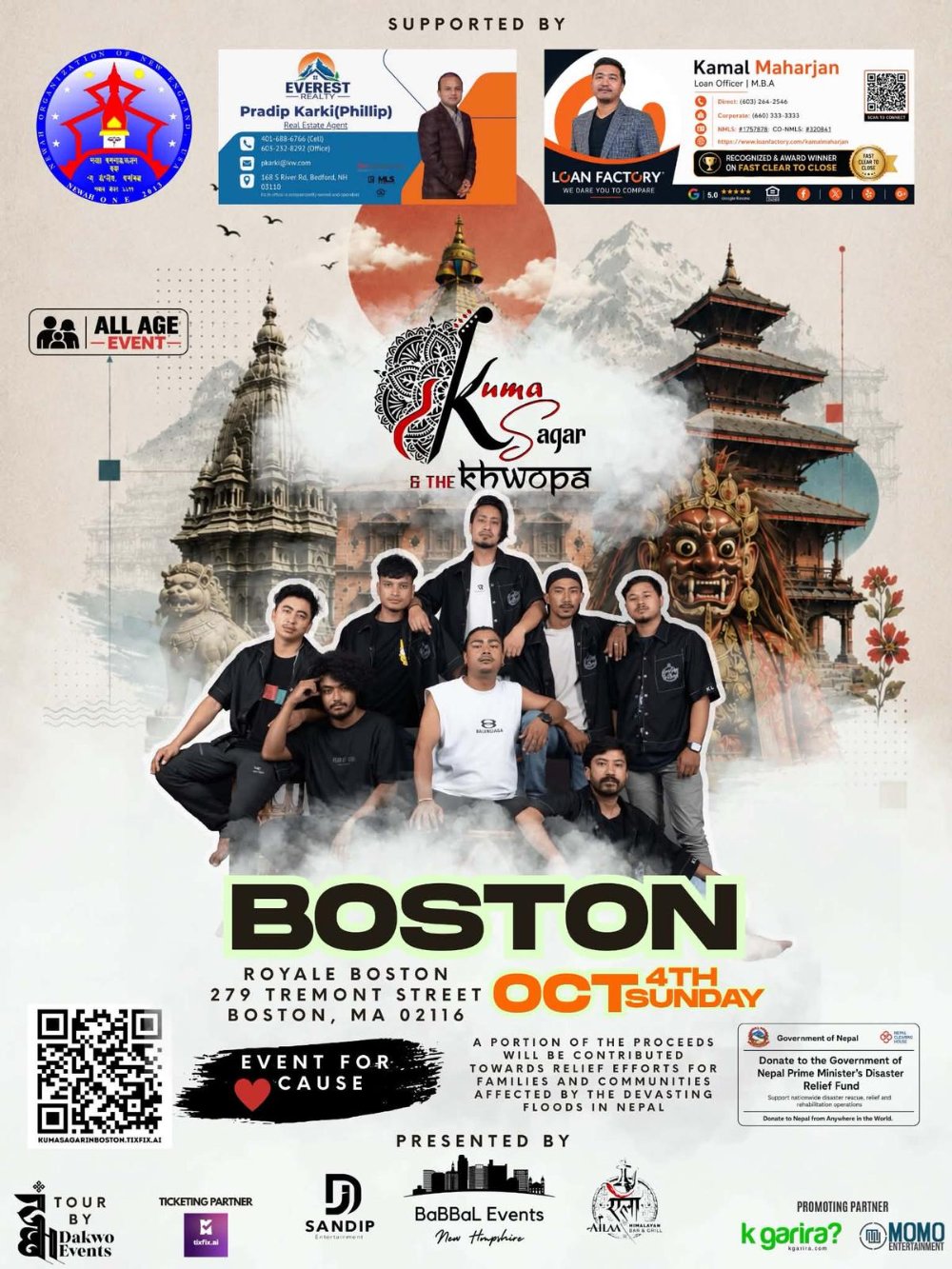 Oct 4, 2026 7:00 PM · Boston / New England · 518 views
 -
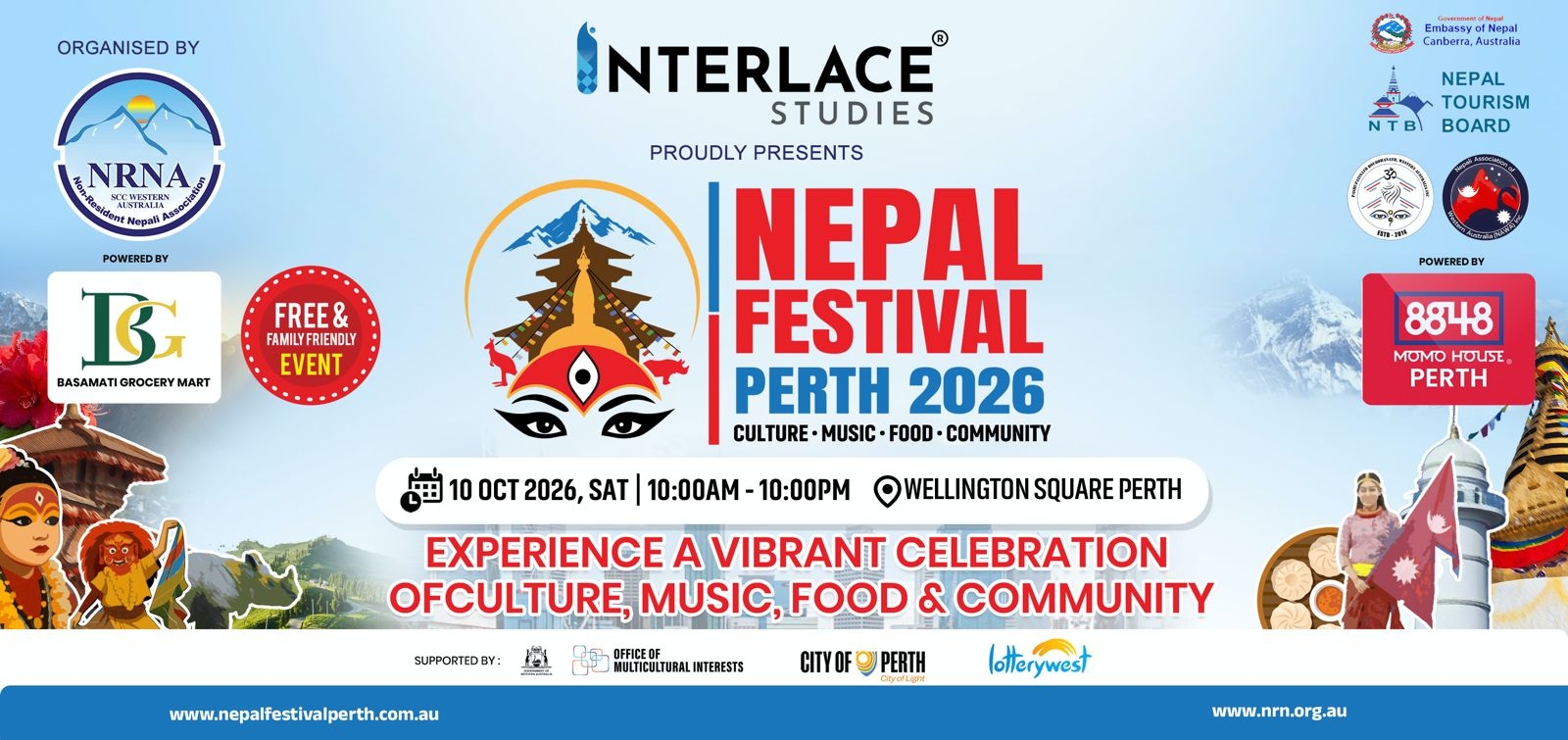 Nepal Festival Perth 2026 FestivalOct 10, 2026 10:00 AM · Perth / Western Australia · 227 views
 -
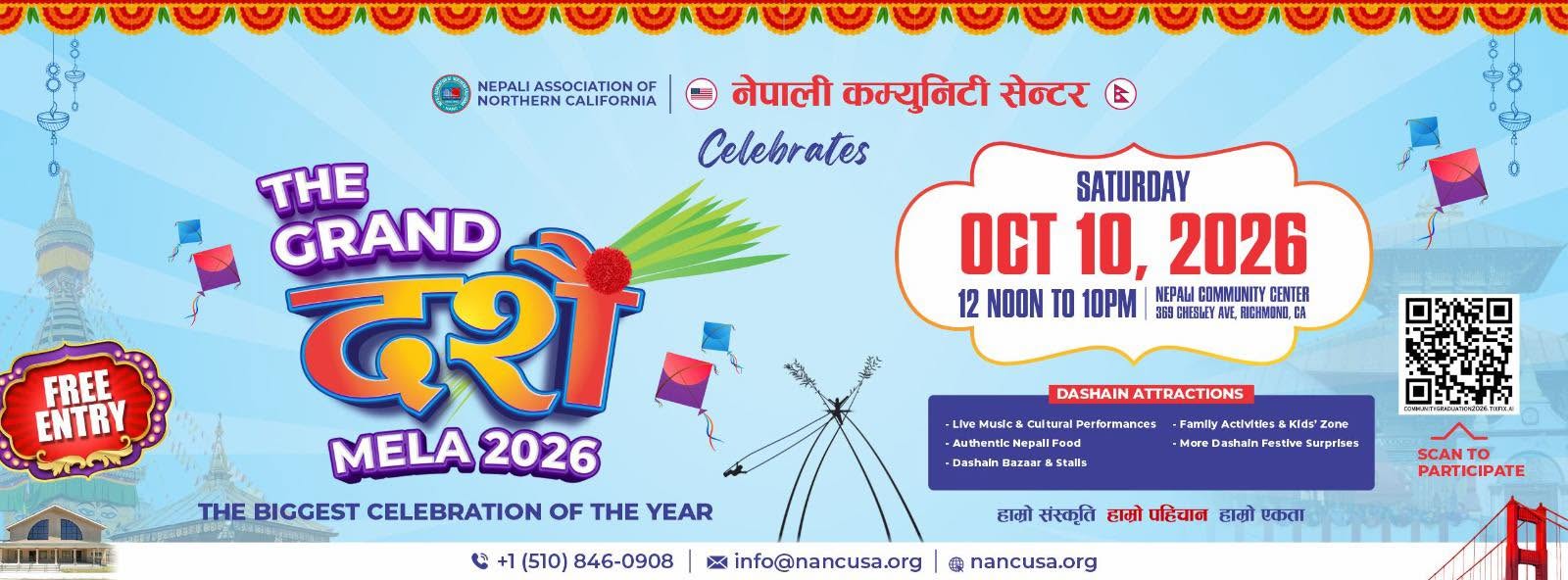 Grand Dashain Mela 2026 FestivalOct 10, 2026 11:00 AM · Bay Area / Northern California · 216 views
 -
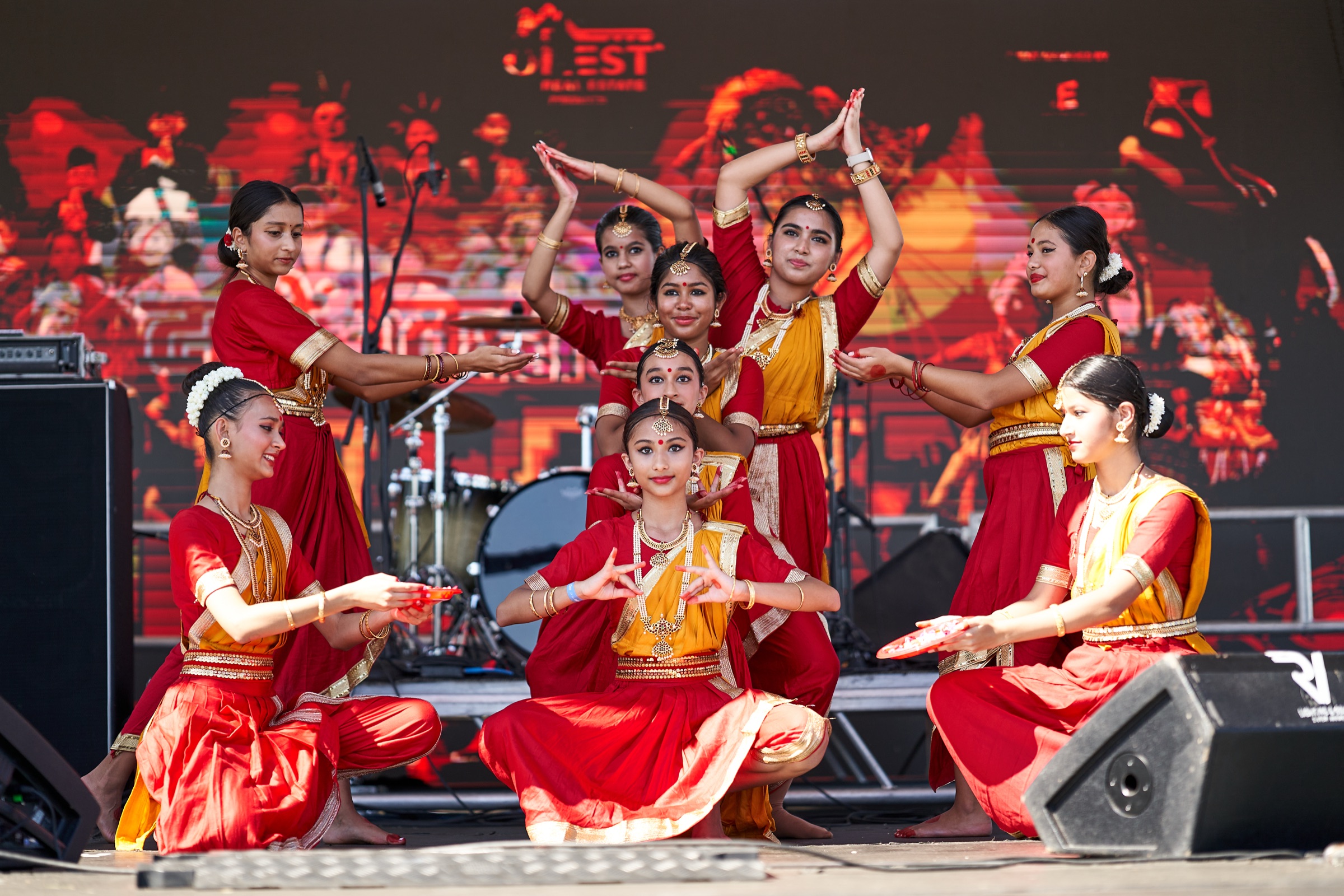 Oct 11, 2026 11:00 AM · DMV / Greater Washington · 229 views · Dashain
 -
 Dashain Festival Fulpati PartyOct 17, 2026 10:00 PM · Greater London · 190 views · Dashain
-
✓Vianet Communications OtherKathmandu · · 287 views
-
Aama Lama RestaurantMalden, MA · · 244 views
-
Ailaa Himalayan Bar & Grill RestaurantStoneham, MA · · 247 views
-
Ailaa Himalayan Bar & Grill RestaurantBedford, TX · · 222 views
-
Annapurna Curry & Sekuwa House RestaurantManchester, NH · · 225 views