IN NEED OF:Interim Constitution Fifth Amendment!!
After all this DRAMA, I want to look into our CONSTITUTION Myself, so if you guys have Copy of Interim Constitution fifth amendment (where President is mentioned)!! I have till 3rd amendment, where President is not mentioned!! Thx in advance!!
geda_gudi · May 6, 2009 8:16 PM · 10,671 views
Here it is.. www.unmin.org.np/downloads/keydocs/2008-07-15-Interim.Constitution.Fifth.Amendment.ENG.pdf http://light.sajha.com/sajha/c...
yakku · May 6, 2009 8:38 PM
Thank you for the link.... also if you have the FINAL Constitution itself let me know, I can come to conclusion by this too.
geda_gudi · May 6, 2009 8:55 PM
If you are curious about constitutional provision on the appointment of COAS, you have to check the forth amendment to the constitution.Here is the final draft of the constitution (before any amendments) - The Interim Constitution of Nepal, 2063 (2007) www.worldstatesmen.org/Nepal_Interim_Constitution2007.pdf And, here is the link for forth amendment - http://www.unmin.org.np/downlo... The key points are: In Article 144 of the Constitution, (1) The following Clause (1A) has been added to Clause (1): “(1A) The president shall be the Supreme Commander of the Nepal Army.” (2) The words “by the Council of Ministers” in Clause (2) have been replaced by the words “by the President on the recommendation of the Council of Ministers”.
yakku · May 6, 2009 9:16 PM
Thanks again, i'll do my research now ;-)
geda_gudi · May 6, 2009 9:27 PM
INTERIM CONSTITUTION OF NEPAL, 2063 (2007) PART 5 EXECUTIVE 37. Executive Power: 1) The executive power of Nepal shall, pursuant to this... Read More Constitution and other laws, be vested in the Council of Ministers. (2) The responsibility of issuing general directives, controlling and regulating the administration of Nepal shall, subject to this Constitution and other laws, lie in the Council of Ministers. (3) The executive functions of Nepal shall be taken in the name of the Government of Nepal. (4) Any decision, order or implementation warrant to be issued in the name of the Government of Nepal, pursuant to clause (3) above, shall be authenticated as prescribed by law 38. Constitution of Council of Ministers: (1) The Prime Minister and the Council of Ministers under the chairpersonship of the Prime Minister shall be constituted by political consensus. Explanation: For the purpose of this Constitution "political consensus" means the political consensus reached between the seven... Read More parties- Nepali Congress, NCPN(UML), Nepali Congress (Democratic), Janamorcha Nepal, Nepal Sadbhawana Party (Anandidevi), Nepal Majdur Kisan Party, Samyukta Bam Morcha Nepal and NCP(Maoist) on 22 Kartik 2063 (November 8, 2006). (2) If consensus cannot be reached pursuant to clause (1), the Prime Minister shall be elected by a majority of two-thirds of the members of the Legislature –Parliament. 60. Restriction on discussion: (1) No discussion shall be held in the Legislature-Parliament on a matter which is under consideration in any court of Nepal, and about anything done by a Judge in course of performance of his or her judicial duties. Provided that nothing in this Article shall be deemed to hinder... Read More the expression of opinion about the conduct of a Judge during deliberations on an impeachment motion. (2) The provision made pursuant to clause (1) above, shall also be applicable to the Constituent Assembly. PART 19 EMERGENCY POWER 143 Emergency Power: (1) If a grave crisis arises in regard to the sovereignty or integrity of Nepal or the security of any part thereof, whether by war, external invasion, armed rebellion or extreme economic disarray, the... Read More Council of Minister of the Government of Nepal may, by Proclamation, declare or Order a state of emergency to be enforced in any specified part or the whole of Nepal. (2) The Proclamation or the Order issued under clause (1) above shall be laid before the meeting of the Legislature-Parliament for approval within a month from the date of its issuance. (3) If a Proclamation or Order laid for approval pursuant to clause (2) above is approved by a two-third majority of the Legislature- Parliament present at the meeting such proclamation or order shall continue in force for three months from the date of its issuance. PART 20 PROVISION REGARDING THE ARMY 144. Formation of Nepal Army: (1) There shall be a Nepal Army in Nepal as an institution. (2) The Council of Ministers shall appoint the Commander-in-Chief... Read More of the Nepal Army. (3) The Council of Ministers shall control, mobilize and manage the Nepal Army in accordance with the law. The Council of Ministers shall, with the consent of the political parties and by seeking the advice of the concerned committee of the Legislature-Parliament, formulate an extensive work plan for the democratization of the Nepal Army and implement it. 147. Management and Monitoring: The other arrangements pertaining to the management and monitoring of the army and its arsenal shall be done in accordance with the "Comprehensive Peace Accords" (Bishtrit Shanti Samjhauta) concluded between the Government of Nepal and Nepal Communist Party (Maoist) on 5 Mangsir 2063 (November 21, 2006) and... Read More the agreement regarding the ‘Monitoring of Arms and Army Management' reached on 22 Mangsir 2006 (December 8, 2006). 158. Power to Remove Difficulties: If any difficulty arises in connection with the implementation of this Constitution, the Council of Ministers may issue necessary Orders to remove such difficulties, and such Orders shall have to be endorsed by the Legislature-Parliament or the Constituent Assembly within a month. PROVISIONS RELATED TO THE PRESIDENT OF NEPAL Bill on Amendments to the Interim Constitution, 2007 (B.S. 2063) - FIFTH AMENDMENT Preamble: As it is desirable to make amendment in the Interim Constitution of Nepal 2007, the Constituent Assembly, in the capacity of the Legislature-Assembly pursuant to... Read More Article 83 of the Interim Constitution of Nepal 2007, issues this amendment. 1. Brief Title and Commencement: (1) This amendment shall be known as “The Interim Constitution of Nepal, (fourth amendment), 2008 (B.S. 2065)”. (2) This amendment shall come into effect immediately. ~*~*~*~*~*~**~*~*~*~**~ The forth amendment amends the above articles 37, 143 and 144 activating the power of the president.
santoshgiri · May 6, 2009 10:18 PM
The law is unclear in the dismissing power and authority of the president in regards to the Amry Chief. However, whenever there is a vaccum of Law, the "Nepal Acts Interpretation Act 2010" applies. The act mentions clearly that the authority granting appointment shall have the power to dismiss. Therefore, the President-who has the authority to appoint pursuant to Fifth amendment has the sole authority tofire the army chief NOT the Prime Minister. The Council of Ministers consists of all Ministers - A Full Cabinet. Here, 4/5 parties representing in the Cabinet did not support the notion to dismiss the army chief. Therefore, t is a minority decision, which is again against the notion of Democratic Norms. Finally, whenever there is a legal vaccum or need of interpretation of statute, the Supreme Court comes into play as the SOLE AUTHORITY TO INTERPRET LAWS. Therefore, The Supreme Court will define the situation. Likewise, Supreme Court has the right to call an Amicus Curie in matters related to National Inerest, as in here. Amicus Curie may comprise of national and international legal experts.
santoshgiri · May 6, 2009 10:26 PM
Yo kura haru Maobadi ajha communist vanaundale bujhdaina. Chhu ya.
aman · May 6, 2009 10:36 PM
But isn't the Granting Authority is CABINET ?? President shall after recommendation of Prime Minister right??? How is it minority decision? I feel Cabinet took a decision right??
geda_gudi · May 6, 2009 10:46 PM
geda gudi, Forth amendment clearly mentions : " The President on the recommendation of the Council of Ministers shall appoint the Commander-in-Chief". It's nowhere mentioned in the constitution whether the recommendation is binding or not. Let's wait for what supreme court has to say there. And, as Santosh giri explianed, the authority granting appointment shall have the power to dismiss. The cabinet did two decisions there: fired CAOS Katwal from the post and appointed Khadka as COAS. As per 144(2) in forth amendment, cabinet can't make the final call on dismissing or appointing COAS; the decision has to be taken by the President. President (not cabinet) is the only authority to communicate to CAOS about the appointment or dismissal according to the constitution. The proper channel would have been : the cabinet making the decision and forwarding it to the President for implementation. In that case, the President would have been in trouble because the constitution is not very clear about whether the president can reverse the decision made by the cabinet. Here the minority member of the cabinet (where only one third members were present) took the decision on sacking one CAOS and appointing another one. Rather than forwarding the decision to the President for implementation, they forward it to the army headquarter. For me, the move made by Maoist is more like : I am one of the advisors of Obama office to recommend someone for Surgeon General. Rather than forwarding my opinion to Obama, I send a letter to Sanjay Gupta notifying him that he has been appointed Surgeon General by me and copy the message to Obama. :-) Just my two cents....
Yakku · May 7, 2009 12:31 PM
geda_gudi...sambhidhan ko pachau sansodhan padi sakiyena bhanya...khoi k conclusion niskiyo ta??
deshbhaktanepali · May 7, 2009 1:51 PM
This conversation is preserved exactly as it was on the original Sajha.com and can't accept new replies.
Start a New DiscussionYou might be interested in...




-
Room Available for Rent USD 850.00Melrose, MA ·
-
One bed room available for rent USD 1,300.00Germantown, MD ·
-
Malden, MA, United States · Reposted Originally posted
-
Big Room with Parking Next to bus stop USD 1,100.00Everett, MA ·
-
Rooms Available for Rent USD 2,700.00Reston, VA ·
-
 Oct 4, 2026 7:00 PM · Boston / New England · 518 views
 -
 Nepal Festival Perth 2026 FestivalOct 10, 2026 10:00 AM · Perth / Western Australia · 227 views
 -
 Grand Dashain Mela 2026 FestivalOct 10, 2026 11:00 AM · Bay Area / Northern California · 215 views
 -
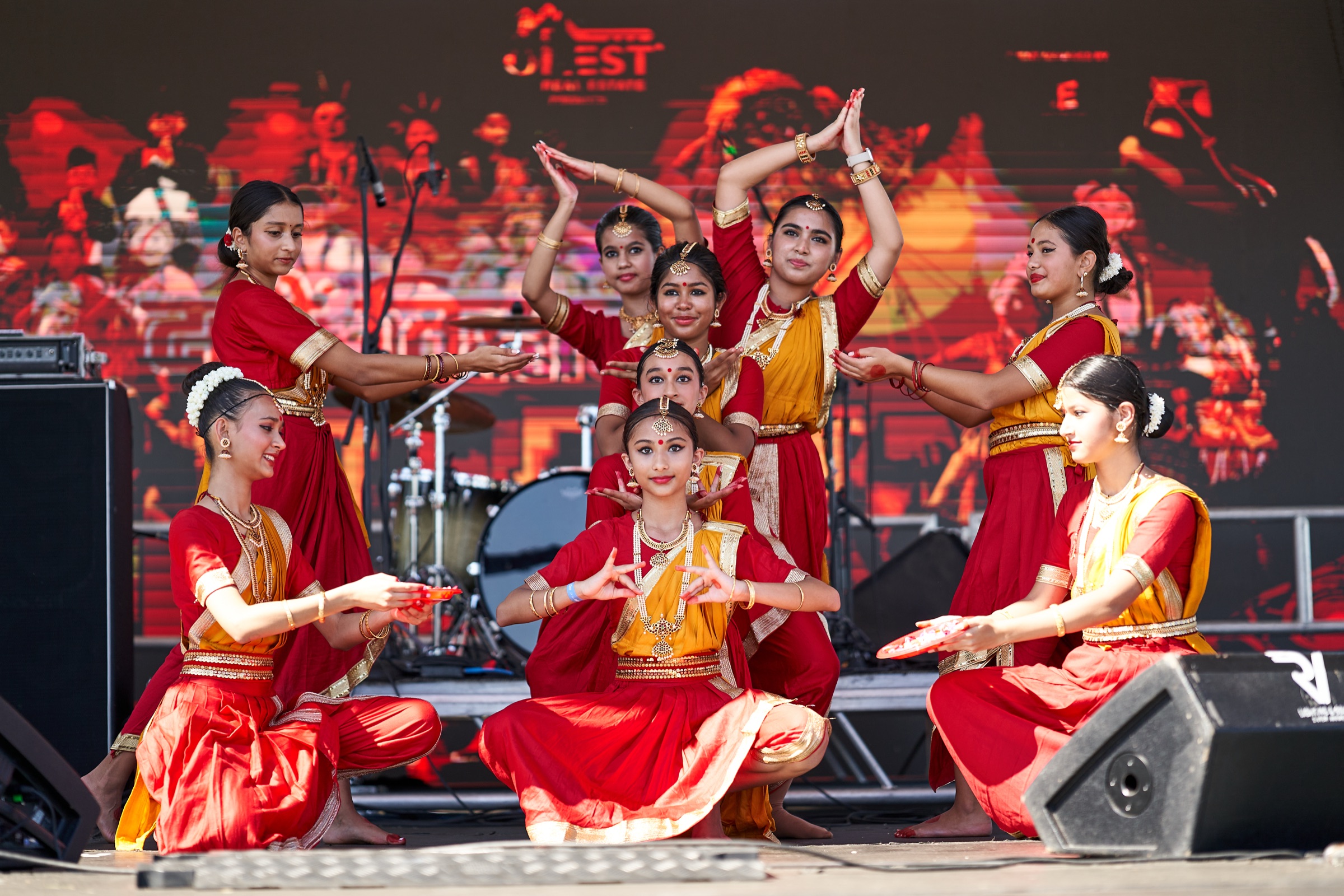 Oct 11, 2026 11:00 AM · DMV / Greater Washington · 228 views · Dashain
 -
 Dashain Festival Fulpati PartyOct 17, 2026 10:00 PM · Greater London · 189 views · Dashain
-
✓Vianet Communications OtherKathmandu · · 287 views
-
Aama Lama RestaurantMalden, MA · · 244 views
-
Ailaa Himalayan Bar & Grill RestaurantStoneham, MA · · 247 views
-
Ailaa Himalayan Bar & Grill RestaurantBedford, TX · · 222 views
-
Annapurna Curry & Sekuwa House RestaurantManchester, NH · · 225 views