The Exchange at Halesi : A Sacred Place and a Societal Context
The Blessing (and Curse) of Shiva Ethan Gohen Academic Director Christina Monson S.I.T. Nepal Spring 2008 1. Introduction Halesi is a small, but growing village located in the Khotang District of Eastern Nepal. In many ways it is rather normal. As is typical in this area of Nepal, its inhabitants are mainly Rai Hindus, although there is a substantial community of other Hindu castes as well. Less typically, there is a small, but very important Tibetan Buddhist Monastery in Halesi. The reason for this monastery is even less typical still. In the rocky terrain around Halesi there are many caves. But in the central rocky, tree covered hillock of Halesi bazaar there is one cave of particular importance. By Hindus it is called Halesi. It gave the village its name. By Tibetan Buddhists it is called Maratika. This cave, which is a naturally formed cavity in every sense of the word, is thick with spiritual significance. It is uniquely important religious site for both Hindus and Buddhists though, as yet, the events that transpired here are not well known. But these events, as well as its very naturalness, make Halesi one of the most important spiritual sites for these two religions and perhaps the world. It is a great treasure in the hands of a little village. The purpose of this study is to illuminate what ways the presence of such a significant temple has and will continue to affect the lives of the people in Halesi. It begins with the necessary historical and temple information to provide a basis for understanding and then goes on to look at more recent phenomenon and the dialogue in Halesi, a multifaceted exchange of belief and desires. One man, who recognizes the inextricable connection between Halesi’s fate and the very presence of the temple, jokingly referred to this relationship as the blessing of Shiva. I would add that not everything that has happened in Halesi has been easy for its people. At certain times, the presence of the temple may have seemed like more of a curse than a blessing. This paper is an attempt to look at the way that religious and practical realms interact in the little known story of one very important place. 2. Methodology After arriving in Halesi, my primary means of understanding this place has been through casual interviews. I have tried to talk to representatives of very diverse social perspectives in Halesi society in order to get a rounded picture and allow the people themselves to identify the issues and distinctions that were a reality to them. I worked with a translator to conduct most of my interviews. The communicational flaws of translation are obvious. But there is still more to say about my quest for information through the medium of a Nepali person. Nepali people are highly sensitive to caste and class hierarchies and may have edited some attitudes according to the class and caste identity of my translator. Fortunately, my main translator was an outsider from this community, lessening the potential severity of this. One bias evident in my fieldwork is that most of my interviews come from male informants. This is because women, more often than men, were very busy in Halesi. Even if they were present, they often deferred to the men or were dominated by the men in speech and thus refrained from contributing much. 3. The Myths, Discovery, and Ordering of Halesi It is not the purpose of this paper to give a full mythology and history of Halesi temple and the surrounding area in the centuries prior. I am more concerned with recent history, present, and future projection. For a fuller explanation of history and myths in Halesi see Buffetrille 1994, in English language, and for stories especially see Bhattarai 1984, in Nepali language. However, some familiarity with the history and stories that define Halesi are necessary to understand these more recent happenings and I will give a general overview in this section using information gathered from by own fieldwork, reinforced by the previous work of others. 4. Shiva and the Caves in Halesi There are several caves in Halesi, some of which connect directly to the story of Shiva, which is told by many people to varying degrees of specificity. The two main caves are located in one forested hillock in the center of Halesi. Shiva and his family first came to Halesi when running from a monster that wished to kill him. He fled into one of these caves, which I will refer to as the Lower Cave since it has several names according to tradition. This cave opens onto the low fair grounds of Halesi. Inside the cave, Vishnu defeated the monster while Shiva, bursting through the ceiling of the cave, fled to safety in another cave near to Argaule, a town on the road from Lamindada to Halesi. The Lower Cave has features that tell the story of this event, although some are interpreted differently by different traditions. A large stone in the opening is sometimes called Shiva’s ox, which guarded the cave from the monster. It is alternatively called the body of the dead monster himself. The pattern of his intestines can be seen stringing over the arc of the cave’s ceiling overhead. In the back of the cave the ceiling opens up, letting in light through a large vertical channel from near to the top of the exterior hillock. The footsteps of Shiva are clearly imprinted in the side of the cave as he fled upward and blew out this hole according to the story. Shiva returned to Halesi when everything was safe and made his home with Parbati, his wife, in the upper cave. This is the main Shiva temple in Halesi, where the power and presence of Shiva and Parbati are felt. They remained here until the current era of humanity. Sometimes they would leave the cave disguised as Kiranti children and play in the forest or down by the banks of the Sun Khoshi and Dhudh Khoshi rivers, two major rivers which flow on both sides of Halesi region down from the mountainous north. Inside the cave is a natural Shivalinga, a stalagmite that rises from the cave floor. This is considered to be the embodiment of Shiva. There is another rock that is believed to be the embodiment of Parbati. There are in fact many rocks and passageways imbued with special powers inside this cave. But the Shivalinga and Parbati are the main objects of worship in the cave. Many people come simply to do darsan, meaning “to greet god.†Others come to ask for blessings. Another common practice is called bhakal, where a devotee asks for something and promises offerings to Shiva if, by his grace, that wish comes to be. 5. Padmasambhava in Halesi Specifically Buddhist history in Halesi begins with the story of Padmasambhava, or Guru Rinpoche as he is referred to by Tibetan Buddhists. Compared to the story of Shiva this is relatively recent time, in the time of humans. There exists both a biography of Padmasambhava and Mandarava that describe their experience in the cave of Maratika, its Tibetan name. Padmasambhava’s biography describes Maratika as a place where a “rain of flowers constantly falls. Enveloped in a dome of rainbows, the scent of incense permeates the air. It has a grove of sandalwood trees and is blessed by Lords of the Three Families†(Tsogyal 1999, pp. 45). Mandarava’s biography describes Maratika as a “sacred power spot where the outer, inner, and secret mandalas were complete… a wish fulfilling jewel that surpasses any other sacred place in India for the practice of spiritual attainment†(Chonam and Khandro1998, pp. 152). Padmasambhava came to Maratika with his consort, the Indian Princess Mandarava, to perform the practice of vidyadhara longevity. After three months of practice they had a vision of the Buddha of Long Life, Amitayus. Buddha blessed them, pouring from a “nectar-filled vase of immortal life†into their open mouths (Tsogyal 1999, pp. 45). He made them “immortal pure awareness holders†(Chonam and Khandro1998, pp. 153). Following this they practiced the Hayagriva Mechar Cycle on the union of Hayagriva and Vajravarahi in order to eliminate any further obstacles. Upon successful realization, Mandarava “compiled a treasury of more than a thousand extensive and concise longevity methods, including essential pointing-out instructions†(Chonam and Khandro1998, pp. 153). For Buddhists, Halesi cave is most famous as a special spot for long-life practices. This is particularly true of the site of the Parbati stone, called chhepuma in Tibetan. The water that drips from the stones in several places throughout these caves, originating from the rock itself, is collected and considered to be the equivalent of the Amitayus long-life nectar. It is called umbrik in Nepali, the anti- poison. It is also called jal, holy water, and is valued by Hindus as prasat, a god- blessed substance. The lamas at Maratika prepare a pill with this umbrik and call it the “Maratika Long Life Pill (‘Liberation of Tasting’).†6. The Rai People in Halesi The area of Halesi, and the entire Khotang district in Eastern Nepal as well as parts of Solu, is remembered by Rai inhabitants as their original homeland. The Rai are a mongoloid ethnicity of Nepal. They identify with a unique cultural tradition called Kirant (which also encompasses Limbu people). They use this term synonymously with varieties of Rai language, religion, and as an alternate name for the Rai people themselves. The Rai people also call themselves Bhumi Putra, a Sanskrit term that means “Sons of the Earth.†It is a worship and closeness to nature that the Rai pride themselves on. However, since the nation of Nepal was unified for the first time by Prithvi Narayan Shah in 1769 much of this distinction has been lost. The Rai people identify themselves as a Hindu people with the same beliefs as other Hindus in Nepal. This is because Prithvi Narayan Shah knew that the only way to politically unify such a diverse country as Nepal was to unify it culturally as well. For ideological reasons as well, he envisioned a purely Hindu kingdom that would distinguish Nepal from a tainted India (Whelpton 2005, pp. 56). Rai informants told of the clever tactics with which he undermined their own Kirant beliefs. Local Rai leaders, hired into the ranks of the new kingdom (and thus dependent on it), were made to enforce Hindu worship in their communities and replace the Kirant cosmology. Rai people still celebrate two unique annual festivals that they say are links to their past traditions. Ubowle-Chadipurne (The first term translates to “going up hill,†a recognition of the difficulty ahead. The second term translates to “full moon dayâ€) takes place around May and the Nepali month of Baisak, but shifts according to the lunar calendar. This is an Earth worship puja held to bless the planting season, which will determine their fortune for the rest of the year. The second festival is Udhaule-Dhanipurne. It is the day of the new moon and the harvest, held around November. At this time the Rai give thanks to the Earth for their food. It is a happy time when plenty can be enjoyed. However, a characteristic of both these festivals is community wide music making and circle dancing, an event that is fun for everyone. Despite these instances of “Earth worship,†the Rai in Halesi say that the world’s primary god is Shiva, Paruhang in Kirant language. Shiva’s wife Parbati, known as Sumnina in Kirant, is also revered by them. These two Hindu deities are the main deities of Halesi Cave. This area, previously a Rai Kingdom, used to be almost entirely forested and the Rai people, the only inhabitants of this wild territory, were famous huntsmen. 7. Discovery of Halesi The story of how Halesi temple was rediscovered in more recent history, the late 18th century, involves one of these famous Rai hunters. It is popularly told by the inhabitants of Halesi. Bagbashi Rai was hunting in the rugged territory around Halesi with his dog when he spotted a golden deer with three eyes and one antler. He chased the deer through the forest until it fled into the enormous black opening of a cave that Bagbashi had never seen before. It was difficult for him to descend into the cave, but when he finally did, he discovered that the cave was the home of Shiva. The deer had in fact been Shiva himself exploring the outside, but inside he was manifest as a Shivalinga, a stalagmite on the cave floor. 8. The Mahanta Giri Line At this time, the Rai were a fully Hindu people. For several years, nothing was officially done with the cave. But after a while it was decided, some say relayed by Shiva himself, that there should be a pujari, priest, to manage worship at this cave. According to Hindu tradition priests are always either of the Brahmin or Jogi castes. Therefore the Rai could not be priests over this temple and a Giri family was sent for from another district. The first Giri pujari of Halesi was named Manohar Giri. In the early 19th century, he and his family were appointed by the King of Nepal, Shri Shri Shri Maharaje Griban Yuddha Brikam Saha Bahadur Sumser Jung, and confirmed with a Tama Patra, an engraved metal plate that gave them the right to officiate in Halesi. The land around the temple was declared guthi land, a term that refers, in this case, to national land reserved for the preservation of a religious site. Other uses, such as living or farming, were prohibited. After this declaration, The Rai inhabitants who had since settled nearer to the temple were displaced down a steep hillside descending from the ridge top of Halesi down to the Sun Koshi, a major river that flows out of Solu District. They formed the sprawling village of Kattike, which is even now known as a Rai village. The history of the Giri family in Halesi is not flattering. It lasted several generations, roughly two hundred years, the son of the family acting as the bal pujari, child priest who performed the actual worship, and his father as the authoritative priest. Locals say that the Giri family claimed Halesi as their own private kingdom. They seized all guthi lands for their own farming and forced all local non-Giri families to contribute free labor in their fields. The workers were hardly even fed for their service. Many people I met, including a high caste Chhettri man, remember working in the Giri fields. People who worshipped at the temple typically brought offerings of rice, money, and livestock. All this was claimed by the Giri family for their personal use. For a long time, the Giris were the only people in Halesi who ate rice, since it is too dry in Halesi to grow there. The temple itself was only opened to worshippers and pilgrims at the Giri family’s pleasure. The temple was so profitable that they maintained power in Halesi using the very wealth that the temple generated. The temple was used as a means for the oppression of people and the Giris never intended to give that power up. Until the 1990’s, this reign was absolute. to be continue........!
JPEG · May 3, 2009 5:16 PM · 26,506 views
Official website of Maratika Monastery, Halesi, Khotang, Nepal - Maratika Caves --> Home Documentation HH Dalai Lama HH Trulshik Rinpoche HH Sakya Trizin Rinpoche HH Dudjom Rinpoche HH Dilgo Khyentse Rinpoche History Maratika Mandarava Maratika Rinpoches Dorje Lopon Rinpoche Letter of Authorization Ngawang Chophel Rinpoche Ngawang Tenzin Chogyal Rinpoche Prediction Letter Lineage Masters Monastery Chimey Takten Choling Monastery School Sacred Festival Maratika Sacred Medicine Religious Master visited in Maratika Projects Support Letter Monks Sponsorship Preservation and Renovation of Monastery Shedrup Chimey Choling Project Photo Gallery Lineage Master Maratika Caves Maratika Ceremonies Maratika Monastery Maratika Rinpoche New Year (Losar) Teachings Contact Choose Language Maratika Caves << Start < Prev 1 Next > End >> 2009 © Maratika The Supreme Holy Place Of Immortal Life. All Rights Reserved. Powered by MandalaGraphics.
JPEG · May 11, 2009 7:00 PM
More pictures of Halesi caves aka Maratika By Hindus it is called Halesi. It gave the village its name. By Tibetan Buddhists it is called Maratika. The myth said sometimes Lord Shiva and Parbati would leave the cave disguised as Kiranti children and play in the forest or down by the banks of the Sun Khoshi and Dhudh Khoshi rivers, two major rivers which flow on both sides of Halesi region down from the mountainous north. http://maratika.org/index.php?... Last edited: 11-May-09 07:14 PM
JPEG · May 11, 2009 7:11 PM
An extraordinary example we all should follow: He studied in India and the United Kingdom, joined the United Nations, and traveled to over 60 countries, but finally decided that his roots were in Khotang. He returned to his native district to become a farmer. Madan Rai, 58, realized in 2004 that development begins from the village. "My long experience taught me that a village can set a development model," Rai, an agriculturalist by profession, said. Rai's passion for developing the village has to do with a childhood filled with hardship and hope alike. Son of a British army serviceman, Rai was brought up in a largely illiterate family. "I don't know why, but my grandfather hated education and tried to cultivate the same hatred in us." But Rai developed early a longing for education. By age nine he had a burning desire to go to school. "As my friends joined school I simply could not resist the longing and started to insist to my mother to send me to school," he said. With the completion of schooling in his village, Rai came to Kathamndu and got himself admitted at Tri Chandra College, where he pursued science. "I think it was a turning point in my life and I haven't looked back ever since," Rai said. He later on went to India to study for a Bachelors in Agriculture Science. After completing his degree he got an offer at the UN as an agricultural specialist. " Since then I have traveled to more than 60 countries, where I taught villagers about agriculture." But that teaching, in turn, taught him something invaluable: "Nepal's hill districts contain baskets of money and should be harnessed some time in my life." Soon he landed in Khotang. "Actually, Khotang holds a lot of potential for agricultural development because its soil is still virgin and is good for cabbage, cauliflower, green peas, radish, carrots and other produce like spices, ginger, turmeric," he said. With projects forming in his mind, Rai first established the Nahima Agriculture Research Center, an agricultural farm at district headquarters Diktel, in 2004. "While establishing the center, I invested some Rs 10 million under the name of Khotang Development Forum," he said. Ever since it was established, the center has been providing agricultural training to farmers in the district. "We trained 40 youths in the first batch of our program," he said, adding, "The youths subsequently started visiting remote villages, training farmers in how to grow various agro-products." For Rai, an Ashoka Fellow for 2006, transportation, communication and electricity are crucial factors for a village to continue developing. Now based in Lalitpur, Rai shuttles between Khotang and Kathmandu, to lobby government authorities for transportation, communication and electricity in his district. "We have provided electricity to 26 out of the 76 Village Development Committees (VDCs) in the district," he said, adding, "Electricity is fast picking up and we plan to provide electricity to all the VDCs in five years." Rai and his team are encouraging people in the villages to go for solar energy, besides micro-hydro, to meet the growing demand for power. Rai, who was also winner of the World Bank's "Let's do something now" program, has a plan to computerize the VDCs once electricity reaches every village. "That way, village youth will get acquainted with the world through the internet, and they won't go astray," he said. He also conducts some personality development and other awareness programs in the district. "I think it's very much important to empower village people in order to develop a nation," he said, adding, "Many projects in villages fail to meet their targets due to lack of awareness among the people." We need people like Madan Rai to run Nepal. This is one true example of extraordinary person whom we all should follow. With, jpg
JPEG · May 16, 2009 7:05 PM
This conversation is preserved exactly as it was on the original Sajha.com and can't accept new replies.
Start a New DiscussionYou might be interested in...






-
Room Available for Rent USD 850.00Melrose, MA ·
-
One bed room available for rent USD 1,300.00Germantown, MD ·
-
Malden, MA, United States · Reposted Originally posted
-
Big Room with Parking Next to bus stop USD 1,100.00Everett, MA ·
-
Rooms Available for Rent USD 2,700.00Reston, VA ·
-
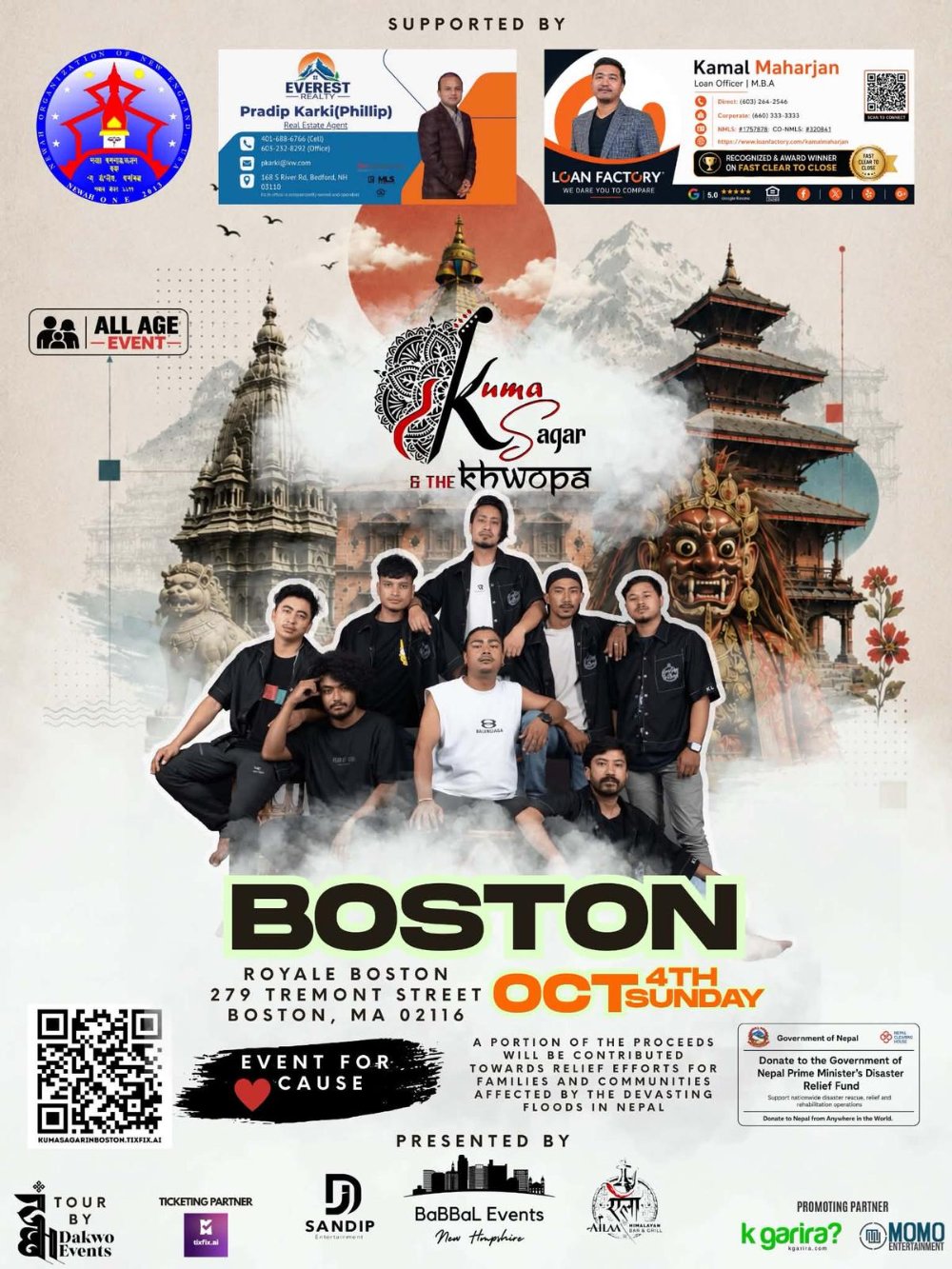 Oct 4, 2026 7:00 PM · Boston / New England · 515 views
 -
 Nepal Festival Perth 2026 FestivalOct 10, 2026 10:00 AM · Perth / Western Australia · 225 views
 -
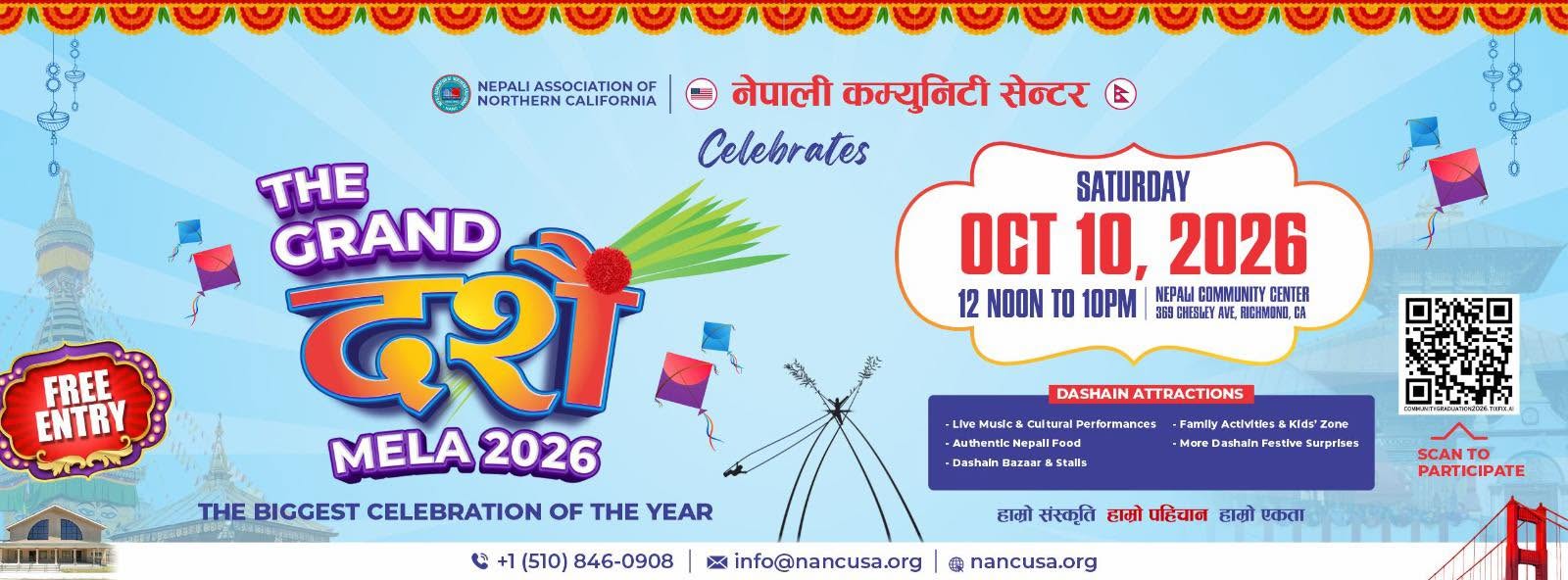 Grand Dashain Mela 2026 FestivalOct 10, 2026 11:00 AM · Bay Area / Northern California · 214 views
 -
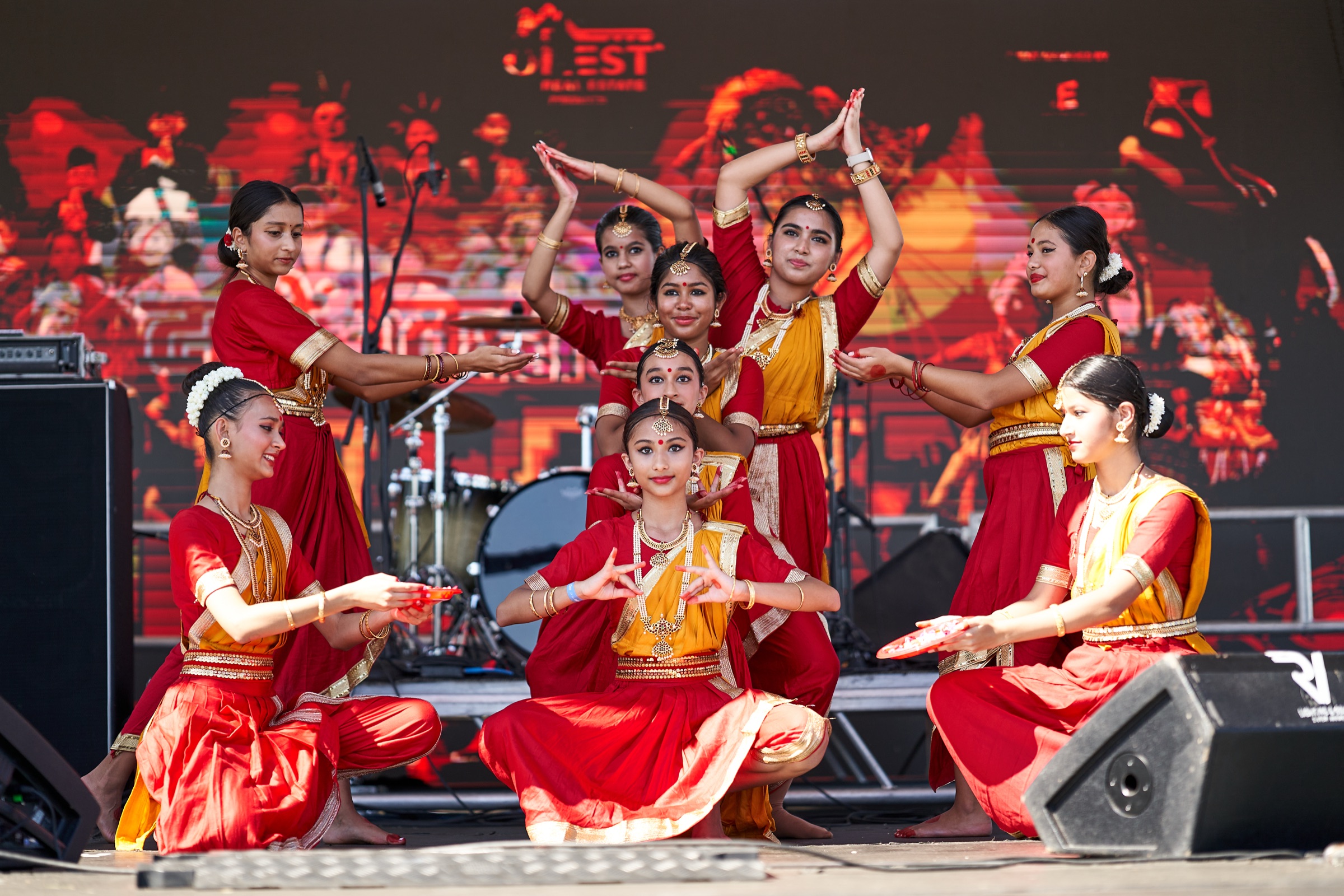 Oct 11, 2026 11:00 AM · DMV / Greater Washington · 227 views · Dashain
 -
 Dashain Festival Fulpati PartyOct 17, 2026 10:00 PM · Greater London · 188 views · Dashain
-
✓Vianet Communications OtherKathmandu · · 285 views
-
Aama Lama RestaurantMalden, MA · · 243 views
-
Ailaa Himalayan Bar & Grill RestaurantStoneham, MA · · 246 views
-
Ailaa Himalayan Bar & Grill RestaurantBedford, TX · · 221 views
-
Annapurna Curry & Sekuwa House RestaurantManchester, NH · · 224 views