THE ORIGIN OF HINDU RELIGION
THE ORIGIN OF HINDU RELIGION Birth of Hindu religion: There are different opinions regarding of the birth of Hindu religion. There is literally a tug of war between the scholars’ one in favour of Dravidian origin and other of Aryan origin. There is hardly any third opinion on that though a small section feels that it has originated from indigenous tribal of India. This is because no great man of this origin had ever tried to write or researched to claim that Hindu religion is born from their indigenous tribal faith. First of all the word Hindu it self has root to non-aryan Kirata or Borok origin with Sindu or Chindi river through the Indus civilisation, is not at all the Indo-Aryan one. Secondly the theory of Hindu religions birth from indo-Aryan faith is null and void by the following facts. Let us look at the list of names of Gods which the Indo-Aryan people had brought when they invaded Indus civilisation. Rig-veda has all the names of god which the Indo-Aryan used to worship when they first came to India. Their faith and philosophy were based on these gods only. The rituals, procedure and hymn etc were detailed in the sacred text of Vedas. Some of the primary and powerful gods mentioned in the Rig-Vedas are Indra, Agni, Varun, Vrihaspati, Brahma, Arundhati, Soma, Vayu, Aswin, Rhitu, Marut, Rudra, Ribhus, Savitar, Brahmanspati. But in the present day Hindu religion none of the Vedic god is worshipped in India. The Brahma is the only one ha temple at Puskar in Rajasthan, and he too does not have any day fixed through out a year. There is no god of Aryan or Vedic origin in the list of Hindu Gods of modern India, other than doubtfully the Vishnu which is considered to be origin of Dravidian. On the contrary none of the Hindu gods of modern India is mentioned or had a place in Vedas. These facts clearly prove that the Hindu religion and its gods are neither born from Aryan faith nor derived from Vedic gods and philosophy. http://tripurasociety.org/hind...
JPEG · Apr 20, 2009 10:12 AM · 98,480 views
Suggestion: Very interesting topic. But hard to read whole line specially the paste part (annoying). Can you make it Easy to read?
syanjali · May 1, 2009 9:55 AM
Namaskar folks: Kiratas was the aboriginal of the ancient India and how with the creation of Vedic literaure, Kirata as the aboroginal was term as the low born men, and try to bring these people into fold of Brahamism(Vedic) Hinduism is shown below: According to Srimad-Bhagavatam and Bhagavad-gita, anyone, including so-called low born men, who may take shelter unto the Lotus Feet of Lord Krishna or His devotees, is sanctified by initiation process. kirata-hunandhra-pulinda-pulkasaabhira-sumbha yavanah khasadayahye 'nye ca papa yad-apasrayasrayahsudhyanti tasmai prabhavisnave namah upon translation is; Kirata, Huna, Andhra, Pulinda, Pulkasa, Abhira, Sumbha, Yavana, members of the Khasa races and even others addicted to sinful acts can be purified by taking shelter of the devotees of the Lord, due to His being the supreme power. I beg to offer my respectful obeisances unto Him. (Srimad-Bhagavatam 2.4.18) In the purport of this verse Srila Prabhupada describes the Pulindas as the Greeks, from whom Western civilization has descended, and the Hunas as the Europeans, who later inherited the Greek legacy. The Khasas are the Chinese, or Far-Eastern peoples. The Kiratas are described in the purport as aboriginal peoples from the Kirata province of "old Bharata-varsa." However, it should be noted that Bharata-varsa is the ancient India and comprised of Nepal also. In another place Srila Prabhupada describes Kiratas as synonymous with Nisadas, residents of present-day Africa: Lord Siva seen as tribal(Kirat) God: The kirata people were the worshippers of Siva and they were meat eaters and drinkers and they looked like pillars of gold with their shaven heads. Siva abode is Mt Kailash which was also the regions of the Kiratas. The Origin of Shiva: The word Shiva has root in the Kirata or Borok race, not in the Vedas because Shiva as god is not mentioned in it. Shiva is hybrid of two Kirata words, simani means Gyan or knowledge and Kaiba, means five, i.e. Si+Ba=Siba>Siva>Sibarai>Sibrai . That means a god who has knowledge of five elements of life, that is earth, fire, water, air, and sky, that is cosmic rays which forms the life. That is one who has created life in this world or creator of life in the world. Other meaning can be one who made us perceive or feel five senses in our body, that is who is the soul of the boy. It is this Sibrai converted to Shivai in Sanskrit. From this five shiva is said to have five face and named as “Panchanan.†Tagera Nyingmaphuma is personified as Lord Siva (Kirat scripture) and is also mentioned as Kiratas/tribal God in Ancient Works of Vedic Literature: The scrips in Mahabaharata depicts this: We should recall that as early as the Mahabharata we find the legend of Siva Mahadeva, the Great God, taking the guise of a Kirata, with Uma with him as a Kirata woman, to test Arjuna when he was practising religious penance in the Himalayas: a legend which may have its germs in the following vers of the Sata-rudriya section of the White Yajurveda (XVI, 7): Asau yo vasarpati nila-grivo vilohitah utainam gopa adrsrann vdaharyah: sa drsto mrdayati nah May he who glides away, whose neck is azure, and whose hue is red, he whom the herdsmen, whom the girls who carry water have beheld, may he when seen be kind to us." (Trans. by Ralph T. Griffith, Benares, 1899.) And this is quite a high exaltation of the status of the non-Aryan hill people, the Kiratas, when the Supreme God with his consort was made to take up the guise of a Kirata hunter and his wife Sabari, as Kirati woman. In the episode of Siva meeting Arjuna as Kirata, accompanied by Uma also in the guise of a Sabari or a Kirati woman, in the Himalaya regions, when Arjuna went there to propitiate Siva by his austerities with a view to obtain the boon of the Pasupata weapons from the Great God himself, as narrated in the Kirata-parvan section of the Vana-parvan of the Mahabharata. na tvam asmin vane ghore bibhesi kanaka-prabha upon translation; "O thou that art shining like gold (addressing Siva in the form of Kirata), dost thou not fear in this terrible forest" (IV, 35, 18). So in other word Siva who is considered as Kiratas and tribals God, and in Vedic Hinduism Siva is seen as the supreme God and so if these people were the worshipers of Siva, weren't the Srimad-Bhagavatam and Bhagavad-gita contradicting itself by saying Kiratas and other aboriginal as the low born men. I have some excerpt from "Khaptad Region in Mythology" by Shiva Kaj Shrestha The Naga People and Abrogenious Kiratas: Quoting Bhagabat Purana, Vallava Doval states that Lord Shiva was borned in Naga Tribe. Atkinson (lbid, p. 362) based on facts and local traditions concludes that Khasa, Kiratas, Nagas and Hunas were tribes of "Mountains"(Hima1ayas). It is very possible that the mythological Naga people were Shaka-Magars who were termed as Kiratis in Nepal and Raj-Kiratis in Kumaun in India. In Vayu Purana, Kiratas are mentioned along with "Shabaras" and "Pulandas". In Far-Western Nepal till 30-40 years ago one could hear of "Sabari" salt traded by Saukas or Vuyasis (mongolic people living in Vyasa Himal area). Famous Indian author Suniti Kumar Chatteriji in his book Kirata-Jana-Kriti quotes an ancient prayer (in the 1st page) which is as follows:- "Om! Salutation to Siva, the all good, the Kirata!Om! Salutation to Uma, the mother, the Sabari speaks for itself. It is therefore many scholars also have seen that Siva is the God of Kirata(tribal) and later it was Aryan who took Siva as their own God and Hindunized/Aryanized it so basically Siva is seen more as Veda Hindu God than tribal God. As one scholar said "To begin with, the kipat system and the mundhum are traditionally uncontested metaphors of Kirata culture. Similarly the worshiping of Tagera Nyingmaphuma or the supreme deity was a pan-Kirata symbol. But with the abolition of kipat system and the simultaneous influence of Hinduism, these symbols have lost their strength considerably. Since Tagera Nyingmaphuma, is often personified as Shiva, who is notonly considered tribal God but also one of the Hindu pantheon, he cannot be claimed by the Kiratas as their exclusive God" ---Politics of Culture: A Study of Three Kirata Communities in the Eastern Himalayas), 1999 by Tanka Bahadur Subba According to G.P Singh, "Saivism, Saktism, Tanticism and Visnavism --- the four important sects or forms of Hinduism also became popular amongst the Kiratas. It is very difficult to ascertain the exact period, which marked the emergence of Saiva, Sakti and Trantric cults as popular cults in the kiratas society. However, on the basis of information contained in the literary texts and other collateral evidence it can be easily affirmed that a large section of the Kirata population in ancient times had abiding faith in the worship of Siva, Mother-Goddess or Sakti and Devi, par excellence and in the Tantric practices. Some of them came under the impact of Bhagavata cult too. Siva, generally conceived as a non-Aryan deity, secured a prominent place in Kirata pantheon. It can be roughly asserted that Siva worship must have begum among the Kiratas in the mountainous regions of the Himalayas in pre-Vedic times before the advent of Aryans. That is why, Siva(Kiratesvara=the God of the Kiratas) has been considered as pre-Aryan God. On the basis of an episode as described in the Mahabharata, as well as, the Kiratarjuniyam of Bharavi the Kirata can be identified with Siva." pg. 238, Kiratas in Ancient India by G.P Singh, 1990. Therefore this is one example of pre-Vedic God taken into the Veda religion which is known as Hinduism today. Namaskar, jpg Last edited: 01-May-09 03:28 PM
JPEG · May 1, 2009 12:35 PM
Nepal Coming to Existence So far not many research has been taken by the Nepali scholar regarding Kiratas due to lack of materials or simply did not bothered. Though Nepal history do mentioned Kiratas as one of the ruling dynasty not much has been recorded during Kirats rule till yet, but as of today many foreign scholars have studied this group of people who have reference in the Mahabharata text and Veda scriptures. Without understanding or acknowledging this people contributions in ancient India and Nepal public will not be able to see the connections of religions, practices and even identities that are all linked to the Kirata. A collection of manuscripts from the 18th and 19th centuries, till now unpublished and unstudied by historians, have made possible regarding history of early Nepl and Kirat people. These historical sources are among those collected by Brian Houghton Hodgson – a British diplomat and self-trained Orientalist appointed to the Kathmandu court during the second quarter of the 19th century – and his principal research aide, the Newar scholar Khardar Jitmohan. To start one need to understand the term Kirata. The Kiratas (Sanskrit: किरात) mentioned in early Hindu texts are the tribals or Adivasi of the land with this sanskrit phrase “kiram atati bhramati yah” meaning one wandering over the forests. The name Kirata is for the first time found in the Yajurveda (Sukla Yajurveda, Vajasaneya, XXX, 16; also Krsna Yajurveda, Taittiriya Brahmana, III, 4,12,1). In connexion with the Purusa-medha or ‘Man-Offering’ sacrifice, where a list of all kinds of human beings and animals symbolically or figuratively offered to the gods as sacrifice is given, we find the following passage:– guhabhyah Kiratam; sanubhyo Jambhakam; paravatebhyah Kimpurusam which upon translation will read ‘A Kirata, for the caves; a Jambhaka (long-toothed man?) for the slopes; a Kimpurusa (an ugly man, a wild man, an ape?) for the mountains.’ Then in the Atharvaveda (X,4,14) we have a reference to a Kirata girl (Kairatika) who digs a herbal remedy on the ridges of the mountains:– Kairatika kumarika saka khanati bhesajam:hiranyayibhir abhribhir girinam upa sanusu. ‘The young maid of Kirata race, a little damsel, digs the drug: Digs it with shovels wrought of gold on the high ridges of the hills.’ (Translation by R.T.Griffith.) “Macdonell and Keith have the following note in their Vedic Index on Kirata: ‘Kirata is a name applied to a people living in the caves of the mountains, as appears clearly from the dedication of the Kirata to the caves in Vajasaneyi Samhita (also Taittiriya Brahmana), and from the reference to a Kirata girl, who digs a remedy on the ridges of the mountains. The Manava Dharma-sastra regards the Kiratis as degraded Ksatriyas (ref. X, 44).’ When a non-Aryan or foreign people is describes in an old Indian text as being of degraded Kshatriya origin, there is always an implication that they were, to some extend at least, advanced in civilisation or military organisation”. — Suniti Kumar Chatterji (KIRATA-JANA-KRTI) The Kiratas were described as 'gold-like', i.e, yellow in color (and not dark or black like the Dasas and Dasyus and the Nisadas and other pre-Aryan peoples of the plains). Here's the quote from the the book taken from Kirata-parvan section of Varna-parvan of the Mahabharata. Kairatam vesam asthaya kancana-druma-sannibham "Taking up a Kirata resemblance, like unto a tree of gold" (IV,35,2); dadarsatha tato jisnuh purusam kancana-prabham "Then the Victorious One(Arjuna) saw a Man, shining like gold" (IV, 35,17) na tvam asmin vana ghore bibhesi kanaka-prabha“O thou that art shining like gold (addressing Siva in the form of Kirata), dost thou not fear in this terrible forest” (IV, 35, 18) The Ramayana also mentions the golden color of the Kiratas; thus Kiratasca tiksna-cudasca hemabhah priya-darsanah,antar-jala-cara ghora nara-vyaghra iti srutah (Kiskindhya-Kanda, 40, 27, 28, qouted by N.N Vasu) upon translation is The Kiratas, with hair done in pointed top-knots, pleasant to look upon, shining like gold, able to move under water, terrible, veritable tiger-men, so are they famed. In Yoga Vasistha 1.15.5 Rama speaks of "kirAteneva vAgurA", "a trap [laid] by Kiratas", so about BCE Xth Century, they were thought of as jungle trappers, the ones who dug pits to capture roving deer. The same text also speaks of King Suraghu, the head of the Kiratas who is a friend of the Persian King, Parigha. *It is to be NOTED that Kirat originated from Assyria, same region as Persia. Kiratas with referenced to scholars: The term Kirat is a corrupt form of Kiriat, Kiryat or Kirjath which means a fort or town in Moabite language of the Mediterranean region. When their number increased, they built many forts and towns and called them Kiriat-hime, Kiryat-yarim, Kirjath-arba, Kiryat-baal, Kiryat-hujro, Kiryat-sanna and Kiryat-sapher which indicate the meaning of the town or fort of the forest, or the town of the god Baal, or the town of books, or the town of palm trees. The residents of the above noted towns started calling themselves, “Kereti” which later on became Keretite or the Kerite tribe. The ancestors of this tribe if identified, comes to Nahor; the younger brother of Abraham, a resident of Ur in Babylon. He belonged to the Semitic family. The Kereti people spread towards the eastern and north-eastern countries. In 2400 BC, a branch of which came to Mesopotamiaor the Assyrian country, intermingled with the Ashur people and formed ONE nation with them. Later on they migrated to Northern India and the Himalayan region via Media and Nisa of Northern Persia with the title of the Kirat-Ashur tribe. But in Nisa they were called Khambos or Yavan and claimed their descent from the Greeks of the Ionian island. In the Sanskrit book of Yogini Tantra, the Kirat nationality is included among the Yavan, Pallava, Koch and Pulinda races. The Greeks had also known the Kirats by the name of Kirhadai. The last remnant of the ancient Kiratite or Cherethite tribe was found recorded in the book of 2 Samuel, 15 - 18. They were a martial tribe during the reign of the Syrian King David in 1049 BC. There is no doubt that the Kirat-Ashur people came to North India earlier than the Aryans yet they had known them very well in Persia. As the Assyrian country was mountainous and the Kirat-Ashur people were great hunters, they preferred to live in the mountainous countries of Kabul, Kashmir, Karakoram and all the Himalayan regions, though some of them migrated to the Indian plains and lived there for about twelve generations. The Aryan used to say Ashur for Kirati and other none Aryan people. Sur meas Aryan and ashur means none Aryan. Please read The term “Kirat” and its origin through scholars" in my earlier post. Hence with the arrival of Aryan into the Indo-Gangetic plains later, the Kiratas were forced to moved to other parts of the region. The Kirat Vansavali mentions that after twelve generations, one branch of Kirat people migrated from the Indo-Gangetic plains to the Himalayan region and the other branch to Lanka or Ceylon to the south. It is for this reason that some scholars admire to find one of the aboriginal tribes of Ceylon with the name of, “Yakho” similar to the Yakkha-tribe of Eastern Kirat people of Nepal. The scholars have identified that the origin of the Kirat people of Nepal can be traced back in combination of three races. This migration of the Kirat people to the Himalayan region will slowly form a new nation (known as Nepal today). I will elaborate on this when i have time again. The combination of three races also will answer confusions regarding several ethnicities in Nepal This will answer like to of suvachintak1 who wants to know or is interested in where did Nepali people come from? "How did we get divided in to Brahmin, Newars , etc…..?"" In the mean time, i want folks to read this so one will have slight about the history of Kirata people in Nepal. Historians have pointed two essence that led to disintegration of Kirat regions, religions and people in Nepal and the Himalayas regions. The first is the Kirat conflict with Tibetan Migrant, followed by the conflict with Gorkha ruler, Prithvi Narayan Shah. Kirat Conflict with Tibetan Migrant: Historians today are convinced that a widespread cultural conflict took place in the eastern Himalayan region between the indigenous inhabitants – called the Kirant – and the Tibetan migrant population, reaching a climax during the 18th and 19th centuries. Another wave of political and cultural conflict, between Gorkhali and Kirant ideals, surfaced in the Kirant region of present-day Nepal during the last quarter of the 18th century will be presented later. A collection of manuscripts from the 18th and 19th centuries, collected by Brian Houghton Hodgson and his principal research aide, the Newar scholar Khardar Jitmohan has shed some ideas on the Kirat people history in Nepal. For over two millennia, a large portion of the eastern Himalaya has been identified as the home of the Kirant people, of which the majority are known today as Rai, Limbu, Sunuwar, Yakha and Lepcha. Dhimal, Hayu, Koch, Thami, Tharu, Chepang and Surel ethnic groups also consider themselves to be of Kirati descent. Still though other ethnic groups in Nepal have a association or is link directly or indirectly to Kiratas. For example, Newars are believed to descendant of Kirat people. "The similarity in place names of Tistung-Palung-Chitlang to the south of Chandragiri hills, now inhabited by the Hale and Gwa caste groups of Newars, and Chepang area, as well as the linguistic relations between the Chepangs, Newars and Kirats indicate they could have common ancestry and could be descendents of the Nagas. The Newar name for Patan, Yala, is believed to originate from the Kirat king Yellung or Yalambara, the alleged founder of the dynasty and the city.Chyasal-tol is believed to commemorate the 800 Kiratas slain in battle with the Lichchavis (Tiwari, 2001). In ancient times, the entire Himalayan region was known as the kimpurusha desha, a phrase derived from a Sanskrit term used to identify people of Kirant origin. These people were also known as nep, to which the name nepala is believed to have an etymological link. The earliest references to the Kirant as principal inhabitants of the Himalayan region are found in the texts of Atharvashirsha and Mahabharata, believed to date to before the 9th century BC. For over a millennium, the Kirant had also inhabited the Kathmandu Valley, where they installed their own ruling dynasty.This kirant population in the valley, along with original Austro-asiatic and negretoid settlers form the base for later Newar population. When the Kirat dynasty ended, the Kirat people settled mostly in the Koshi region of present-day eastern Nepal and Sikkim. From around the 8th century, areas on the northern frontier of the Kirant region began to fall under the domination of migrant people of Tibetan origin. This flux of migration brought about the domination by Tibetan religious and cultural practices over ancient Kirant traditions. This influence first imposed shamanistic Bon practices, which in turn were later replaced by the oldest form of Tibetan Buddhism. The early influx of Bon culture to the peripheral Himalayan regions occurred only after the advent of the Nyingma, the oldest Buddhist order in Lhasa and Central Tibet, which led followers of the older religion to flee to the Kirant areas for survival. The Tibetan cultural influx ultimately laid the foundation for a Tibetan politico-religious order in the Kirant regions, and this led to the emergence of two major Tibetan Buddhist dynasties: in Sikkim and Bhutan. The early political order of the Kingdom of Bhutan had been established under the political and spiritual leadership of the lama Zhabs-drung Ngawang Namgyal. Consequently, Bhutan used to be known in the Himalayan region as the ‘kingdom of [Buddhist] spiritual rule’ (in old Nepali, dharmaako desh). The Tibetan rulers of Sikkim were also known as Chogyal, or spiritual rulers. Both of these kingdoms adopted policies of suppression of indigenous practices, replacing them with those of Tibetan Buddhism. Bhutan’s religious rulers established a tradition of appointing religious missions to other Himalayan kingdoms and areas, through which they were able to establish extensive influence in the region. Bhutan’s ambitious missions were sent as far west as Ladakh. Even before the founding of modern Nepal by Prithvi Narayan Shah of Gorkha in 1769, Bhutan’s rulers were able to establish spiritual centres in several parts of what was to become the former's territories, including Kathmandu, Bhaktapur, Gorkha and Vijayapur in the midhills, and Mustang, north of the central Himalayan range. Sikkim had long been home to Lepcha Kirant people and culture. Under the guidance of Tibetan Buddhist lamas, however, their self-rule and cultural independence was suddenly taken away. Sikkim kings were even able to subdue the entire far-eastern part of the Kirant region – historically known as Limbuwan – for at least a short period of time. Here, the new rulers adopted policies of religious and cultural subjugation, encouraging Sikkim lamas to travel to places of strategic importance in order to establish monastic centres. But the indigenous population did not easily surrender themselves to this cultural invasion. Limbu and Lepcha manuscripts collected by Brian Houghton Hodgson in Darjeeling indicate significant resistance by the Kirant against Tibetan Buddhist rule and cultural domination. While much of this struggle consisted of attempts to strengthen cultural awareness, there were also violent engagements between Kirant communities and their new rulers. to be continued........................!! Happy weekends folks, jpg, archelogy major Last edited: 01-May-09 08:10 PM
JPEG · May 1, 2009 5:42 PM
Disintegration of the [Kirat]Original Hindu Religious Practice So far not many research has been taken by the Nepali scholar regarding Kiratas due to lack of materials or simply did not bothered. Though Nepal history do mentioned Kiratas as one of the ruling dynasty not much has been recorded during Kirats rule till yet, but as of today many foreign scholars have studied this group of people who have reference in the Mahabharata text and Veda scriptures.Without understanding or acknowledging this people contributions in ancient India and Nepal public will not be able to see the connections of religions, practices and even identities that are all linked to the Kirata. A collection of manuscripts from the 18th and 19th centuries, till now unpublished and unstudied by historians, have made possible regarding history of early Nepl and Kirat people. These historical sources are among those collected by Brian Houghton Hodgson – a British diplomat and self-trained Orientalist appointed to the Kathmandu court during the second quarter of the 19th century – and his principal research aide, the Newar scholar Khardar Jitmohan. To start one need to understand the term Kirata. The Kiratas (Sanskrit: किरात) mentioned in early Hindu texts are the tribals or Adivasi of the land with this sanskrit phrase “kiram atati bhramati yah” meaning one wandering over the forests. The name Kirata is for the first time found in the Yajurveda (Sukla Yajurveda, Vajasaneya, XXX, 16; also Krsna Yajurveda, Taittiriya Brahmana, III, 4,12,1). In connexion with the Purusa-medha or ‘Man-Offering’ sacrifice, where a list of all kinds of human beings and animals symbolically or figuratively offered to the gods as sacrifice is given, we find the following passage:– guhabhyah Kiratam; sanubhyo Jambhakam; paravatebhyah Kimpurusam which upon translation will read ‘A Kirata, for the caves; a Jambhaka (long-toothed man?) for the slopes; a Kimpurusa (an ugly man, a wild man, an ape?) for the mountains.’ Then in the Atharvaveda (X,4,14) we have a reference to a Kirata girl (Kairatika) who digs a herbal remedy on the ridges of the mountains:– Kairatika kumarika saka khanati bhesajam: hiranyayibhir abhribhir girinam upa sanusu. ‘The young maid of Kirata race, a little damsel, digs the drug: Digs it with shovels wrought of gold on the high ridges of the hills.’ (Translation by R.T.Griffith.) “Macdonell and Keith have the following note in their Vedic Index on Kirata: ‘Kirata is a name applied to a people living in the caves of the mountains, as appears clearly fromthe dedication of the Kirata to the caves in Vajasaneyi Samhita (also Taittiriya Brahmana), and from the reference to a Kirata girl, who digs a remedy on the ridges of the mountains. The Manava Dharma-sastra regards the Kiratis as degraded Ksatriyas (ref. X, 44).’ When a non-Aryan or foreign people is describes in an old Indian text as being of degraded Kshatriya origin, there is always an implication that they were, to some extend at least, advanced in civilisation or military organisation”. — Suniti Kumar Chatterji (KIRATA-JANA-KRTI) The Kiratas were described as 'gold-like', i.e, yellow in color (and not dark or black like the Dasas and Dasyus and the Nisadas and other pre-Aryan peoples of the plains). Here's the quote from the the book taken from Kirata-parvan section of Varna-parvan of the Mahabharata. Kairatam vesam asthaya kancana-druma-sannibham "Taking up a Kirata resemblance, like unto a tree of gold" (IV,35,2); dadarsatha tato jisnuh purusam kancana-prabham "Then the Victorious One(Arjuna) saw a Man, shining like gold" (IV, 35,17) na tvam asmin vana ghore bibhesi kanaka-prabha “O thou that art shining like gold (addressing Siva in the form of Kirata), dost thou not fear in this terrible forest” (IV, 35, 18) The Ramayana also mentions the golden color of the Kiratas; thus Kiratasca tiksna-cudasca hemabhah priya-darsanah, antar-jala-cara ghora nara-vyaghra iti srutah (Kiskindhya-Kanda, 40, 27, 28, qouted by N.N Vasu) upon translation is The Kiratas, with hair done in pointed top-knots, pleasant to look upon, shining like gold, able to move under water, terrible, veritable tiger-men, so are they famed. In Yoga Vasistha 1.15.5 Rama speaks of "kirAteneva vAgurA", "a trap [laid] by Kiratas", so about BCE Xth Century, they were thought of as jungle trappers, the ones who dug pits to capture roving deer. The same text also speaks of King Suraghu, the head of the Kiratas who is a friend of the Persian King, Parigha. *It is to be NOTED that Kirat originated from Assyria, same region as Persia. Kiratas with referenced to scholars: The term Kirat is a corrupt form of Kiriat, Kiryat or Kirjath which means a fort or town in Moabite language of the Mediterranean region. When their number increased, they built many forts and towns and called them Kiriat-hime, Kiryat-yarim, Kirjath-arba, Kiryat-baal, Kiryat-hujro, Kiryat-sanna and Kiryat-sapher which indicate the meaning of the town or fort of the forest, or the town of the god Baal, or the town of books, or the town of palm trees. The residents of the above noted towns started calling themselves, “Kereti” which later on became Keretite or the Kerite tribe. The ancestors of this tribe if identified, comes to Nahor; the younger brother of Abraham, a resident of Ur in Babylon. He belonged to the Semitic family. The Kereti people spread towards the eastern and north-eastern countries. In 2400 BC, a branch of which came to Mesopotamiaor the Assyrian country, intermingled with the Ashur people and formed ONE nation with them. Later on they migrated to Northern India and the Himalayan region via Media and Nisa of Northern Persia with the title of the Kirat-Ashur tribe. But in Nisa they were called Khambos or Yavan and claimed their descent from the Greeks of the Ionian island. In the Sanskrit book of Yogini Tantra, the Kirat nationality is included among the Yavan, Pallava, Koch and Pulinda races. The Greeks had also known the Kirats by the name of Kirhadai. The last remnant of the ancient Kiratite or Cherethite tribe was found recorded in the book of 2 Samuel, 15 - 18. They were a martial tribe during the reign of the Syrian King David in 1049 BC. There is no doubt that the Kirat-Ashur people came to North India earlier than the Aryans yet they had known them very well in Persia. As the Assyrian country was mountainous and the Kirat-Ashur people were great hunters, they preferred to live in the mountainous countries of Kabul, Kashmir, Karakoram and all the Himalayan regions, though some of them migrated to the Indian plains and lived there for about twelve generations. The Aryan used to say Ashur for Kirati and other none Aryan people. Sur meas Aryan and ashur means none Aryan. Please read The term “Kirat” and its origin through scholars" in my earlier post. Hence with the arrival of Aryan into the Indo-Gangetic plains later, the Kiratas were forced to moved to other parts of the region. The Kirat Vansavali mentions that after twelve generations, one branch of Kirat people migrated from the Indo-Gangetic plains to the Himalayan region and the other branch to Lanka or Ceylon to the south. It is for this reason that some scholars admire to find one of the aboriginal tribes of Ceylon with the name of, “Yakho” similar to the Yakkha-tribe of Eastern Kirat people of Nepal. The scholars have identified that the origin of the Kirat people of Nepal can be traced back in combination of three races hence creating several ethnic groups in Nepal. This migration of the Kirat people to the Himalayan region will slowly form a new nation (known as Nepal today). I will elaborate on this when i have time again. The combination of three races also will answer confusions regarding several ethnicities in Nepal This will answer like to of suvachintak1 who wants to know or is interested in where did Nepali people come from? "How did we get divided in to Brahmin, Newars , etc…..?"" In the mean time, i want folks to read this so one will have slight about the history of Kirata people and the reason behind the disintegration of the Kirat[Original Hindu] religious practice in modern Nepal. Disintegration of Kirat regions, and religious practices Historians have pointed two essence that led to disintegration of Kirat regions, religions and people in Nepal and the Himalayas regions. The first is the Kirat conflict with Tibetan Migrant, followed by the conflict with Gorkha conquest led by Prithvi Narayan Shah. Kirat Conflict with Tibetan Migrant: Historians today are convinced that a widespread cultural conflict took place in the eastern Himalayan region between the indigenous inhabitants – called the Kirant – and the Tibetan migrant population, reaching a climax during the 18th and 19th centuries. Another wave of political and cultural conflict, between Gorkhali and Kirant ideals, surfaced in the Kirant region of present-day Nepal during the last quarter of the 18th century will be presented later. A collection of manuscripts from the 18th and 19th centuries, collected by Brian Houghton Hodgson and his principal research aide, the Newar scholar Khardar Jitmohan has shed some ideas on the Kirat people history in Nepal. For over two millennia, a large portion of the eastern Himalaya has been identified as the home of the Kirant people, of which the majority are known today as Rai, Limbu, Sunuwar, Yakha and Lepcha. Dhimal, Hayu, Koch, Thami, Tharu, Chepang and Surel ethnic groups also consider themselves to be of Kirati descent. Still though other ethnic groups in Nepal have a association or is link directly or indirectly to Kiratas. For example, Newars are believed to descendant of Kirat people. "The similarity in place names of Tistung-Palung-Chitlang to the south of Chandragiri hills, now inhabited by the Hale and Gwa caste groups of Newars, and Chepang area, as well as the linguistic relations between the Chepangs, Newars and Kirats indicate they could have common ancestry and could be descendents of the Nagas. The Newar name for Patan, Yala, is believed to originate from the Kirat king Yellung or Yalambara, the alleged founder of the dynasty and the city.Chyasal-tol is believed to commemorate the 800 Kiratas slain in battle with the Lichchavis (Tiwari, 2001). In ancient times, the entire Himalayan region was known as the kimpurusha desha, a phrase derived from a Sanskrit term used to identify people of Kirant origin. These people were also known as nep, to which the name nepala is believed to have an etymological link. The earliest references to the Kirant as principal inhabitants of the Himalayan region are found in the texts of Atharvashirsha and Mahabharata, believed to date to before the 9th century BC. For over a millennium, the Kirant had also inhabited the Kathmandu Valley, where they installed their own ruling dynasty.This kirant population in the valley, along with original Austro-asiatic and negretoid settlers form the base for later Newar population. When the Kirat dynasty ended, the Kirat people settled mostly in the Koshi region of present-day eastern Nepal and Sikkim. From around the 8th century, areas on the northern frontier of the Kirant region began to fall under the domination of migrant people of Tibetan origin. This flux of migration brought about the domination by Tibetan religious and cultural practices over ancient Kirant traditions. This influence first imposed shamanistic Bon practices, which in turn were later replaced by the oldest form of Tibetan Buddhism. The early influx of Bon culture to the peripheral Himalayan regions occurred only after the advent of the Nyingma, the oldest Buddhist order in Lhasa and Central Tibet, which led followers of the older religion to flee to the Kirant areas for survival. The Tibetan cultural influx ultimately laid the foundation for a Tibetan politico-religious order in the Kirant regions, and this led to the emergence of two major Tibetan Buddhist dynasties: in Sikkim and Bhutan. The early political order of the Kingdom of Bhutan had been established under the political and spiritual leadership of the lama Zhabs-drung Ngawang Namgyal. Consequently, Bhutan used to be known in the Himalayan region as the ‘kingdom of [Buddhist] spiritual rule’ (in old Nepali, dharmaako desh). The Tibetan rulers of Sikkim were also known as Chogyal, or spiritual rulers. Both of these kingdoms adopted policies of suppression of indigenous practices, replacing them with those of Tibetan Buddhism. Bhutan’s religious rulers established a tradition of appointing religious missions to other Himalayan kingdoms and areas, through which they were able to establish extensive influence in the region. Bhutan’s ambitious missions were sent as far west as Ladakh. Even before the founding of modern Nepal by Prithvi Narayan Shah of Gorkha in 1769, Bhutan’s rulers were able to establish spiritual centres in several parts of what was to become the former's territories, including Kathmandu, Bhaktapur, Gorkha and Vijayapur in the midhills, and Mustang, north of the central Himalayan range. Sikkim had long been home to Lepcha Kirant people and culture. Under the guidance of Tibetan Buddhist lamas, however, their self-rule and cultural independence was suddenly taken away. Sikkim kings were even able to subdue the entire far-eastern part of the Kirant region – historically known as Limbuwan – for at least a short period of time. Here, the new rulers adopted policies of religious and cultural subjugation, encouraging Sikkim lamas to travel to places of strategic importance in order to establish monastic centres. But the indigenous population did not easily surrender themselves to this cultural invasion. Limbu and Lepcha manuscripts collected by Brian Houghton Hodgson in Darjeeling indicate significant resistance by the Kirant against Tibetan Buddhist rule and cultural domination. While much of this struggle consisted of attempts to strengthen cultural awareness, there were also violent engagements between Kirant communities and their new rulers. Gorkhali hegemonies: The next phase of military and cultural threat faced by the Kirat people was at the hands of the Gorkhali expansionists of Nepal. The nature and intensity of this hegemony was to prove significantly different from that of the earlier Tibetan one, however. From the very beginning, the Gorkha court's intention in the region was not the extension of its Hindu-based culture. Rather, Gorkha's was a clear military campaign of territorial expansion. After the completion of the conquest of the Kathmandu Valley in 1769, the Gorkhali army marched east towards the Kirat territory. The Sen rulers of eastern Nepal, known as Hindupati, had established a weak rule in the Kirat region by adopting a policy of mutual understanding with the local Kirat leaders. The Gorkhali military campaign, in contrast, brought with it a forceful and brutal occupation. During the conquest, the invading authorities adopted a harsh divide-and-rule policy: they first asked the Kiratis to surrender, assuring them that they would retain local rule and their traditional order. After many took up this offer, however, the conquerors instead demanded that Gorkhali rule be obeyed and Gorkhali traditions be followed. Manuscripts in Hodgson's collection make mention of Kirat men, male children and pregnant women having been murdered in great numbers. The Gorkhalis ultimately divided the Kiratis into two groups, the sampriti and the niti: the former were those who had surrendered to Gorkhali power and cultural traditions, while the latter maintained their own traditions. The Gorkhali authorities naturally favoured the sampritis, killing the nitis or forcing them to flee their lands. As a result, much of the niti population migrated towards Sikkim and Bhutan. But Gorkhali wartime policy changed, particularly after the conquest of the territories of Kumaun and Garhwal far in the west. By the end of the 18th century, the authorities in Kathmandu were in need of more state revenue, and implemented a policy to bring people into Nepali territory in order to make barren land arable. The Kirat who were ousted from their lands during the Gorkhali military conquest were also asked to return home, albeit under the condition that Gorkhali rule and traditions were strictly followed. Relatives and friends of those who had fled were recruited to call them back, and people moved again between the state-given identities of niti and sampriti. Hence after the annexation of Kirat Region, much of the significant of Kirats religious practice and values suffered at the hands of hindu brahmins who arrived at the Kirat region later after the annexation.Prior to that Kiratis did not engage the services of brahmins to perform religious ceremonies. Hence the Kirat religious practices slowly shifted from being theirs to modern day Hinduism. This is the summary of the history of Kirat people from 18th century to the annextion of Kirat Region by the Gorkha dynasty. On my next post i will start the early period of Nepal, the formation of Nepal and how the term "Nepal" came to exist when the Kiratas migrated from Indo-Gangetic plains to the Himalays regions. Happy weekends folks, jpg, archelogy major Last edited: 02-May-09 09:46 AM
JPEG · May 2, 2009 9:18 AM
One interesting fact to highlight the people. Isle of Bali linked with Pre-Brahminic Nepal Authentic accounts of Hindu cultural presence in the South-East Asian region was first reported by Fa Hsien, the intrepid Chinese Buddhist Pilgrim. In 441 A.D., he had made a landfall in one of the islands when driven off course by a storm during his perilous return voyage from Sri Lanka to his home port in China. Fa Hsien has left behind for posterity a first hand account of the presence of brahminism in the island coexisting with Buddhism. The learned pilgrim who had spent decades in India studying Buddhist sanskrit manuscripts and all his compatriots who visited India during the same period have used the expression brahminism or Dewa-Worshipping instead of the popular modern term Hinduism. Ever since that discovery, the inhabitants of the Isle of Bali have been identified as Hindus. By so doing, we are inadvertently comitting a grave injustice not to the Hindus alone but to the History of Man. Here in the Isle of Bali, we can bear witness to the peaceful syncretism of Hinduism (Dewa-Worshipping) and Buddhism in their archaic form. Manjusri, the founder deity of Kirati Nepal is worshipped by the Balinese as the embodiment of the three supreme gods of Hindu pantheon, i.e., Brahma, Bisnu and Mahadeo. The Balinese also worship the Pancha Dhyani Buddha, Five Buddhas of Eternal Meditaion identified as Hindu gods, i.e., Vairochana as Sadasiwa, Amitabha as Mahadewa, Ratnasambhawa as Brahma, Amoghasiddha as Bisnu and Aksobhya as Rudra. Not only do the Balinese acknowledge Pancha Dhyani Buddha, they are aware that four of them face the cardinal directions while the fifth one is placed at the centre. The significance of this discovery, that is to say, Manjusri, founder deity of Nepal and the Pancha Dhyani Buddha from Nepal who are totally unknown in Hindu India but are woshipped by the Balinese, leads an observer to believe that Kirati Nepal and the Isle of Bali share a common provenance. The fact that Pali canons are unknown in the Isle of Bali establishes a simple fact that Bali Island had remained beyond the reach of Ashokan Missionaries. However, absence of brahminic caste system within Balinese community further narrows down our research to one single conclusion: that the Balinese are indeed that branch of the Kirati Mongolians who had migrated out of Kathmandu Valley eastward during the proto-historic Völkerwanderung(Barbarian Invasions). Essentials of Kirati History by Colonel G.L. Rai-Zimmdar
JPEG · May 8, 2009 10:48 AM
Hindu religion came from people who eat mushrooms (the infected kind).
Power_Ranger · May 8, 2009 2:14 PM
Behold the revelation Usually when crime is committed, a trace of evidence is left behind. The following praise to Lord Shiva and Parvati from one of the veda scripts is a revelation to behold. Om Namah Sivaya KiratayaOm Namah Umayai Sabaryai upon transaltion is; "Om! Salutation to Siva, the all good, the Kirata! "Om! Salutation to Uma, the mother, the Sabari! Arya-Dramida-Nasida-Kiratanam krtir hi ya; Sveta-tamrasita-svarna caher-varnya-mayi hita; rsibhir brahmanair dista jina-buddhadi-desita, vibhinna-ruchi-hrdya ca ricitra-patha-hetutah, sarva-devatmika nitya jira-brahmaikya-bhavani, sarvam-saha dharitriva sarva-vaha sanatami. dharma-mitir Bharatiya nitya-satyasya siddhaye sarva-lokasya sada syadd hitaya ca sukhaya ca, vibudhanam prasadaya prey ase sreyase' pi ca. sva-karma-niratah sarve caranto dharma-desanam himsa-lobha-vihinasca bhavantu sukhinah sada. And this is quite a high exaltation of the status for the non-Aryan hill people, when the scriptures from the vedic literature solely reveal the true identity of Siva and Uma. Note to be taken. The word Siva and Sabari is of non-aryan origin. As already proven tha the word Siva is hybrid of two Kirata words, simani means Gyan or knowledge and Kaiba, means five, i.e. Si+Ba=Siba>Siva>Sibarai>Sibrai. That means a god who has knowledge of five elements of life, that is earth, fire, water, air, and sky, that is cosmic rays which forms the life. Many historical records and mythological facts reveals that Sibrai or Siva was originally a Tripuri vis-a-vis Kirata people’s original God, which later had been adopted by non-Kirata people of India, and its mythology re-written. The Tripuri (Tipra or Tipperah) people are the original inhabitants of the Kingdom of Tripura in North-East India and Bangladesh. The Tripuri people through the Royal family of the Debbarmas ruled the Kingdom of Tripura for more than 2000 years till the kingdom joined the Indian Union in 1949. The Tripuri people are considered part of the Tibeto-Burmese ethnic group. Originally they migrated from near the upper courses of the Yangtze kiang and the Hwang Ho rivers in Western China. The common reference to these people as "Kiratas" and "Cinas" in the early Sanskrit texts of India unmistakably indicates that they came down to the Assam valley long before the dawn of Christian era. Manifestation as Uma: One of the names of Parvati is Uma. This name is also not mentioned in any of the Vedas. The origin and the birth of word Uma is also full of conflicting and contradictory in the Purana. But it is very clear according to Tripuri faith and mythology. The Tripureshwari Goddess is called as simply Ama or sakani ama that mother of south. This word Ama had been corrupted to Ama>Uma and symbolized with Parvati. The other name of Parvati is known as Kiratini, Chandika but is more well known as Durga which has all its roots as non-aryan origin. Hence still today Rai people of Kirat family still worship and thanks Kiratini, Chandika as Durga in a form of Chandi dance. According to the book "Devi Mahatmya"("Glory of the Goddess") by Coburn, Thomas B, it is striking that the word Chandika has virtually no earlier history in Sanskrit. "There are no instances of its occurrence in the Vedic literature we have surveyed. The epics are similarly barren: neither the Ramayana nor the Mahabharata give evidence of the epithet, although in one of the hymns inserted in the latter Canda and Candi are applied to the deity they praised." And Sabari is a female name from Sabara tribe. Sabara tribe is associated with food-gathering and hunting activities. Tribal and indigenous people of India by Rabindra Nath Pati, Jagannatha Dash In addition, at the page 235 Tribal roots of Hinduism by Shiv Kumar Tiwari, one can find the list of non-aryan tribes. The sanskrit refers Pulinda, Nishada, Sabara, Kiratas tribes repeatedly. At next page, it gives account about Sabara tribes. Here's a short except from the page. "The earliest reference to the Sabara tribe is found in the Aitareya Brahmana wherein an account of its origin is given. It says that the eldest sons of Visvamitra were cursed to become the progency of the most abject races such as Andhras, the Pundras, the Sabaras, the Pulindas and the Mutibas. These Dasyu tribes are said to have lived on the borders of the Aryan territory. The Mahabharat further elaborates this explanation. The Ramayana also confirms the tribe to be of non-Aryan origin." The Origin of Hindu Religion is thereby concluded but i will continue to update any relevant findings regarding to Hinduism. On my continuation of this thread, we will FOCUS on Early Period of Nepal, and how the term "Nepal" came to exist when the Kiratas migrated from Indo-Gangetic plains to the Himalays regions. Happy readings, jpg(archelogy major)
JPEG · May 10, 2009 2:13 PM
Behold the revelation Usually when crime is committed, a trace of evidence is left behind. The following praise to Lord Shiva and Parvati from one of the veda scripts is a revelation to behold. Om Namah Sivaya Kirataya Om Namah Umayai Sabaryai upon translation is; "Om! Salutation to Siva, the all good, the Kirata! "Om! Salutation to Uma, the mother, the Sabari! Arya-Dramida-Nasida-Kiratanam krtir hi ya; Sveta-tamrasita-svarna caher-varnya-mayi hita; rsibhir brahmanair dista jina-buddhadi-desita, vibhinna-ruchi-hrdya ca ricitra-patha-hetutah, sarva-devatmika nitya jira-brahmaikya-bhavani, sarvam-saha dharitriva sarva-vaha sanatami. dharma-mitir Bharatiya nitya-satyasya siddhaye sarva-lokasya sada syadd hitaya ca sukhaya ca, vibudhanam prasadaya prey ase sreyase' pi ca. sva-karma-niratah sarve caranto dharma-desanam himsa-lobha-vihinasca bhavantu sukhinah sada. And this is quite a high exaltation of the status for the non-Aryan hill people, when the scriptures from the vedic literature solely reveal the true identity of Siva and Uma. Note to be taken. The word Siva and Sabari is of non-aryan origin. As already proven that the word Siva is hybrid of two Kirata words, simani means Gyan or knowledge and Kaiba, means five, i.e. Si+Ba=Siba>Siva>Sibarai>Sibrai. That means a god who has knowledge of five elements of life, that is earth, fire, water, air, and sky, that is cosmic rays which forms the life. Many historical records and mythological facts reveals that Sibrai or Siva was originally a Tripuri vis-a-vis Kirata people’s original God, which later had been adopted by non-Kirata people of India, and its mythology re-written. The Tripuri (Tipra or Tipperah) people are the original inhabitants of the Kingdom of Tripura in North-East India and Bangladesh. The Tripuri people through the Royal family of the Debbarmas ruled the Kingdom of Tripura for more than 2000 years till the kingdom joined the Indian Union in 1949. The Tripuri people are considered part of the Tibeto-Burmese ethnic group. Originally they migrated from near the upper courses of the Yangtze kiang and the Hwang Ho rivers in Western China. The common reference to these people as "Kiratas" and "Cinas" in the early Sanskrit texts of India unmistakably indicates that they came down to the Assam valley long before the dawn of Christian era. Manifestation as Uma: One of the names of Parvati is Uma. This name is also not mentioned in any of the Vedas. The origin and the birth of word Uma is also full of conflicting and contradictory in the Purana. But it is very clear according to Tripuri faith and mythology. The Tripureshwari Goddess is called as simply Ama or sakani ama that mother of south. This word Ama had been corrupted to Ama>Uma and symbolized with Parvati. The other name of Parvati is known as Kiratini, Chandika but is more well known as Durga which has all its roots as non-aryan origin. Hence still today Rai people of Kirat family still worship and thanks Kiratini, Chandika as Durga in a form of Chandi dance. According to the book "Devi Mahatmya"("Glory of the Goddess") by Coburn, Thomas B, it is striking that the word Chandika has virtually no earlier history in Sanskrit. "There are no instances of its occurrence in the Vedic literature we have surveyed. The epics are similarly barren: neither the Ramayana nor the Mahabharata give evidence of the epithet, although in one of the hymns inserted in the latter Canda and Candi are applied to the deity they praised." And Sabari is a female name from Sabara tribe. Sabara tribe is associated with food-gathering and hunting activities. Tribal and indigenous people of India by Rabindra Nath Pati, Jagannatha Dash In addition, at the page 235 Tribal roots of Hinduism by Shiv Kumar Tiwari, one can find the list of non-aryan tribes. The sanskrit refers Pulinda, Nishada, Sabara, Kiratas tribes repeatedly. At next page, it gives account about Sabara tribes. Here's a short except from the page. "The earliest reference to the Sabara tribe is found in the Aitareya Brahmana wherein an account of its origin is given. It says that the eldest sons of Visvamitra were cursed to become the progency of the most abject races such as Andhras, the Pundras, the Sabaras, the Pulindas and the Mutibas. These Dasyu tribes are said to have lived on the borders of the Aryan territory. The Mahabharat further elaborates this explanation. The Ramayana also confirms the tribe to be of non-Aryan origin." The Origin of Hindu Religion is therefore is religion of native tribes and hence this thread is concluded but i will continue to update any relevant findings regarding to Hinduism if i have hands to it. On my continuation of this thread, we will FOCUS on Early Period of Nepal, and how the term "Nepal" came to exist when the Kiratas migrated from Indo-Gangetic plains to the Himalays regions. Happy readings, jpg(archelogy major) Last edited: 10-May-09 04:42 PM
JPEG · May 10, 2009 2:14 PM
Both Aryan and Mongoliad who are called Kiratas by Aryans came to ancient India from the Mediterranean region. The former came from Persia and the latter came from Assyria country. The latter arriving earlier. The Aryan used to say Ashur for Kirati and other none Aryan people. Sur meas Aryan and ashur means none Aryan. There is no doubt that the Kirat-Ashur people came to North India earlier than the Aryans yet they had known them very well in Persia. As the Assyrian country was mountainous and the Kirat-Ashur people were great hunters, they preferred to live in the mountainous countries of Kabul, Kashmir, Karakoram and all the Himalayan regions, though some of them migrated to the Indian plains and lived there for about twelve generations. ~Sir John Hammerton in his book called “Early Races of Mankind" which can be found in "The History of the Kirat People" published in 2003. The Kirat Vansavali mentions that after twelve generations, one branch of Kirat people migrated from the Indo-Gangetic plains to the Himalayan region and the other branch to Lanka or Ceylon to the south. It is for this reason that some scholars admire to find one of the aboriginal tribes of Ceylon with the name of, “Yakho†similar to the Yakkha-tribe of Eastern Kirat people of Nepal. The scholars have identified that the origin of the Kirat people of Nepal can be traced back in combination of three races. "The History of the Kirat People" (2003) The migration of the Kirat people to the Himalayan region will slowly form a new nation (known as Nepal today). I will elaborate on this when i have time again. The combination of three races also will answer confusions regarding several ethnicities in Nepal This will answer like to of suvachintak1 who wants to know or is interested in where did Nepali people come from? "How did we get divided in to Brahmin, Newars , etc…..?"" thereby solving the issue of Unity, not ethnic, division. But i need more time. But in the mean time, here's some brief summary of early period of Nepal. By also looking at the early period of Nepal, one should get the idea about the Origin of the Hindu Religion. It be noted that they wasn't any Vedic Hinduism influence on the aboriginal people at that early period. These group of people religion and practices were thus "Virgin" ~ Untouched and Unspoilt! PRE-HISTORIC NEPAL From the Scholars As per the legends, the aboriginal people were serpent worshippers and were called Nagas. The legends portray the Nagas as a matriarchal society who worshipped simple unhewn stones as tribal female deities dedicated to Kali, Kumari, Devi, Malika, Maiju and Ajima. Traces of such customs still remain with the Newars, the Kiratas and Rajbanshis (Tiwari, 2001). The similarity in place names of Tistung-Palung-Chitlang to the south of Chandragiri hills, now inhabited by the Hale and Gwa caste groups of Newars, and Chepang area, as well as the linguistic relations between the Chepangs, Newars and Kirats indicate they could have common ancestry and could be descendents of the Nagas. The Newar name for Patan, Yala, is believed to originate from the Kirat king Yellung or Yalambara, the alleged founder of the dynasty and the city. Chyasal-tol is believed to commemorate the 800 Kiratas slain in battle with the Lichchavis (Tiwari, 2001). Mahabharat mentions Kiratas as aligned to Kauravas. Shiva also appears as a Kirata to give Arjuna the weapon of Pashupat. The Puranas ( edited in 400 AD?) mention Kiratas as people of the Madhyadesh, located in the Himalayas next to Kamrupa ( Slusser, 1982). Kira (edge) ta (roam)- so Kiratas thought to refer to aboriginal people roaming at the edge of Aryan settlements. Some vamsavalis mention the Kiratas took the Bagmati route from the south to enter the valley (Tiwari, 2001). Slusser suggests earlier drifters from the Tibetan plateau to be the ancestors of Kiratas who in turn were the ancestors of the Newars (Slusser, 1982). Whereas the Gopalas and Mahispalas were thought to have come from India and followed Vedic Hinduism with Vaisnavite inclination, the Kiratas were thought to be the followers of Shiva. Kirateswore Sivalinga and proto-Lichchvi Kali of Aryaghat are indicative of Sivaite following among Kiratas.(Tiwari, 2001). According to N. M. Thulung, Kirata folklore suggests the Kiratas originated from “Mong†in China. They split into the Chyan, Tyan and Hyan genets. The Chyan moved south to the Indus Valley and from there into Nepal after the Aryan invasion. The Aryans entered the Indus Valley in waves between 2000-1200 BC and expanded into the Gangetic plains. The Aryans referred to the original inhabitants as “Dasaâ€, “Dasyu†and later “Saka†and they were excluded from the Aryan society because they had different religious beliefs. The Manusmriti identifies the Kiratas as one of the eleven tribes who inhabited the Indus-Saraswoti region. Tiwari believes some of these tribes were forced to move away from their homeland and into the Kumaon region. While the Khas set up their kingdom in the Kumaon hills, the Kiratas moved on to settle in the Kathmandu Valley (Tiwari, 2002). While no remains of temples were found in the Indus Valley, archaeologists have concluded that worship of the primal form of Siva, Rudra, was popular. Note to taken: "they were excluded from the Aryan society because they had different religious beliefs" The Manusmriti lists the Yavanas with the Kambojas, Sakas, Pahlavas, Paradas, Kiratas etc. and regards them as degraded Kshatriyas (members of the warrior cast). In the Bhagavata Purana the term is used in the context of meat eaters, outcasts. The Vishnu Purana also indicates that the "chatur-varna" or four class social system was absent in the lands of Kiratas in the East and the Yavanas(Greek) and Kambojas(Iranian), etc. in the West The easternmost town of the Sakas dug up by archaeologists so far is Alamgirpur which lies a little to the north of Delhi. Thus, the physical distance as well as the time gap between the Indus civilization and the Kathmandu Valley is not as great as it seems. Further east and closer to Nepal lay the Sakya kingdom of Kapilavastu. They are believed to belong to the Khas clan of the Sakas and they also extensively used brick construction. Considering the fact that the Sakyas and the Kirats were contemporaneous, it is not difficult to conceive that the Kirats may have traveled to Kathmandu Valley after being displaced from their ancestral homeland by the Aryans. The Kirata capital appears to have shifted frequently. Chronicles mention the capital shifted from Kiratsur at Thankot to Andipringga (Hadigaon) and to Patan. According to Tiwari, earlier, Bishandevi of Balkhu near Naikap seems to have represented the power of the state so when the Kiratas set up their capital at Andipringga, they brought her and set her up in their capital somewhere near the current location of Satyanarayan temple. This act invested the Kiratas with the power to rule. Later, during Lichchavi rule, Narayan became the god which invested the power to rule, so the Lichchavis erected the Narayan temple at the site of the goddess of Andipringga and relocated the temple of the goddess to Tunaldevi at Chandol (Tiwari, 2002). Popular belief is that Patuko mound in central Patan is of Kirata origin. Some historians have concluded that Kirata king Patuko shifted his palace from Gokarna to Sankhamul. Patuko is thought to have been the second last Kirat king so Patuko is probably a historical figure of Kiratas. Kirata culture used bricks for built structures since early times. Tiwari believes Kiratas used bricks and timber to build palaces and transient buildings for commoners and contends Sankhamul as the palace site, probably where the Patuko mound stands (Tiwari, 2001). Chyasal tol is one of the oldest quarters. Chyasal and Guita are exclusively inhabited by Jyapus, suggesting their lineage closest to ancient Nepal. The Kiratas early relations with Patan is reinforced by the fact that two sites are considered venerable by the present day Kiratas: Siddhilaxmi temple near Tyagal tol and Tikhel at the southwest corner of Patan (Slusser, 1982). Although legend has it that the Lichchavis slew 800 Kiratas at Chyasal tol, some believe Lichchavi takeover of Kiratas was not violent as the Lichchavis make no mention of diaspora, fire or sword or boasts of victory (Slusser, 1982). Lichchavi inscriptions suggest Kirata settlements in the form of small towns were situated on the upper reaches of the hill slopes. They had non-Sanskrit names which continued even during Lichchavi periods. Some of these were Ahidumkottagrama (around Gokarna), Lembatidrangga (Lele), Mathanggrama (west of Thamel), Lohpring and Muhpring (east and northeast of Pasupati), Kadunggrama, Ferangkotta, Kichpringgrama, Pasinkhya, Thenchograma and Jolpringgrama (all around Thankot), Konko (south of Bhaktapur), Thanthuridrangga (near Budanilkantha) etc. Excavations in Hadigaon have revealed pre-Lichchavi brick walls (167 BC -–1 AD) and a water tap tray with the name Andigrama suggesting the site belonged to the Kirata settlement of Andipringga. In current Kirata terminology and probably in the ancient times as well, “cho†and “gung†indicate places located on higher grounds. The Lichchavi inscriptions have many such names e.g. Haragung, Dhandangung, Chhogung, Lumbancho, Pahancho, Dhancho, Gungrihara, Gungshikhara etc. Spring fed ponds and hill top ponds, natural or man-made, were important to Kiratas as they were settled on higher grounds. The Lichchavis and later on the Mallas continued to use these as their source of water supply for their towns. The small settlements of Yambi (current Indrachowk), Jama (current Jamal), Lanjagvala (current Lagan) and their capital Andipringga (current Hadigaon) further to the east were aligned along the main trade route from India to Tibet, the Kampo-Yambi Marga (Indrachowk -Ason-Jamal-Naxal-Hadigaon-Dhumbarahi-across Dhobikhola-Mahankal-Kapan)(Tiwari, 2001). Lichchavis later added the larger town of Daxinakoligram to the south of Yambi. In his book “The Brick and the Bull†Tiwari hypothesizes that when the “Sakas†moved away from their homeland and into the Kathmandu Valley, they brought along with them the knowledge of the 18 building trade groups, among these the art of brick building, water tanks, drainage system etc. They also brought their religion (Tiwari, 2002). The discovery of 2nd century BC brick construction by the Italian excavation team near the Satyanarayan temple gives conclusive proof that the Kiratas had advanced knowledge of brick construction. Terracota figurines of humped bulls and matrika sculptures suggest Saiva and mother goddess worship was prevalent among the local population. That other dynasties preceded Lichchavis is proven by the fact that Sanskrit inscriptions of Lichchavi period used mostly non-Sanskrit terms for administrative and personal names (Rogamacau, Sindrira, Kedumbata) and more than 80% place names including that of hamlets, towns, rivers etc which have survived till today, eg. Pharping, Balkhu, Balambu, Mhepi, Khopring, Tukucha etc. If Lichchavi rule began from the 1st century and older names survived for more than 500 years when the Lichchavi inscriptions were made, it indicates that there were well established towns and villages during the Kirata period and there was continued influence of the Kirata language on non-Sanskrit language (Tiwari, 2001). The Kiratas worshipped Ajima (Yumi) or grandmother and Ajju or Bhairav or Hathvan (Theba) or grandfather and these traditions are existent in eastern Nepal. Some writers consider the imageless piths of Kanga Ajima, Luti Ajima and Maiti Ajima as remains of Kirata goddesses. Yumi was worshipped as mother goddess; Rais and Limbus also worship Yumis. Popular Newari belief links Indrachowk Akash Bhairav and Pachali Bhairav to Kirata king Yalambar Hang and his son Pabbi respectively. Places worshipped as Bhairav were memorials of kings: Akash Bhairav of Indrachowk commemorates King Yalambar while Pachali Bhairav is for the Kirata king of Pharping. One interesting point is the Hadigaon inscription of Amshuvarman listing state recognized religious sites. None of the above sites were cited or were lumped under “tadnyadevakulam†indicating they did not find favor with the then rulers (Tiwari, 2001). Many early Kirata settlements probably emerged around mother goddesses and Bhairav temples. There probably were also Kirat defenses on hilltops such as Phulchoki, Nagarjun, Champa Devi, Nagarkot gap, Nuwakot etc. The vamsavalis tell of Kirata palaces at Phulchoki, Godavari, Gokarna and later Pulchowk but there are no remains to corroborate the statements. The Mandeva palace at Gokarna is thought to be the Kirata palace but since it is a cave, its likelihood being the remains of a Kirata palace is remote. The Kirata towns on hilltops were referred to as pringgas eg. Pharping, Khopring (Bhaktapur) and dula suffix meant settlements on slopes: Kupondol (Newari term dol for dula).
JPEG · May 17, 2009 10:25 AM
This conversation is preserved exactly as it was on the original Sajha.com and can't accept new replies.
Start a New DiscussionYou might be interested in...




-
Room Available for Rent USD 850.00Melrose, MA ·
-
One bed room available for rent USD 1,300.00Germantown, MD ·
-
Malden, MA, United States · Reposted Originally posted
-
Big Room with Parking Next to bus stop USD 1,100.00Everett, MA ·
-
Rooms Available for Rent USD 2,700.00Reston, VA ·
-
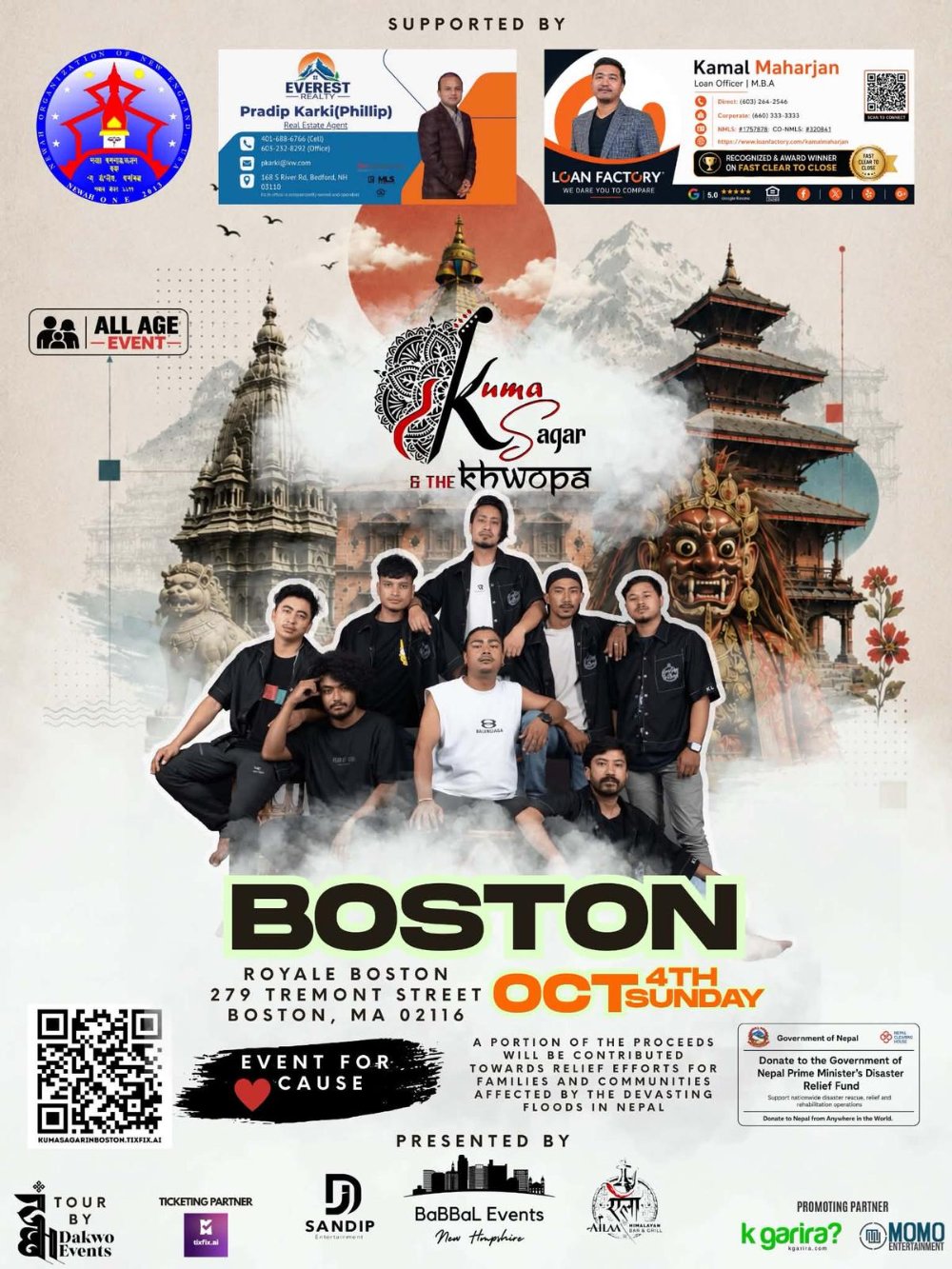 Oct 4, 2026 7:00 PM · Boston / New England · 507 views
 -
 Nepal Festival Perth 2026 FestivalOct 10, 2026 10:00 AM · Perth / Western Australia · 220 views
 -
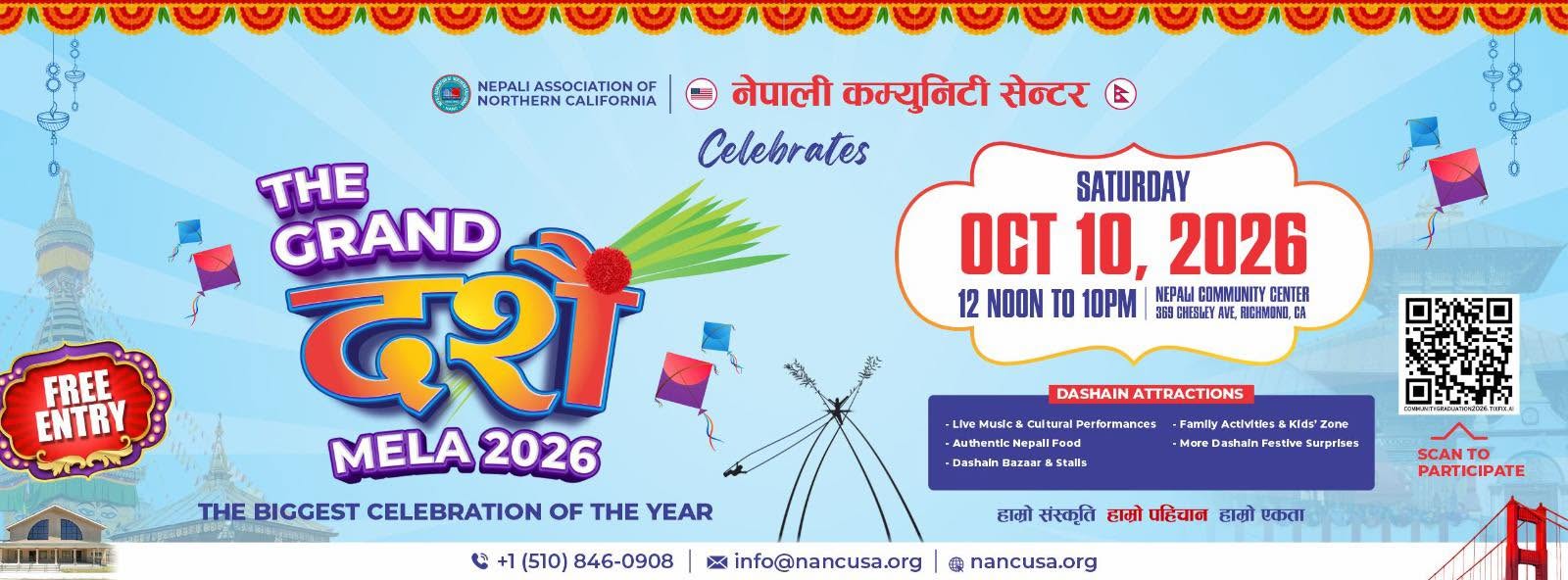 Grand Dashain Mela 2026 FestivalOct 10, 2026 11:00 AM · Bay Area / Northern California · 209 views
 -
 Oct 11, 2026 11:00 AM · DMV / Greater Washington · 221 views · Dashain
 -
 Dashain Festival Fulpati PartyOct 17, 2026 10:00 PM · Greater London · 183 views · Dashain
-
✓Vianet Communications OtherKathmandu · · 280 views
-
Aama Lama RestaurantMalden, MA · · 238 views
-
Ailaa Himalayan Bar & Grill RestaurantStoneham, MA · · 239 views
-
Ailaa Himalayan Bar & Grill RestaurantBedford, TX · · 214 views
-
Annapurna Curry & Sekuwa House RestaurantManchester, NH · · 218 views