pashupati ko nepali priest
Though the way of his appointment was false ,he seems to( at least for me personally)be the right person. http://nayapatrika.com/newsdet...
shiva_linga · Jan 13, 2009 5:05 AM · 14,976 views
By reading his article, it seems to me that he is very good guy. The procedure of Selecting the Priest may be wrong but its always better to have Nepalese priest then those Indians. We nepalese had known how to protest. So we are protesting for everything. We dont care. Either government is doing good or bad, we will not stop protesting. We dont want Nepal to be like what Zimbabwe is now. 50 billion dollar of Zimbabwe can just buy two loaves of bread over there. Nepal could be in similar scenario in the near future. Before Protesting for anything, lets try to understand whether that thing is good or not. The amount collected from Pashupatinath was always being sent to India before. At least we could stop this money from going outside with that Nepalese Priest but now again its the same.
Hoowdy · Jan 13, 2009 9:44 AM
Why only Hindu.........because nepal is predominantly Hindu Country . Maoist are blatantly attacking hindu. Do you think maoist even care if there are nepalese or hindi priest. Prachanda refused to take oath on GITA while taking oath for PM. praoviing maoist is a Nastik party. Hoody read this and may be this will open your eyes. Nepal's Maoist rulers rile Hindus By Dhruba Adhikary Nepal's first elected prime minister, the Maoist leader of the interim coalition formed last August, remains in hot water due to his enthusiastic involvement with the management of a major Hindu shrine. Prachanda's efforts to pacify the simmering discontent through a statement in parliament on Wednesday have had only a marginal effect in calming the instant - and ominous - flak his moves have drawn from devotees far and wide. And the beleaguered leader is not out of the woods yet. The ongoing row began when Prachanda invoked a law legislated before the erstwhile monarchy was abolished that gave the government a say in the appointment of priests at Kathmandu's Pashupatinath temple, a holy site for Hindus all over the world that houses a stone image of Lord Shiva, the third god of the Hindu trinity. Over 80% of Nepal's 25 million people are Hindu, while in India an estimated 930 million of its population are followers of Hinduism. The temple area is overwhelmed by swarms of pilgrims from neighboring countries during the Shivaratri festival, an occasion marking the birth of Lord Shiva, which usually falls in the month of February. Many Hindus strive to visit Pashupatinath at least once in their lives; its significance can be compared to that of Mecca for Muslims or the Vatican for Catholics. Locally, those who head to this Hindu holy place frequently include Ilankovan Kolandavelu, the Malaysian ambassador who is a member of his country's minority Hindu community. Revolutionary Prachanda and his minister responsible for cultural affairs, Gopal Kirati, took the unprecedented step of appointing new priests to conduct daily worship and rituals at Pashupatinath. In the process, the Maoist leadership earlier "accepted" the resignations tendered by traditionally-appointed priests, known as Bhatta, who are of south Indian origin. This action, which broke a tradition maintained through centuries, was bound to spark outrage across the country and beyond. Deposed king Gyanendra, who lost his throne when the constituent assembly declared Nepal a secular republic last May, issued a statement urging all concerned to keep Pashupatinath above the political controversy. "Doesn't new Nepal need a new Pashupatinath?" asked Minister Kirati at a news conference last week. While he appeared satisfied with what he thought was a logical defense, the media present could not help but laugh at his remarks. As the controversy dragged on, Pashupatinath remained virtually unattended. Devotees were confused and skeptical about the moves of the Maoist leaders, whose eyes seem to be fixed on the property and daily income of the temple. (It wouldn't be the first time the temple was utilized as a source of income. When slavery was formally abolished a century ago, rulers of Nepal took some of the temple's money, gold and other valuables to compensate those who were required to free their slaves.) Meanwhile, some of the immediate stakeholders - including storekeepers, called Bhandaris - took the case to the Supreme Court. On January 1, the court issued a stay order until the case was ready for a detailed hearing. But the cultural affairs minister challenged the court order in public: "We are not going to honor the Supreme Court on this matter." To make things worse, the minister directed the temple trust to appoint two assistants to help new appointees. But in view of the growing public anger, the Maoist ministers submitted a petition to the court to vacate its earlier order. A hearing is scheduled for Monday, January 12, and Nepal's public appears to be prepared to wait till the court delivers its verdict. But Hindus in India aren't as patient. They have held demonstrations in front of the Nepal Embassy in New Delhi and elsewhere; television pictures have shown angry crowds burning effigies of Prachanda. The first high-profile Indian to return home without visiting the temple was Mulayam Singh Yadav, leader of the country's Samajwadi Party. He was in the capital this week as a personal guest of Nepal's president. Indian Hindu nationalist leader Lal Krishna Advani took up the issue publicly on Tuesday, saying how "deeply distressed" he was by the ongoing controversy. He also expressed unhappiness over the way incumbent Indian priests were being treated. Earlier, his Bharatiya Janata Party had published a statement claiming that the controversial action had "hurt the sentiments of people in India". Official India, however, has remained quiet, which is understandable because of the country's constitutionally-secular status. Besides, Congress party president Sonia Gandhi, whose Italian origins enter public debate every now and then, may not have a particular interest in the temple, given she was barred from visiting on an earlier visit to Nepal with her husband, then prime minister Rajiv Gandhi. Back home, Nepal's President Ram Baran Yadav told Prachanda how concerned he was over the issue that had hurt the sentiments of millions of people within the country and beyond. Whether or not Prachanda anticipated this level of resentment, if not hostilities against the Maoist leadership, remains a matter of conjecture. In any case, Prachanda and his comrades later tried to neutralize public outcry by presenting themselves as patriots; Indian priests were being sacked to make room for Nepali priests. The objective, according to argument put forward by pro-Maoist newspapers, was also to prevent monetary donations to the temple from being misappropriated by Indian priests. Communications Minister Krishna Bahadur Mahara told an audience in the western region of Nepal that no "foreign intervention" in the country's internal matters would be tolerated. He praised Prachanda's initiative to appoint Nepali priests as courageous. Needless to emphasize, Mahara's allusion is to the Indians. One pertinent question arises here: who is giving Indians a pretext to be meddlesome if not the Maoists themselves? They were the ones to stir the hornet's nest. The masses appear unwilling to accept Maoists as the trustees of the Hindu religion. Prachanda's refusal to take the oath of prime minister in the name of god is cited as an example of the party's atheist character. The other relevant point members of the public often make is that since communists consider religion as opium, the Maoists' sudden concern and sympathy for Hindus is absurd and hollow. If the communists worship anything at all, it would be the portraits of Karl Marx, Mao Zedong, Vladimir Lenin and Joseph Stalin. There are people who are in favor of giving Prachanda the benefit of the doubt, but they also contend that the Maoists should have adopted proper and transparent methods to select qualified and competent Nepali priests. And that has not happened. What Maoists have done, as was admitted by an official of the temple trust, was to randomly choose priests from among their cadres. Credible media reports said the Indian priests did not quit on their own accord, but were compelled to resign. To make matters worse, the priests the Maoists appointed did not know the precise manner of how the rituals, prescribed by the first shankaracharya (temple head), have to be carried out inside the temple. In his book on Pashupatinath, writer Govinda Tandon explained why the tradition of hiring priests from southern India was set in motion 300 years ago. "Catholics go to the Vatican to see the pope; nobody bothers whether he is from, Germany or Poland,” Sharat Chandra Wasti, an associate professor of Sanskrit studies, told Asia Times Online. Similarly, Muslims go to Mecca, not to a political entity called Saudi Arabia, he added. Wasti, who has spent considerable time doing research on the temple, posed another challenging question to Maoists: can their government appoint clergies in Nepal's mosques and churches as well? No, they cannot. Clearly, Maoists are taking undue advantage of the high level of tolerance that exists among Hindus. Wasti even suspects that the Maoists have eaten pecuniary bait thrown by some non-Hindu groups aiming to secure mass conversions. The legal aspect of the issue too is not favorable to the Maoists. Since the monarchy, which stood as a custodian of the Hindu character of the country, has already been replaced by a secular setup, the state apparatus has no authority to intervene in the affairs of a religious entity. The relevant law has lost its validity. "The state's right has to be restricted to maintaining law and order, leaving [all] ritual matters to religious authorities and devotees," said Badri Bahadur Karki, a leading constitutional lawyer. This, he added, is the norm of a civilized, democratic society. Perhaps this is something the Maoists have failed to comprehend.
no_quiero · Jan 13, 2009 10:52 AM
It doesnot matter whether that Prachanda is Hindu or Christian. This Priest thing is the clear indication that Nepal cannot have their own decision and either Nepal will be like Bhutan or it will be another State of India.
Hoowdy · Jan 13, 2009 12:21 PM
I totally agree with you Hoowdy. I too thought that the appointment of Nepali Priest was a good idea considering the amount of money involve. But looks like our Nepali brothers and sisters just need a reason to protest before looking the cause in detail. And two leaders from NC left the parliament to take part in that priest protest like we don't have any other problems.
Jonny · Jan 13, 2009 1:57 PM
नेपाली भनेर अन्धराष्ट्रबादी बनेर समर्थन गर्ने भए बेग्लै तर यो वृतान्त पढेपछि म मा उनि (याने कि पण्डित विष्णु) प्रति रहेको अलि अलि सहानुभुति पनि रद्द भएर गयो । सबभन्दा पहिला ६-७ पुश्ता पन्डित भएको घरमा जन्मेर पनि जन्म मिति नै गोलमाल हुनुले नै उनीहरुको पुस्तैनि पण्डित्याइ खोक्रो रहेछ भन्ने जनाउँछ, त्यसो नभए पनि जन्म मिती ढाटेको वा कुनै कारणबश फर्जि बनाएको जस्तो छ । भारतीय पुजारी, त्यो पनि एउटा गाँउको एकै खलको मात्रै हुनु पर्ने भन्ने नियम कुन आधारमा बनाइएको हो त्यो थाहा नलागि यस्तो नियमको समर्थन वा विरोध गर्नु मलाइ मन लाग्दैन । कुन कुन कारणले गर्दा परम्परागत द्यो ब्रम्हु (अर्थात हालका राजोपाध्याय) र पो (अर्थात हालका पोडे)हरुको पुर्खौलि पुजारी बन्ने हक छिनेर दक्षिण भारतीय भट्टहरुलाइ स्थापित गरे, अनि भट्ट बन्न आएका दक्षिण भारतीयहरुलाइ नेपाल मण्डलमा स्थायी बसोबास गर्ने अधिकार प्रदान किन गरिएन, यो कुरा खोजको विषय हो जसमा मेरो ठोस विचार हाललाइ छैन । तर पशुपतिको पुजारी बन्न जतिसुकै मेहनति वा मेधावि भएपनि मात्र १५ दिन अध्ययन गरेर योग्य बनिन्छ भन्ने मलाइ कदापि लाग्दैन । न त पशुपतिको पुजाविधि तथा तन्त्रमन्त्रहरु कितावहरुमा छापिएको छ भन्ने नै लाग्छ । ती कितावमा छापिएका तन्त्र पढेर हालका भट्टहरु भट्ट बनेका हुन त ? तपाइ त अझ बौद्ध धर्म सम्बन्धि शोध गरेर पिएचडि गरेको मान्छेलाइ यी कुराहरु अध्ययन गर्न झनै बढी समय लाग्छ होला । यी कुरा ले चै अदालत ले राम्रै फैसला गरेछ भन्ने लाग्यो ! अर्को चित्त नबुझेको कुरा, यी पण्डित बिष्णुले शाक्य सामु अन्तरबार्ता दिएको र उहालाई चित्त बुझ्यो भन्नु भो, क्या गोब्रेस्वाँठ कुरा यार यो त । के यी पिएचडि गरेका पण्डित भन्दा साधारण लेखापढी गर्ने वाइसिएल शाक्य चै पूजारी बिद्या मा निपुर्ण हो? देवाधिदेव महादेवको वासस्थान कैलाश पर्वतको काखमा रहेको करोडौ हिन्दू को आस्था केन्द्र पशुपतिमा गर्ने पुजाविधि जान्ने मान्छे नेपालमा अरु कोही नै छैनन जस्तो गरी गुप चुप तरिकाले कमिसन खाएर शाक्य जी लाई भेट गराएको जस्तो कुरो बुझियो, त्यहिकै भण्डारीहरु वा स्थानिय धार्मिक अगुवाहरुलाइ मात्रै सोध्दा पनि धेरै कुरा खुल्थ्यो होला । यत्रो सार्वजनिक सरोकारको कुरो जनता लाई सुसुचित गराएर धेरै जना बिच बहस गराएर सर्बसम्मत छान्दा कुन चै नेपाली ले बिरोध गरथ्यो होला ? नेपाली ले त्यती खेर नेपाली पूजारी प्रती गर्ब गर्छन जती खेर सर्बसम्मत छनिएका योग्य पूजारी ले पूजा गर्छन नकी एक जना शर्माले भेटाएर अर्को शाक्य ले टिपेर ल्याएको प्रती ? तेसै ले तपाईंले मन दुखाउनु को कुनै तुक छैन जसरि टिपेर ल्याए त्यसरी नै फर्काए!म अदालत जान्न भन्नुको मतलब के ? अदालतले नै पूजा नगराउनु हटाउनु भनेर हटाएको मान्छे ले अदालत को घुर्की लगाउनु बेबकुफी हो बिष्णु जी!
CT. · Jan 13, 2009 4:50 PM
Dhruba Adhikary in his article above has clearly presented the Nepali congress, UML and Madhesi Janadhikar Forum's view. He writes propoganda for Nepali congress, Forum and Indian Embassy and works for the Indian funded Kantipur dainik. The views and comments expressed in the article should not be taken as a basis for making decision whatsoever. After reading the article in the nayapatrika at least i could get some balance between the two. I am happy that we don't have to solely rely on Firangi news media anymore. Sanai bhaipani bistarai sabai paksha ko news bahira auna thali raheko cha. that is a good news for development of unbiased news in nepal.
desert_rain · Jan 13, 2009 10:37 PM
This conversation is preserved exactly as it was on the original Sajha.com and can't accept new replies.
Start a New DiscussionYou might be interested in...




-
Room Available for Rent USD 850.00Melrose, MA ·
-
One bed room available for rent USD 1,300.00Germantown, MD ·
-
Malden, MA, United States · Reposted Originally posted
-
Big Room with Parking Next to bus stop USD 1,100.00Everett, MA ·
-
Rooms Available for Rent USD 2,700.00Reston, VA ·
-
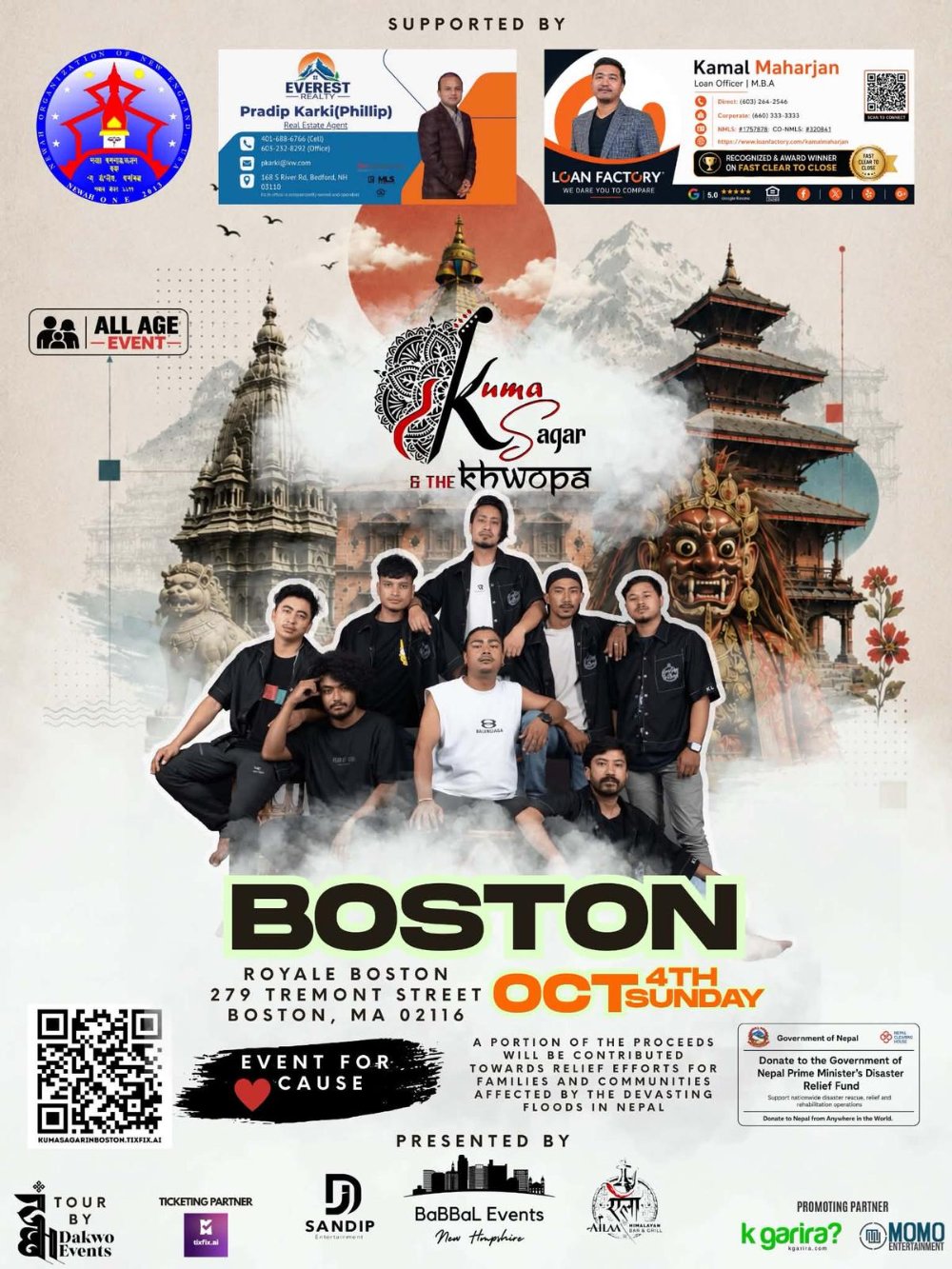 Oct 4, 2026 7:00 PM · Boston / New England · 506 views
 -
 Nepal Festival Perth 2026 FestivalOct 10, 2026 10:00 AM · Perth / Western Australia · 220 views
 -
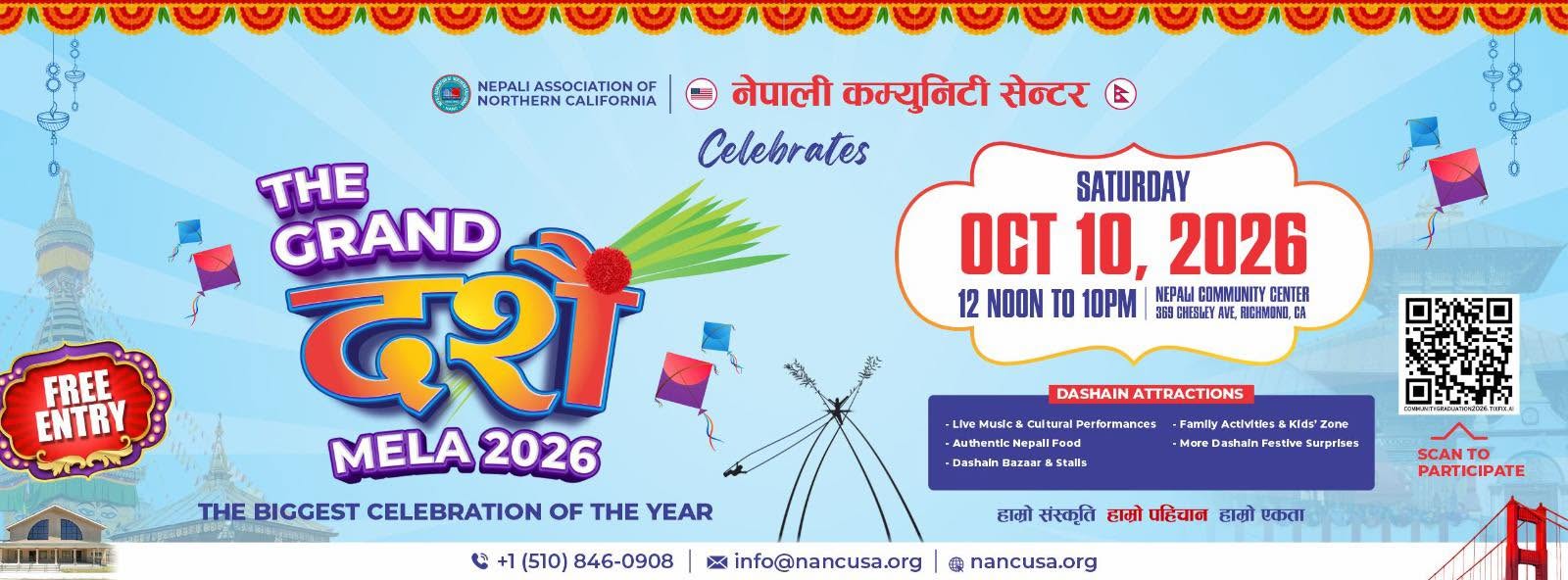 Grand Dashain Mela 2026 FestivalOct 10, 2026 11:00 AM · Bay Area / Northern California · 208 views
 -
 Oct 11, 2026 11:00 AM · DMV / Greater Washington · 221 views · Dashain
 -
 Dashain Festival Fulpati PartyOct 17, 2026 10:00 PM · Greater London · 182 views · Dashain
-
✓Vianet Communications OtherKathmandu · · 279 views
-
Aama Lama RestaurantMalden, MA · · 238 views
-
Ailaa Himalayan Bar & Grill RestaurantStoneham, MA · · 239 views
-
Ailaa Himalayan Bar & Grill RestaurantBedford, TX · · 214 views
-
Annapurna Curry & Sekuwa House RestaurantManchester, NH · · 218 views