What is Sugauli Treaty ? (The First Successful Take Over of Nepal
Sqlladder is the global leader in imparting IT & Business Skills Training. We pride ourselves as one of the Premium Consulting and Placement Companies in the US, located conveniently at a walk able distance from Metuchen station in NJ. We have serviced over 8+ years in delivering superior learning experience with choice and convenience of more than 30 IT Courses, Multiple delivery options, Premier Partnerships, Subject matter experts as Instructors and State of the art Infrastructure. Free Training and guaranteed Job Placement! You can also refer your Friends & Co-worker! Refer can be anyone with Valid Authorization Citizen/ GC/ H1-B /OPT/ CPT/ L-2. We enroll candidates from all over USA we also provide free accommodation during the training period. We Provide Free Training & Job Placement: • Ms SQL Server - in house Job Placement • User Interface Web Developer - Online & Job Placement • Infomatica - Online & Job Placement • Java Developer –Job Placement • .Net Developer –Job Placement • Quality Analysis – Job Placement • Business Analysis –Job Placement Employee Benefits: • We provide free training and accommodation. • Excellent Salary + Benefits for Qualified Candidates. • We are looking for all IT graduates. • We do H1B sponsor • Green Card Processing. • OPT/CPT Support for STEM Extension. • We are E-verified Company. • We also proved Group Health Insurance. If you like to join us please feel free contact us and for more info and to schedule the meeting with us at info@sqlladder.com. We are based in New Jersey. Thank you Khushi Senior IT Recruiter
Khushinagpal · Aug 20, 2014 9:22 AM · 15,640 views
(Map of East India Company before Sugauli Treaty in March 4, 1816) The border treaty signed between the then government of East India Company and Nepal on March 4, 1816 is known as the Sugauli Treaty. The result of the treaty was that Nepal lost almost one-third of its territory on the east, south and west. Unequal Treaty: Sugauli Treaty is known as an unequal treaty. Because any treaty is meant to give both the sides more or less equal or equitable benefits even if one side get a little more benefit and the other a little less. But Nepal suffered only losses because of the treaty while the British India gained a huge territorial advantage. The British got the facilities of corridor in the east and in the west, also it got all the facilities and benefits. No provision of facility and concession was made for Nepal. The territory of Nepal that had been unified and expanded to Teesta in the east, Kangara Fort in the West and nearly to the confluence of Ganga and Jamuna in the south, was curbed on all the three sides. So far as the international treaty is concerned, any treaty should be done on the basis of equality, mutual goodwill and understanding, but the British forced Nepal into the treaty under compulsion and duress. Therefore, experts on international treaty view that Nepal may not be forced to recognize the Sugauli treaty as a sound treaty. Sugauli Treaty was not signed willingly by Nepal: 1. The British East India Company prepared the draft of the treaty with the signature of Lieutenant Colonel Paris Bradshaw on December 2, 1815. It was sent to Nepal with a 15- day ultimatum for counter-signature and asked to return it to them. Nepal did not like the terms and conditions of the treaty, so it did not sign within that period. The British then spread rumour that they were launching attack on the capital, Kathmandu, and even carried out troop movement to show Nepal that it was serious. When Nepal thought that the attack on the capital was inevitable, it was forced to accept the treaty. 2. As it was a treaty imposed on Nepal, the King and high ranking officials did not want to sign it. But as Nepal was under duress to accept its terms, Chandrashekhar Upadhyaya, who had accompanied Pandit Gajaraj Mishra to the British camp at Sugauli, put his signature on March 4, 1816 and gave it to them. 3. As Nepal had signed the treaty under coercion after 93 days against the 15-day ultimatum, the treaty came into effect from that day. Effect of the treaty on Nepal: There are both direct and indirect consequences of the treaty on Nepal 1. Direct consequences: i. Before the treaty, the border of Nepal was extended from Teesta in the east to Kangara Fort in the west. The east-west length of Nepal was 1,415 kilometres and the total area was 267,575 square kilometers. Similarly, the distance from Teesta to Sutlej was 1,373 and the area was 204,917 square kilometers. ii. But the treaty reduced the average east-west length to 885 kilometres and the total area of Nepal is confined to 147,181 square kilometers between the Mechi and the Mahakali Rivers. iii. This way the treaty cut-off the wings on the east and west and receded its area on the south, losing almost one-third of its total area. iv. Nepal was forced to give up not only its western front but also the Mechi to Teesta area on the east, where there was no war. In the treaty, it was mentioned that the aforesaid territory shall be evacuated by the Gorkha troops within 40 days from this date. v. What was more spiteful of the British was that it entered into Titaliya Treaty with Sikkim on February 10, 1817 (11 months after Sugauli Treaty), and gave the land it had snatched away from Nepal to Sikkim Nepal had to bear losses because of its weakness of administration and management: 1. Nepal's biggest weaknesses was its failure to discuss and deliberate in detail the terms and conditions of the treaty before counter-signing it. 2. Nepal had to loose the hill area of Mechi-Teesta portion, which was out of bound of the war. It is because of its administrative weaknesses in putting forth its case and argument to the East India Company, before it was taken away and given to Sikkim. 3. The Rana rulers could not taken initiative on returning the land taken away from Nepal when India gained independence from Britain in 1947. If the Ranas had asked, the British might have returned those lands of Greater Nepal in a single word. There was every possibility of the British rulers in returning Nepal its legacy. One example could be cited that the British divided a single country and created India and Pakistan, including East and West Pakistans, which do not have a common border. 4. But the Ranas might have their own interests. That time the Ranas were already facing difficulties in ruling the country. There were oppositions to their regime. The wave of India's independence movement had also started blowing towards Nepal. The Ranas thought when they were facing difficulty in managing the territory of their country they already had, adding up new areas would further shorten their regime. 5. Even after the Treaty of Peace and Friendship was signed between Nepal and India on July 31, 1950, the Ranas did not dare to take initiative to restore the areas of Greater Nepal that was lost to the British. Article 8 of the Treaty has clearly mentioned that "So far as matters dealt with herein are concerned, the Treaty cancels all previous treaties, agreements, and engagements entered into on behalf of India between the British Government and the Government of Nepal." Still Nepalese rulers that time could not raise voices that Sugauli Treaty was thus annulled and Nepal should get back its lost territories. 6. Similarly, Article 8 of a separate treaty signed between Nepal and Britain on October 30, 1950 states that "All treaties, engagements and agreements between the Government of the United Kingdom and the Government of Nepal concluded prior to 21st December 1923 and the Treaty signed at Kathmandu on that date shall cease to have effect from the date on which the present Treaty comes into force in so far as their application between the United Kingdom and Nepal is concerned." Nepalese administrators then could not show the courage to claim the territories seized from Nepal, with the argument that the new treaty had annulled the Sugauli Treaty. The 104-year Rana oligarchy must have come to an end because history had cursed them. Although the Ranas did not want to get back the lost territories to continue remaining in power, their regime ended on February 18, 1951, after three-and-a-half months of the signing of 1950 Treaty. If they had really been tried and had succeeded in getting back the lost territory, they would have remained illustrious in the history of Nepal even if their rule ended. The other side of the coin is that their regime might have been extended, if they had succeeded in getting back the lost territories from East India Company. Remark?? Now, the question is when will Nepal be able to stand on firm legs? The answer would be: Nepalese will become self-reliant, if there are enough employment opportunities inside the country, if there is industrial development and if there is maximum utilization of the natural resources. But the development of industries, development of infrastructure and production of the necessary goods within the country depend on politics and political activities. Therefore, political stability is imperative for the development of the country. If everything within the country is favourable and the Nepalese society becomes fully self-reliant, we can cremate the Sugauli Treaty by restoring the remaining territory of the Greater Nepal that was earned by our ancestors. In this context it could be cited an example: Britain had taken over Hong Kong Kowloon in 1842 under a treaty saying it would be forever. But it was forced to return back the territory to China after 155 years. Similarly, Macao, which was captured 400 years ago by Portugal, was returned to China on December 20, 1999. Now the dialogue is going on for the unification of Taiwan to China. The dialogue has progressed ahead because of its possibility. This is due to the fact that China is becoming a prosperous country. It is going to capture most of the goods and merchandise market of the world. At the same time, it is marching ahead in the political field as well. Last edited: 20-Aug-14 09:22 AM
sajhanepaljainepal · Aug 20, 2014 9:22 AM
This conversation is preserved exactly as it was on the original Sajha.com and can't accept new replies.
Start a New DiscussionYou might be interested in...





-
Room Available for Rent USD 850.00Melrose, MA ·
-
One bed room available for rent USD 1,300.00Germantown, MD ·
-
Malden, MA, United States · Reposted Originally posted
-
Big Room with Parking Next to bus stop USD 1,100.00Everett, MA ·
-
Rooms Available for Rent USD 2,700.00Reston, VA ·
-
 Oct 4, 2026 7:00 PM · Boston / New England · 515 views
 -
 Nepal Festival Perth 2026 FestivalOct 10, 2026 10:00 AM · Perth / Western Australia · 225 views
 -
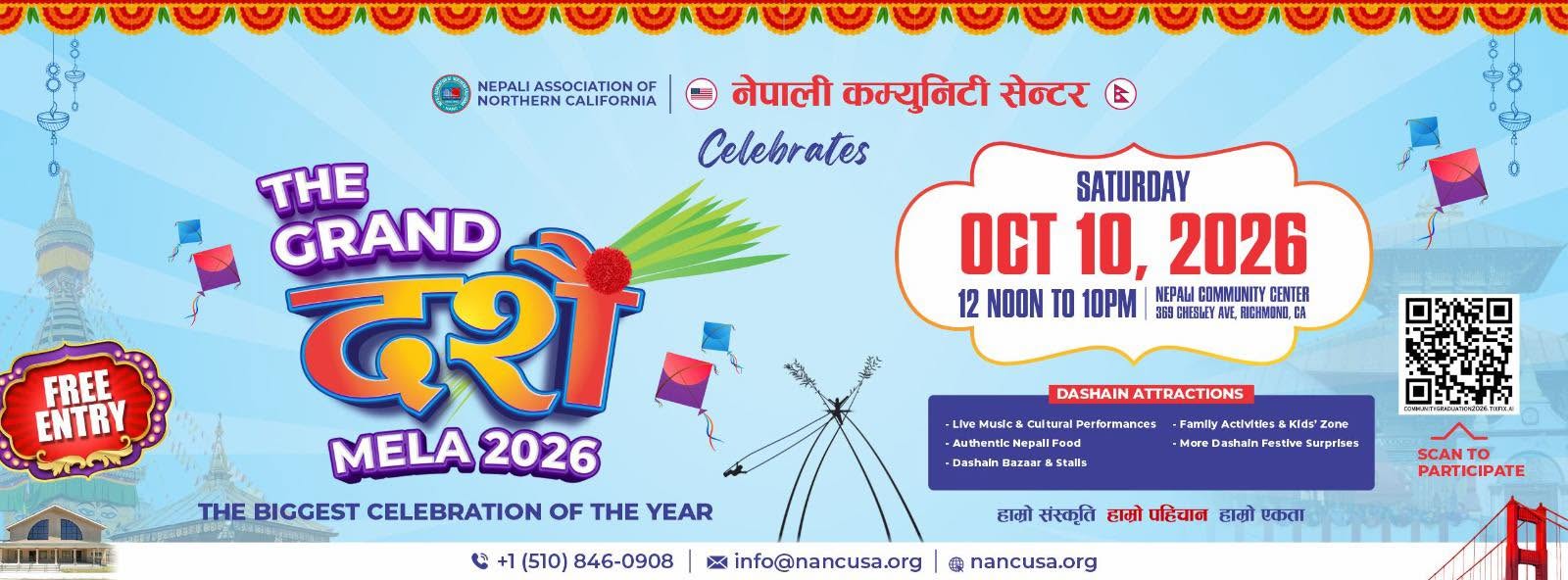 Grand Dashain Mela 2026 FestivalOct 10, 2026 11:00 AM · Bay Area / Northern California · 214 views
 -
 Oct 11, 2026 11:00 AM · DMV / Greater Washington · 227 views · Dashain
 -
 Dashain Festival Fulpati PartyOct 17, 2026 10:00 PM · Greater London · 188 views · Dashain
-
✓Vianet Communications OtherKathmandu · · 285 views
-
Aama Lama RestaurantMalden, MA · · 243 views
-
Ailaa Himalayan Bar & Grill RestaurantStoneham, MA · · 246 views
-
Ailaa Himalayan Bar & Grill RestaurantBedford, TX · · 221 views
-
Annapurna Curry & Sekuwa House RestaurantManchester, NH · · 224 views