Interesting Read--World’s Biggest Arms Importer, India Wants to Buy Local
World’s Biggest Arms Importer, India Wants to Buy Local By GARDINER HARRISMARCH 6, 2014 Photo In a joint venture with Sikorsky, Tata builds cabins and parts for the S-92 helicopter at the Hyderabad plant.CreditGraham Crouch for The New York Times Continue reading the main storyShare This Pag NEW DELHI — Of the 30 countries that attended a defense exposition last month to sell weapons to India, the world’s largest arms importer, only the Russians had the chutzpah to dress up their tanks and guns with women in tightfitting camouflage. The confident and sexy display reflected Russia’s longtime position as India’s dominant military provider, but decades of effort by India to make its own hardware may finally be bearing fruit. India recently rolled out its own fighter jet, a tank, a mobile howitzer and a host of locally made ships. If India succeeds, the Russians could be in trouble. Russia has nearly $39 billion worth of military equipment on order by India, representing nearly a third of Russia’s total arms exports. India’s defense minister, A. K. Antony, said at a news conference during the exposition that the country’s reliance on foreign arms makers must end. “A growing India still depending on foreign companies for a substantial part of our defense needs is not a happy situation,” he said. Continue reading the main storyArms for India Russia has long been India’s leading arms supplier. TOP WEAPONS SUPPLIERS Share of deliveries, 2008-12 79% Russia Britain Uzbekistan Israel United States 6 4 4 2 TOP ARMS IMPORTS Share of arms imports, 2008-12 58% Aircraft Armored vehicles Ships Missiles Sensors 13 12 9 4 Source: Stockholm International Peace Whether India can break its import addiction is anyone’s guess, but many arms analysts are skeptical. India is expected to spend about $11 billion this year buying weapons from abroad, despite decades of effort by the government to create a domestic military manufacturing sector. “I don’t think there’s another country in the world that has tried as hard as India to make weapons and failed as thoroughly,” said Pieter D. Wezeman, a senior researcher at the Stockholm International Peace Research Institute, which studies global security. Mr. Wezeman said he was skeptical that India’s new products would change that history, saying that its fighters, tanks and guns were “of questionable quality.” India ranks eighth in the world in military spending. Among the top 10 weapons buyers, only Saudi Arabia has a less productive homegrown military industry. China, by contrast, has been so effective that it is beginning to export higher-technology arms. India’s main problem as an arms manufacturer is a corrupt and inefficient government sector that has neither the expertise to develop top-notch weapons nor the wherewithal to make them in abundance, said Manoj Joshi, a fellow at the Observer Research Foundation, a policy group based in New Delhi. In one telling example, India could buy fully assembled Russian Sukhoi fighters for about $55 million each, but instead mostly relies on kits that are sent to the government-owned Hindustan Aeronautics Limited, which assembles them at a cost of about $68 million each — nearly a quarter more. In another example, government labs spent billions trying to develop an aircraft engine, only to abandon the effort and buy engines from General Electric for the recently introduced fighter, the Tejas. “While it’s more complicated assembling Sukhois than putting together an Ikea flat-pack, it’s not that hard,” said Samuel Perlo-Freeman, a program director at the Stockholm institute. “And it’s far from an independent and autonomous development of a new weapons system.” India has tried to encourage private companies to make arms in India, both in partnerships to the government and independently, but few of these efforts have succeeded. Most of India’s homegrown arms are developed in 50 government labs and built at eight large government manufacturing facilities and 40 government ordnance factories. Companies have mostly been unwilling to work with the government, and the government has not allowed foreign makers to own more than 26 percent of any Indian factory. It has agreed to raise that limit to 49 percent, but no company has applied for the exception. Mr. Antony dismissed criticisms of the government’s chokehold on arms production. “Indian scientists and Indian industry are more efficient, and the government will have to support them,” he said. But Mr. Joshi said India’s government needed to get out of manufacturing. “Our defense industrial base is hopelessly out of date,” he said. “It needs to be dismantled and handed over to the private sector.” That has left the door open for countries like Russia, whose arms deliveries to India reached a record level in 2012, the most recent year for which figures are available, rising 50 percent from 2011. In the previous five years, India bought 12 percent of the world’s arms imports, and Russia accounted for 79 percent of India’s deliveries, according to the Stockholm institute. American manufacturers have recently won several orders for transport and maritime patrol aircraft, displacing some Russian equipment, but the Russians are still by far India’s dominant arms supplier. In 2012, Russia delivered to India the second nuclear-powered submarine ever exported by any country. Photo Ashish Saraf manages the Tata-Sikorsky joint venture.CreditGraham Crouch for The New York TimesAlexander Kadakin, Russia’s ambassador to India, dismissed any notion of a slowdown in sales to India. “It is inappropriate in my view and even incorrect to speak about Russia allegedly losing its leading positions in the Indian market,” he told an exposition publication. Because of poor infrastructure, stultifying labor rules and difficulties acquiring real estate, making anything in India is hard. The country’s manufacturing sector is declining and now represents 13 percent of the total economy — about the same share as in the United States. <p class="story-body-text story-content" data-para-count="446" data-total-count="5791" itemprop="articleBody" style="margin: 0px 0px 1em 105px; line-height: 1.4375rem; font-family: georgia, 'times new roman', times, serif; width: 510px; max-width: 540px; color: rgb(51, 51, 51); bac
_____ · Mar 9, 2014 9:09 AM · 1,663 views
This conversation is preserved exactly as it was on the original Sajha.com and can't accept new replies.
Start a New DiscussionYou might be interested in...




-
Room Available for Rent USD 850.00Melrose, MA ·
-
One bed room available for rent USD 1,300.00Germantown, MD ·
-
Malden, MA, United States · Reposted Originally posted
-
Big Room with Parking Next to bus stop USD 1,100.00Everett, MA ·
-
Rooms Available for Rent USD 2,700.00Reston, VA ·
-
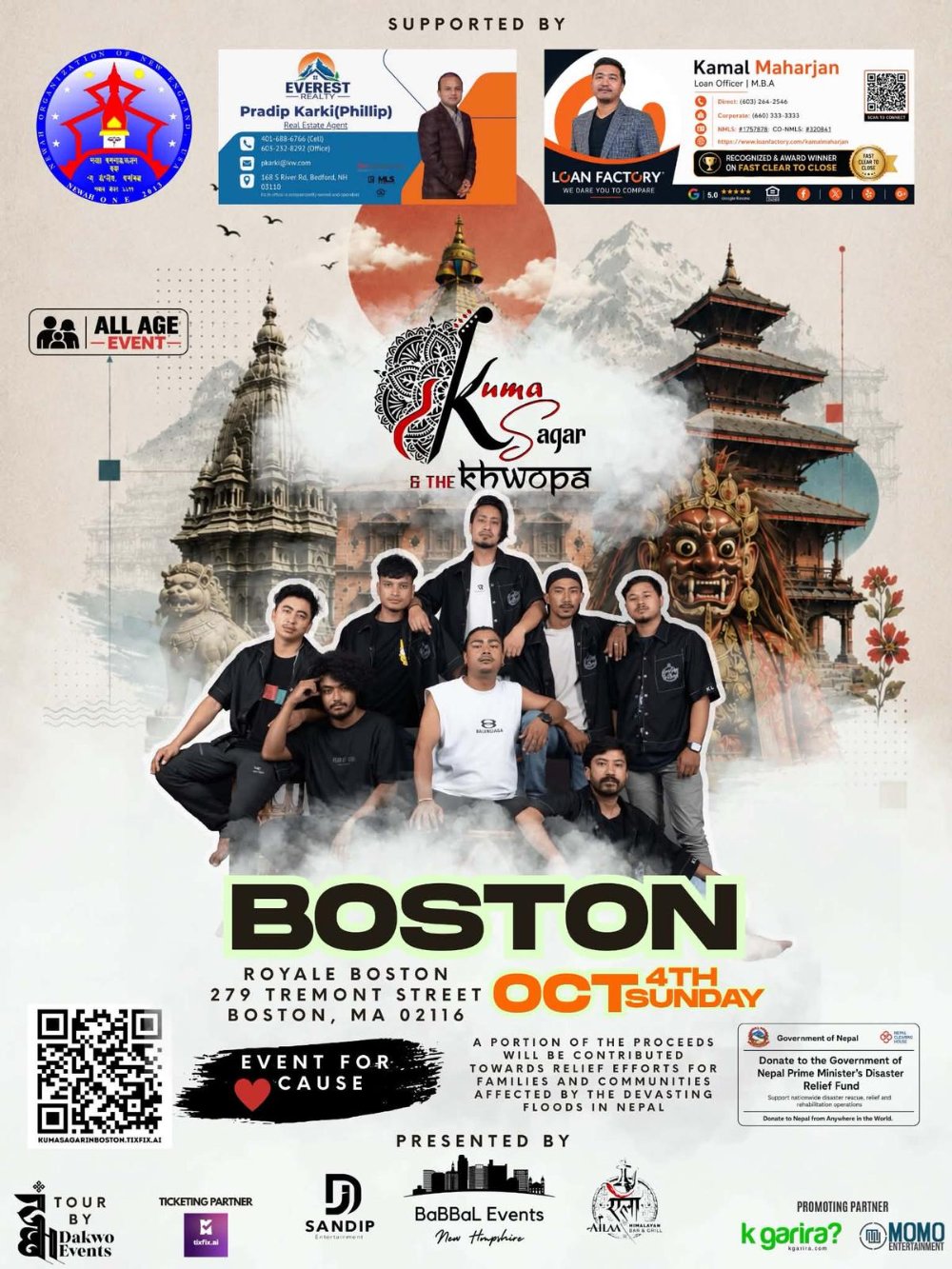 Oct 4, 2026 7:00 PM · Boston / New England · 518 views
 -
 Nepal Festival Perth 2026 FestivalOct 10, 2026 10:00 AM · Perth / Western Australia · 227 views
 -
 Grand Dashain Mela 2026 FestivalOct 10, 2026 11:00 AM · Bay Area / Northern California · 216 views
 -
 Oct 11, 2026 11:00 AM · DMV / Greater Washington · 228 views · Dashain
 -
 Dashain Festival Fulpati PartyOct 17, 2026 10:00 PM · Greater London · 189 views · Dashain
-
✓Vianet Communications OtherKathmandu · · 287 views
-
Aama Lama RestaurantMalden, MA · · 244 views
-
Ailaa Himalayan Bar & Grill RestaurantStoneham, MA · · 247 views
-
Ailaa Himalayan Bar & Grill RestaurantBedford, TX · · 222 views
-
Annapurna Curry & Sekuwa House RestaurantManchester, NH · · 225 views