The Cobbler
“Why did you spit on my shoe?” I asked; a little concerned that the little boy with unkempt hair and scruffy looks, who perhaps hadn’t taken a shower for last few months, and was wearing a thin brown t-shirt, which would have been off white in its heydays had a nerve to spit on my shiny black boots. “If you put a little water with polish babu, it blends well together and it is easier for me to shine it” he replied without looking at me, gazing the shoe with undivided attention. “You meant moisture?” I asked. He was silent. “So is it all about your comfort and not about the quality of work?” I asked again “you mentioned that it becomes easier for you to shine, but what about the damage it does to my boot?” He raised his head and looked at me for the first time, his tired brown eyes narrowed and looking at me with little frustration. “I do not know babu, this is how my father taught me to shine shoes, but I can assure you that none of his customers have complained so far” “Where is your father?” His innocent reply and humility made me smile. Of course he wouldn’t know the reason, because that is how his father shined the shoes in similar fashion and he, alike many kids his age, wouldn’t have an audacity or wisdom to question his peers. “My family is in Birgunj babu, I came to Kathmandu with my uncle” He held the shoe by its heels, brought it closer to my face and turned it around both ways twice, a silent gesture of asking if it was okay. That was the shiniest shoe I had ever seen in my life. _._._._._._._._._._._._._._._._._._._._._._._._._._._._._._._._._._._._._._._._._._._._._._._._._._._._._._._._._ “Here Munna, I have few more shoes for you” This was my third trip to the shoe-shine boy. On my last visit, I got to know a little more about him - his name, and that he was an eleven year old. His shop, or whatever it was, was few yards away from where the current Nanglo bakery café in Jawalakhel is. He had a wooden box, few cans of black and dark tan polishes, few brushes, a dirty old rag, a pair of scissors, some glue, a rectangular piece of high density rubber and a spool of nylon thread. I had actually been there one more time before last, but it had suddenly started raining and it seemed that Munna had ran for cover hauling his wooden box. “The shoes you bring are nice babu, they are better than Bansbari shoes, what are they?” “Bata” I replied. “What do they cost?” “Not much” I said indifferently. Although they weren’t really very expensive, but I didn’t want to tell Munna something he didn’t have to know. Five hundred rupees for a pair of shoes in early nineties was still a significant amount, more so to a shoe boy who charged five rupees per shine. “I have talked to my neighbors and my parents’ friends about you Munna, if you work as good, you might have a lot of customers at your doorstep.” He smiled. That was his version of ‘thank you’ _._._._._._._._._._._._._._._._._._._._._._._._._._._._._._._._._._._._._._._._._._._._._._._._._._._._._._._._._ “How far dada” Arjun, the little boy who helped my mother with chores and was more of a younger brother to me wiped the sweat off his forehead with the back of his forearm and coughed. “Not too far mora, you always whine” I laughed. “No you do, you always whine about making your bed early morning” he retorted frowning. I kicked him gently on his knee laughing. He tried to kick me too, but almost lost his balance. We used to fight often, actually wrestle, all of us, Arjun, me and my younger brother. That was after Arjun had taken a shower. We were both carrying a small wooden bench to Jawalakhel chowk that morning. Thanks to my parents and neighbors, Munna’s business had significantly grown by leaps and bounds, and he had customers actually waiting on him these days. “Babu, what is the meaning of marsiya?” He asked after he positioned the wooden bench near his wooden box, making sure it wouldn’t impede the traffic in the sidewalk. He had forgotten to thank. Arjun laughed. I stared. He stopped and turned around – still giggling. “Who called you that?” “That shahuji of that store” He pointed to the store next door. “Why would he say that?” “I do not know, he was cursing me this morning calling me moro marsiya” _._._._._._._._._._._._._._._._._._._._._._._._._._._._._._._._._._._._._._._._._._._._._._._._._._._._._._._._._ “What happened?” I snarled. I was walking by Jawalakhel chowk few days later and decided to check on how Munna was doing. “Nothing” he shook his head looking at his feet- sobbing. “Here, look at me” I said curtly. And then he looked, with timid eyes that seemed to have been wet for some time. His lips were bloody and the area below his left jaw was swollen. Someone had punched the poor boy. “Who did this to you Munna?” I looked at his feet and started crying again. “Here, tell me, who did this to you?” I jerked his frail body holding his thin arms. “That sahuji’s son”. He said between sobs. “Why did he do that? Do you know?” He shook his head. “He just came by this morning, kicked my box, held me by the collar, punched me and he asked me to get out of his sight.” Not that I had was old enough to know everything about my temperament, but I was wise enough to realize that I was always blinded by rage the moment I encountered such injustice and discrimination. The only reason that Shahuji’s son would beat Munna was because he was poor, and wasn’t originally from Kathmandu. I had seen many episodes like that growing up, kids in neighborhood throwing stones at ‘Madhesi’ fruit vendors, calling them names and even manhandling them at times without any reason. And now, seeing those kids migrate to America and suddenly advocating for the rights of minorities, still with enough vile towards anyone that belonged to Indian origin makes me ask myself if there certainly was something wrong in our middle class Kantipuri upbringing in Nepal decades ago. The shahuji had been witnessing the conversation between myself and Munna all this time, and as I paced towards his store, he disappeared inside. “What do you want?” A young teenager, few years older than me, asked me tersely. “Why did you beat up that poor guy?” I didn’t have to put on my detective hat to figure he was shahuji’s son. “Why do you care about that marsiya? He blocks all our customers, our business have gone down after he arrived?” “Really? His store is almost a hundred feet away from yours, who are you fooling? I know that the only reason you beat him is because he is poor and he is not from Kathmandu” “Listen, if he doesn’t leave that place in two days, I will beat him again. And I’d beat him so bad, you’d see him in Patan Hospital next time” We argued for few more minutes, and I threatened him of cops and my neighborhood friends and the consequences that followed if he repeated it again. It was not until I realized there were lots of people outside the store listening us argue. Typical Kathmandu. As I came out of the store and hurried towards Munna, I could see that he had packed all his belongings inside his wooden box and was sitting on the bench. “What happened?” I asked. “You're leaving early today?” “Yes babu” He smiled, his tears were gone, his lips were still bloody and the jaw had swollen a little more. “I do not think I will come here tomorrow, I just don’t want any of this” “What?” I didn’t see that coming. “Where will you go?” “I am thinking about going back to Birgunj, I will ask my uncle to put me in a bus tomorrow morning.” He lifted his wooden box and placed it on his head. “This is not the first time it has happened to me” “I wish I could take that bench you gave me” He added, still smiling. The he walked away, his tiny steps making his way towards Lagankhel. My eyes watered as I saw the innocent little boy disappear off my sight. As I turned around and walked a few feet, I heard a pair of footsteps from behind sprinting towards me. I stopped and looked behind - it was Munna. He was running fast and breathing heavily. And he did something he had never done before, he held my palms with his tiny hands, looked me in the eyes and attempted to smile one last time. “Thank you babu” He said as he let go of my hand and ran away again, this time it was faster than ever. Last edited: 19-Aug-13 09:28 AM
behoove_me · Aug 19, 2013 9:12 AM · 3,674 views
<<The only reason that Shahuji’s son would beat Munna was because he was poor, and wasn’t originally from Kathmandu. I had seen many episodes like that growing up, kids in neighborhood throwing stones at ‘Madhesi’ fruit vendors, calling them names and even manhandling them at times without any reason. And now, seeing those kids migrate to America and suddenly advocating for the rights of minorities, still with enough vile towards anyone that belonged to Indian origin makes me ask myself if there certainly was something wrong in our middle class Kantipuri upbringing in Nepal decades ago.>> ---So so true.... I have seen and known such people/friends ....isn't that hypocritical ? A bogus sympathy.....I dont want to pour feeling of negativity in such a lovely and brilliantly crafted story/memoir . Truely , Beehove ji , a beautiful memoir/story . Heart touching . Thank you !! - ThahaChaena
ThahaChaena · Aug 21, 2013 10:26 AM
Appreciate your kind words Thane, despite being a fiction it had some nuance of reality. Again, alike you I do not want to delve only in negativity regarding how befriending outsiders was a matter of utter sacrilege while I was growing up in Kathmandu, but this was one grim issue no one remembers anymore.
behoove_me · Aug 21, 2013 8:18 PM
This conversation is preserved exactly as it was on the original Sajha.com and can't accept new replies.
Start a New DiscussionYou might be interested in...




-
Room Available for Rent USD 850.00Melrose, MA ·
-
One bed room available for rent USD 1,300.00Germantown, MD ·
-
Malden, MA, United States · Reposted Originally posted
-
Big Room with Parking Next to bus stop USD 1,100.00Everett, MA ·
-
Rooms Available for Rent USD 2,700.00Reston, VA ·
-
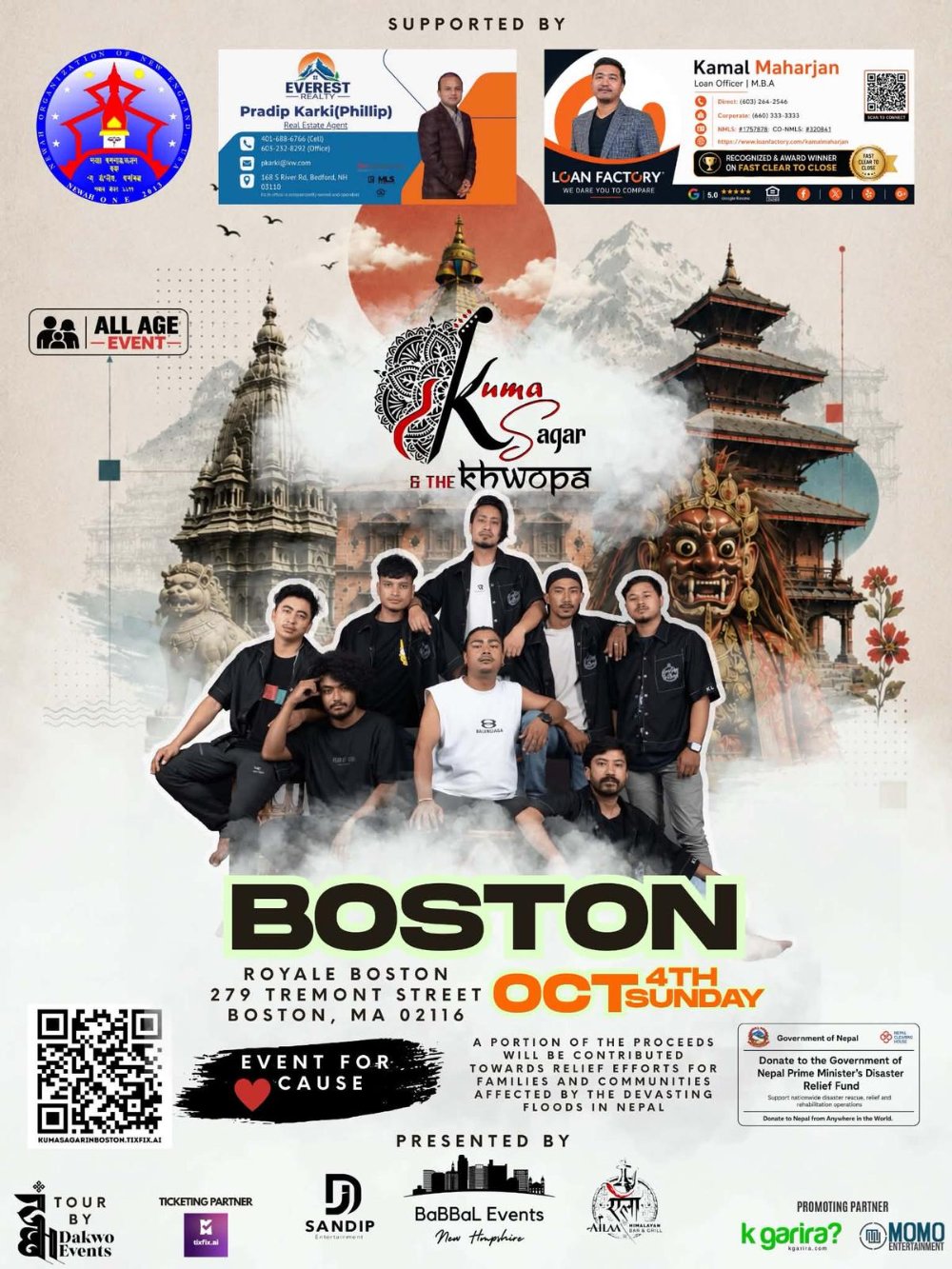 Oct 4, 2026 7:00 PM · Boston / New England · 518 views
 -
 Nepal Festival Perth 2026 FestivalOct 10, 2026 10:00 AM · Perth / Western Australia · 227 views
 -
 Grand Dashain Mela 2026 FestivalOct 10, 2026 11:00 AM · Bay Area / Northern California · 216 views
 -
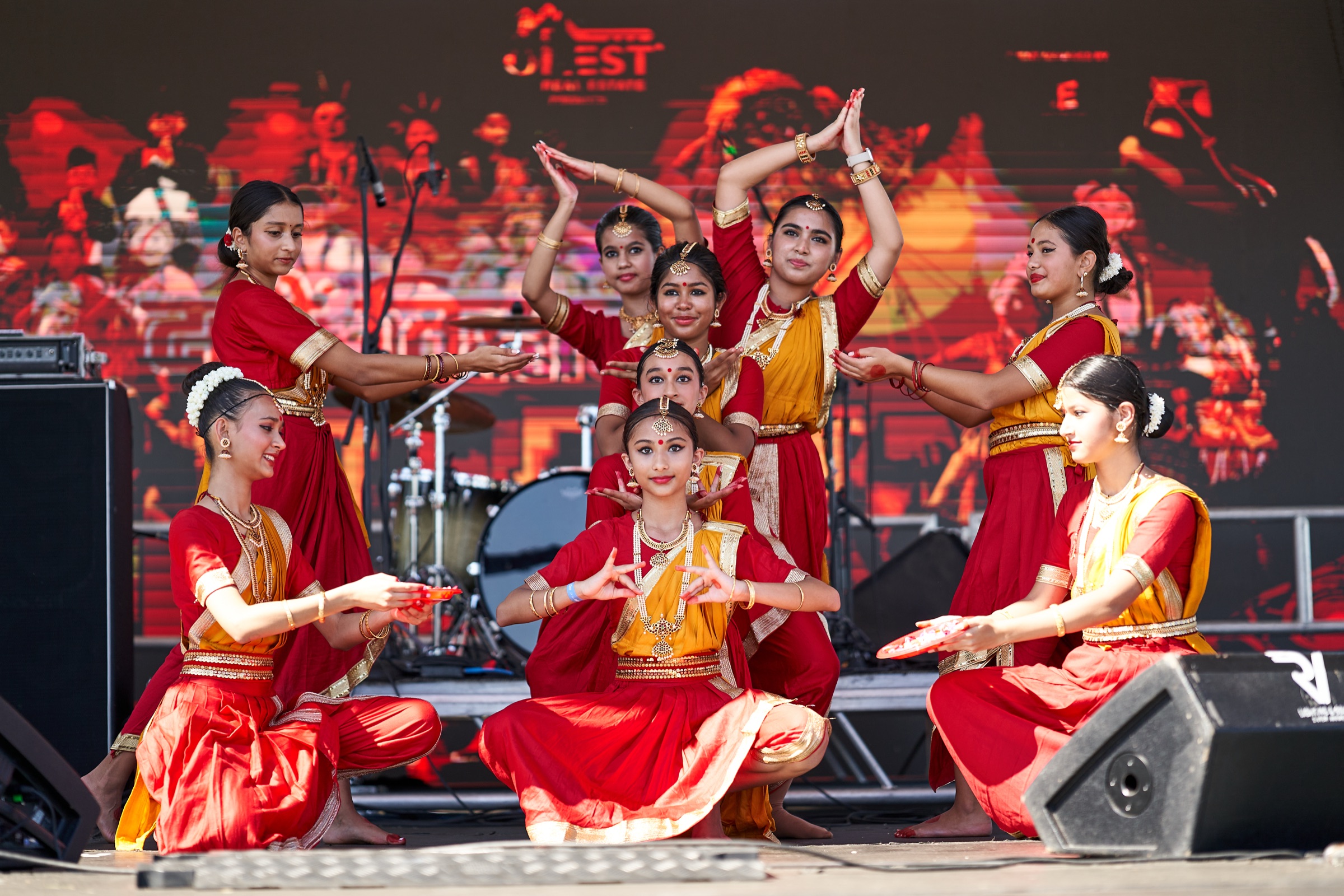 Oct 11, 2026 11:00 AM · DMV / Greater Washington · 229 views · Dashain
 -
 Dashain Festival Fulpati PartyOct 17, 2026 10:00 PM · Greater London · 190 views · Dashain
-
✓Vianet Communications OtherKathmandu · · 287 views
-
Aama Lama RestaurantMalden, MA · · 245 views
-
Ailaa Himalayan Bar & Grill RestaurantStoneham, MA · · 247 views
-
Ailaa Himalayan Bar & Grill RestaurantBedford, TX · · 223 views
-
Annapurna Curry & Sekuwa House RestaurantManchester, NH · · 226 views