A research paper on Sajha online community
It was surprising to see a research paper written about sajha.com and Lok Dohori. Original Article here: http://www.academia.edu/483280... In Social Sciences in a Multicultural World: Proceedings of the International Conference, 11-13 December 2006, Kathmandu, Sociological/Anthropological Society of Nepal (SASON) & Swiss National Centre of Competence in Research (NCCR). Lok Dohori on Sajha.com: Music Videos and the Politics of Memory Anna Stirr Recent scholarship on media and technology has highlighted two related areas in which technology contributes to social and cultural change: new technologies enable new social formations, and also produce new material culture. Perhaps the most influential account of technology’s contribution to new social formations has been Benedict Anderson’s assertion that the development of print capitalism allowed people to imagine communities connected horizontally in time, with events taking place simultaneously in different places (Anderson 1991). Others have since examined how radio, television, and most recently, the internet, contribute to the “compression” of time and space, defining location not by geographical coordinates but by the topic of conversation (Appadurai 1996; Kirshenblatt-Gimblett 1994). One such site defined by common interest is the Boston-based Nepali diaspora website Sajha.com. Sajha advertises Nepali diaspora events, offers advice for new arrivals in the U.S, provides Nepali music to download and recently began a match-making service. Most popular, however, are Sajha’s public forums and chat rooms, whose regulars are mostly Nepalis living all over the world. Addressing each other as sajhabasiharu (residents of Sajha), they are bound together across time and space by a common interest in remembering Nepal. Sites of conversation like Sajha also create new cultural materialities, new archives of cultural memory. Those who participate in Sajha’s public forums are engaging in what Laura Kunreuther has termed domestic archiving—an everyday practice of remembering and of creating material locations for memories, which generates sentiments concerned with personal, national, or cultural pasts (Kunreuther 2002). Here, the media used, and the new and previously existing cultural forms and styles that become part of the conventions of its use, also determines the content and shape of what is recorded and remembered, or silenced and erased ((Eisenlohr 2004; Kunreuther 2002 ). Sajha’s public forums contain much more than typed messages from people who congregate in this virtual space—they also contain photos, mp3s, and videos. Thus what is archived on the Sajha server and in the memories of Sajha “residents” is comprised of multiple media forms and multiple conversations about these media. Embedded in a Sajha thread started in mid-April 2006 and continuing at least up until mid- May, are over 75 music videos of Nepali lok and dohori songs. Sajha member Ashim presents these music videos as an antidote to the plethora of political discussions occurring on other threads during the April democracy movement. Ashim’s intent seems to be to divert diaspora Nepalis from the anxiety of the moment and turn their eyes and ears toward an idealized village environment. By examining one of these music video texts as recontextualized within the ever-changing text of Sajha.com’s public forum, Kurakani, I address how practices of remembering village Nepal may contribute to diaspora Nepalis’ perceptions of politics in Nepal. “Folk Video Music for Folk Music Lovers” Esteemed residents of Sajha, Every thread on Sajha is filling up with politics. To refresh our minds, I have uploaded some song clips for the folk song lovers, hoping they'll provide some entertainment. I will keep adding new songs! Please refrain from adding irrelevant things to this thread; don't let it divert from its purpose! Thank you! Ashim1 1 Translation mine. Original text: आद#रिणय साझावा#सह-: साझाका ह/क धागाह- राज#न#तक क5रा6 मा8 9 भ#र; <दा = माइ?ड ABशको ला#ग F6 लोक #गत पारिखह-को ला#ग िभ#डयो #गतका #कIपह- टा=Kको छM, आशा छ, मनोरNजन गनMO<;छ भ;र।#बRतार9 नया= #गतका #कIपह- प#न थTद9 जा;छM! कUपया असWबिNधत क5राह- टा=Kर, यस धागोको मMल उYZयलाइ [र जान न#दनMहोस्! धNयबाद! -अ#सम् In this initial posting to his2 music video thread on Kurakani, initiated on April 22 at the height of the protests against Nepal’s monarchy that have come to be known as People’s Movement, Part II3, Ashim insists on separating entertainment and politics. I read his prefacing of “residents of Sajha” with “esteemed,” and his adoption of a semi-formal official tone throughout the post, as a simultaneously serious and ironic reference to Sajha’s stated mission of creating community, in contrast to the often hotheaded political discussions taking place on almost every other thread. Ashim’s formal language, using third-level honorifics4 and politely phrased requests, calls the “residents of Sajha” to a more civil plane of interaction, where honorifics instead of insults determine the tone of the dialog. His position is clear: politics are divisive, and folk music videos as entertainment can “freshen our minds,” returning us to civility and community through mutual pleasure in hearing music and viewing images of village Nepal. Ashim’s view of politics is shared by many in Kathmandu, where the voice of antipolitical discourse is heard on a daily basis. According to this discourse, politics is synonymous with corruption, and the true needs of the people are ignored by the palace, the political parties, and the Maoists alike. Within this context music and video entertainment is an apolitical realm of pleasure, a counter to the power-driven preoccupations of a few who are leading the masses in ruining Nepal. Several Sajha posters have specifically acknowledged Ashim’s anti-political intent. Others have merely thanked Ashim for the videos and provided links to his sources.5 The number of members who have posted comments is small compared to the number of videos Ashim has posted, and is but a tiny percentage of the 1796 hits the thread has received. It seems that in the transnational context of Sajha during Nepal’s April 2006 People’s Movement, music videos of 2 I use the masculine pronoun because Ashim is generally a masculine name. However, gender is one of many aspects of identity that is ambiguous on such an anonymous forum. 3 People’s Movement, Part I would be the revolution of 1990. 4 Nepali has four commonly used levels of honorifics. The third level is used to index an interlocutor’s status as the speaker’s equal or superior. 5 www.youtube.com Nepal were indeed appreciated, at least by some, as an antidote to politics. What we cannot know is what kind of antidote it was: did viewers interpret the sounds and images of lok dohori videos as escapist fantasy, or as depicting real life, real suffering, and an altogether more realistic picture of everyday Nepali experiences than that which politicians of any stripe appear to recognize? Is the antidote to politics better understood as a dose of fantastic amnesia, or a spoonful of bitter truths? The discussions on the music video thread of Sajha’s public forum don’t tell us which of these is the best interpretation, and neither should we imagine that one perspective is more correct than the other. Yet the distinction between these two potential ways of viewing and listening to representations of Nepal is an important one that can also be phrased in terms of different ways of remembering. A fantastic, idealized picture of village Nepal locates it in the past, in a time beyond which music videos’ audiences and denizens of Sajha have advanced. It is a time without electronic media, where transnational internet conversations and embedded music videos remain unimaginable; we the viewers thus place ourselves at the opposite end of a continuum of progress and development as we turn our gazes backward to “village time.” Such a temporally-centered practice of remembering appears time and again in discourses of modernization and development, in which technology is an iconic marker of a developed, modern state of being. Paul Greene has argued that the sounds of the musical genre of lok pop contribute to political apathy by sonically locating villages in the past, through juxtaposing “village” and “modern” sounds (Greene 2002/2003). While this may be one effect of so-called “village” sounds in international urban environments, I argue that this perspective is only one of many political viewpoints to which lok git may contribute. In contrast, an idea that these representations of village reality are more “realistic” or “truthful” can perhaps be more closely allied with a discourse of memory that emphasizes spatial rather than temporal distance. This is the migrant’s way of remembering the village—home as it is and continues to be even though I am not there, often with an emphasis on suffering combined with deep-seated connection to place. In practice, discourses of memory across place and memory across time almost always coexist, influencing and reinforcing each other. Such is the case with the music videos on Sajha. Arab Khaadimaa: Bridging the Gulf of Separation Arab Khaadimaa (In the Arabian Gulf), the sixteenth video in Ashim’s list, caught my eye because of its unusual introductory sequence (Sapkota 2006 (2063)). While most lok and dohori videos contain only the songs, this one begins with a dialog similar to those in short educational videos produced by development organizations and broadcast on national TV. In this introductory sequence, a melodramatic turn of events sets the stage for the subsequent dohori song. Over a Hindi-serial-style soundtrack of swelling strings, a landlord and his two servants approach the humble village home of an old woman, her daughter-in-law and grandson. Rudely addressing the old woman with the lowest Nepali honorific forms, the landlord demands repayment on a loan her son has taken to finance his migration to work abroad. When the woman discloses that the son has not sent money and may be in dire straits, the landlord and his two servants attempt to take the daughter-in-law as payment, and, after she runs away, they succeed in taking the cow, threatening to return soon for the daughter-in-law. As the grandson cries, the old woman delivers a monologue directed to her faraway son, entreating him to come back and rejoin his family, and declaring that destitute poverty would be better than his continued absence. As she begins her last words “we don’t even need money,” the ominous swelling string sounds give way to a madal drumbeat and a flute melody, and the scene cuts to a young man waking up in a bare room. The voice of the male singer, Resham Sapkota, begins the verse: Mother must be thinking of me, weeping Eheyyy! I got a hiccup just before dawn6 Between the hills and the forests 6 A hiccup is a sign that someone is thinking of him. The young man wakes up, drinks water and looks into the distance. Cut to the old woman, wiping her eyes while cutting crops in a field. The chorus begins: Eheyyy! Mother weeps, working in the fields Cut again to the son, carrying a load on a busy street in front of the minarets of a mosque: Here I am in the Arabian Gulf The chorus repeats, this time to the scene of Resham Sapkota and Bima Kumari Dura in a studio, wearing headphones and standing behind a music stand as Resham sings the chorus a second time. Eheyyy! Mother weeps, working in the fields Here I am in the Arabian Gulf Throughout this video, images of the son seated on his bed dreaming of home, and hard at work in the streets of a Gulf city alternate with images of his mother seated on her porch dreaming of his return, and hard at work in the fields, sometimes with the daughter-in-law, sometimes being given orders by the landlord. Intercut with these are shots of Bima and Resham in the studio. The second verse is Bima’s response as the old woman dreaming of her son’s return, and singing to call him home. This is followed by the son’s account of what happened to him: he was on a bus thinking he was headed to Japan, but he ended up trapped in an unnamed country of the Persian Gulf, tricked by his employment agency—a not uncommon occurrence in the cutthroat market for visas and jobs abroad. The mother sums up their predicament in the last verse: wherever they go, the poor have no chance. The alternating images of domestic and foreign toil and oppression— dukha—underscore this point. Yet the sounds and images of home village and foreign city also convey some significant differences: the video opens with the moo of a cow, and cows play an important part in the opening dialog. As a central symbol of Hindu identity and a sound iconic of village life (Kunreuther 2002 ), the sounds and images of cows in this video mark the village, and home, as a Hindu space. Religious symbols in the village index familiarity, reproduction and domesticity—the loss of the cow, who has just given birth, is a small tragedy for the old woman and her grandson, made even more dramatic through its parallel to the potential loss of the daughter-in-law. Perhaps another parallel can be drawn between loss of the cow and the son’s own separation from his domestic religious identity—the foreignness of his Gulf workplace is emphasized by the contrast between the domestic atmosphere of cows in a cozy village cowshed, and the minarets that tower over him as he toils in the streets. The contrast in size between these religious symbols is almost oppressive, and the son seems to be trapped in the Persian Gulf by the Islamic architecture itself. This point is brought home during the last verse of the song, as Bima Kumari sings the last plea for the son to return home, and the camera pans downward from a close-up of the crescent moon and star at the spire of a minaret, to the son carrying his load through the street below. If the poor have no chance anywhere, these contrasts seem to imply, better to be poor at home than in a foreign land. But what of the studio shots, and the voices narrating the lives of the migrant worker and of those waiting at home for his return? How do Bima Kumari Dura and Resham Sapkota fit into this story of dukha at home and abroad? One possible interpretation is that these shots highlighting the process of mediation function similarly to the disembodied, universalizing radio voice, particularly the voice that reassures: “I am just like you” (Kunreuther 2002). As singers of legendary stature in contemporary Nepal, Bima and Resham have earned the authority to sing for the people, and the images of them performing Arab Khaadimaa suggest that they are, indeed, the voices of the people. Bima’s dress—a sari with a married woman’s jewelry—marks her as an authoritative spokesperson for multiple village identities: neither too cosmopolitan nor too regionally identified, her formal bearing displaying respect for her audience. The integration of cuts with lyrics associates each singer with his or her counterpart in the song’s narrative. While the first two verses depict both Bima and Resham together in the studio, the third verse, in which the son describes his plight, shows Resham singing alone. Subsequently, in the fourth verse, Bima is pictured alone in the studio. This both highlights the sense of separation and loneliness experienced by the characters in this narrative, and creates a stronger link between each singer and the male and female characters whose voices they supply. The studio is foregrounded as a point of mediation across spatial distance—through the recording process, the voices of those who are separated can be brought together, a family made whole again. The recurrence of the same images over and over in this video also creates a strong sense of temporal simultaneity: while mother and son labor in their respective oppressive situations, no matter how far apart they may be, Bima Kumari Dura and Resham Sapkota are simultaneously singing the story of their sorrows.7 Recontextualizing Memory: Music Videos, Politics and Community in Sajha Nepali migrants, like the Appalachian migrants whose lives Katie Stewart describes, “live in a bodily realization of knowing one life and also another life that displaces the first. Theirs is at each moment a double vision—two cultures differentiated through a lived experience of loss [Said 1984]…The search for a past and for a place leads them to reconstitute their lives in narrative form, a story designed to reassemble a broken history into a whole. The world created there is a world unnatural and unreal; it resembles fiction or dream” (Stewart 1992:261). Separating the searches for past and place, though it may be merely an exercise, allows us to dissemble the fictional world of the homogenized, ideal-past “Nepali village” and re-place this dream in some of the sites of its articulation. Arab Khaadimaa and the many other migrationthemed lok and dohori songs attempt to narrativize the experiences of migrant families’ dukha, focusing on the lived experience of loss and separation. Yet the narrative in Arab Khaadimaa does not attempt complete, unbroken linearity. Juxtaposed with the “simultaneous” struggles of mother and son, the shots of Bima and Resham in the studio foreground the technological construction of this narrative, reminding viewers that it is the studio’s mediation that allows for this imagined connection. Foregrounding the site of mediation can also be seen as a universalizing move, suggesting that lok git singers, or perhaps even the media they produce, provide the oppressed with 7 It is significant, I think, that no instruments appear in these studio shots. It is the voice that is important here, the fact that the story is being sung. a voice. The dangers of this kind of universalism have been well articulated by Stacy Pigg and Paul Greene, in their accounts of how the visual and sonic image of the Nepali village has been located far away and in the past, promoting apolitical and even antipolitical fantasy and allowing for the continued domination of existing power structures (Greene 2002/2003; Pigg 1992). In concentrating on the distinction between memory across place and memory across time, I have tried to show that despite nostalgia’s narrativizing impulse and the apparently unitary, commoditized texts it produces (Stewart 1992), the discourses that surround those texts leave room for multiple versions of remembered histories. The practices of remembering portrayed in Arab Khaadimaa emphasize memory across spatial distance—the son’s hiccup in the first verse of the song strongly suggests that the framing story’s shift into song be interpreted as actually happening in temporal sequence, so that the son “hears” the mother’s call from afar. Here the village is not a site of temporal backwardness in the eyes of those who live there; it is home, and though there may be great injustice, that injustice is happening now. There are at least some, including my friend Anil Shahi who helped me translate the video, who interpret this video in very political terms as a call to action against feudal social structures that compel labor migration (Personal communication, May 2006). Anil is a politically active person, one of those who were contributing to “filling up” the other Sajha threads with politics; his interpretation of Arab Khaadimaa fits well with his own political agenda. This video and others like it do not offer him a fantasy of a village that exists only in the past, by which one can transcend the political; rather, they reaffirm his own political sentiments. Out of the thousands who have viewed this video thread on Sajha, there must be others whose interpretations differ from Ashim’s antipolitical framing rhetoric. Yet, the same tension exists in the virtual community of Sajha as in the world of face-to-face discussion, between the “touristnostalgic” consumption of neatly packaged doses of a “village Nepal” located in the past, and the recognition of actual villages and villagers as potential members of a contemporary community or polity. Antipolitical discourse in Kathmandu, in the Nepali diaspora, and on Sajha, could be seen as another expression of dukha—of dissatisfaction with “the system,” with the seemingly endless stream of apparently incompetent governments whose reforms never quite trickle down to the level of the common people. Instead of merely creating fantasies, the multiple mediating acts of creating videos, putting them on the web, and posting comments about them in a public forum, creates new material sites of culture. These material objects—videos, music and other sounds, the postings that remain in Sajha’s Kurakani forum—act as signs that index real villages and real sets of feelings experienced by villagers, migrants and urbanites alike. The inclusion of so many lok git videos on a diaspora Nepali website speaks to the website’s stated purpose of creating community, here through the feelings of loss and separation that many of these videos dramatize. Those “residents of Sajha” who take the time to watch these lok dohori videos, even if they never post, are affirming a national identity based on affective ties by sharing experiences of pleasure, whether they interpret them ultimately as escapist entertainment, dukha-saturated laments that uphold the status quo in the end, or revolutionary calls to action. There’s a coda to this story that brings us up to date: eventually it was Ashim himself who brought politics into the video thread, in a conversation with another poster about which songs would make good political songs.8 This reminds us that rhetorical positions, like selves and memories, are not fixed. The lyrics to dohori git such as Arab Khaadimaa are mostly improvised in their non-mass-mediated forms. The mass-mediated forms provide new tunes and new poetic material for performers to draw from, and in the cross-fertilization that follows, dohori as a genre that is at once mass-mediated, commercially performed in live venues, and performed for pleasure 8 They changed the lyrics of the song Ban ko Kaphal to read “while your reign may last only two days, our reign is life-long.” (#त]ो सासन ^ई #दनको भए #न हा]ो सासन जM#न भ#रलाई)। and entertainment by villagers and urban migrants alike, becomes an ever-expanding field of intertextual play. Sites like Sajha fit this image of a loose community of improvisers in which mass-mediated cultural forms intersect with, shape, and are themselves shaped by the creativity of performing individuals. Like the studios foregrounded in Arab Khadimaa’s video, Sajha is a point of technological mediation that assists Nepalis in creating community across space and time. As the conversations in Kurakani and the informal circulation of media continue, the ways in which Nepal and its villages are remembered continue to change from day to day. This paper was originally conceived as part of a seminar on music and technology at Columbia University. I am grateful to the other participants in the seminar, as well as Professor Tom Porcello, and fellow SASON panelists Stephanie Spray and Dhrubesh Regmi, for their comments and suggestions. Works Cited Anderson, Benedict 1991 Imagined Communites: Reflections on the Origin and Spread of Nationalism: Norton. Appadurai, Arjun 1996 Modernity At Large. Minneapolis-St. Paul: University of Minnesota Press. Eisenlohr, Patrick 2004 Language Revitalization and New Technologies: Cultures of Electronic Mediation and the Refiguring of Communities. Annual Review of Anthropology 33:21-45. Greene, Paul D 2002/2003 Nepal's Lok Pop Music: Representations of the Folk, Tropes of Memory, and Studio Techniques. Asian Music 34(1):43-66. Kirshenblatt-Gimblett, Barbara 1994 Spaces of Dispersal. Cultural Anthropology 9(3: Further Inflections: Toward Ethnographies of the Future):339-344. Kunreuther, Laura 2002 Domestic Archives: Memory and Home in Kathmandu. Ph.D. dissertation, University of Michigan. Pigg, Stacy Leigh 1992 Inventing Social Categories through Place: Social Presentation and Development in Nepal. Comparative Studies in Society and History 34(3):491-513. Sapkota, Resham 2006 (2063) Arab Khadimaa. Kathmandu: Tareli Sangit Kunj. Stewart, Kathleen 1992 Nostalgia--A Polemic. In Rereading Cultural Anthropology. G. Marcus, ed. Pp. 252-256. Durham and London: Duke University Press.
ne0 · Jun 13, 2013 10:09 AM · 1,753 views
This conversation is preserved exactly as it was on the original Sajha.com and can't accept new replies.
Start a New DiscussionYou might be interested in...





-
Room Available for Rent USD 850.00Melrose, MA ·
-
One bed room available for rent USD 1,300.00Germantown, MD ·
-
Malden, MA, United States · Reposted Originally posted
-
Big Room with Parking Next to bus stop USD 1,100.00Everett, MA ·
-
Rooms Available for Rent USD 2,700.00Reston, VA ·
-
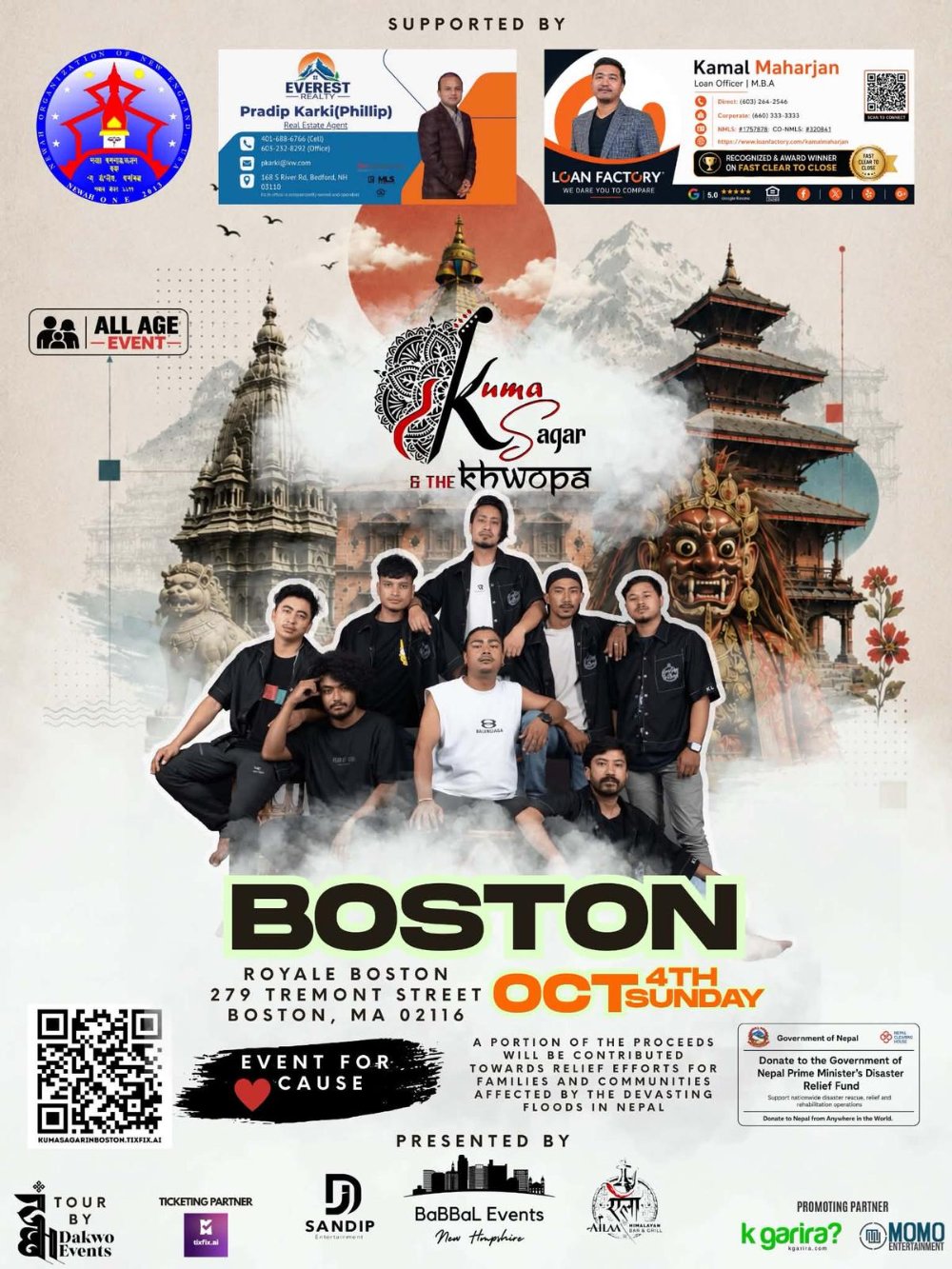 Oct 4, 2026 7:00 PM · Boston / New England · 518 views
 -
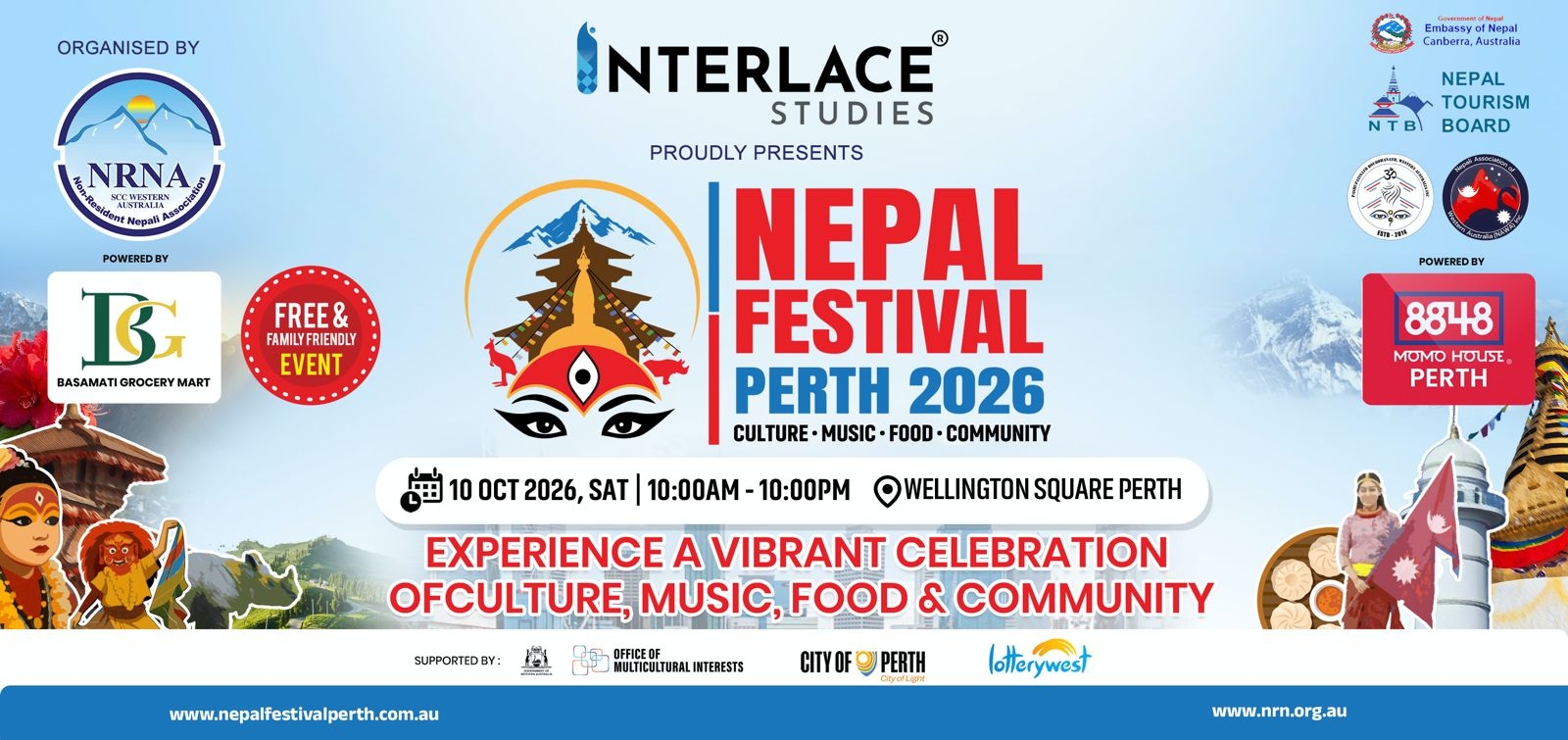 Nepal Festival Perth 2026 FestivalOct 10, 2026 10:00 AM · Perth / Western Australia · 227 views
 -
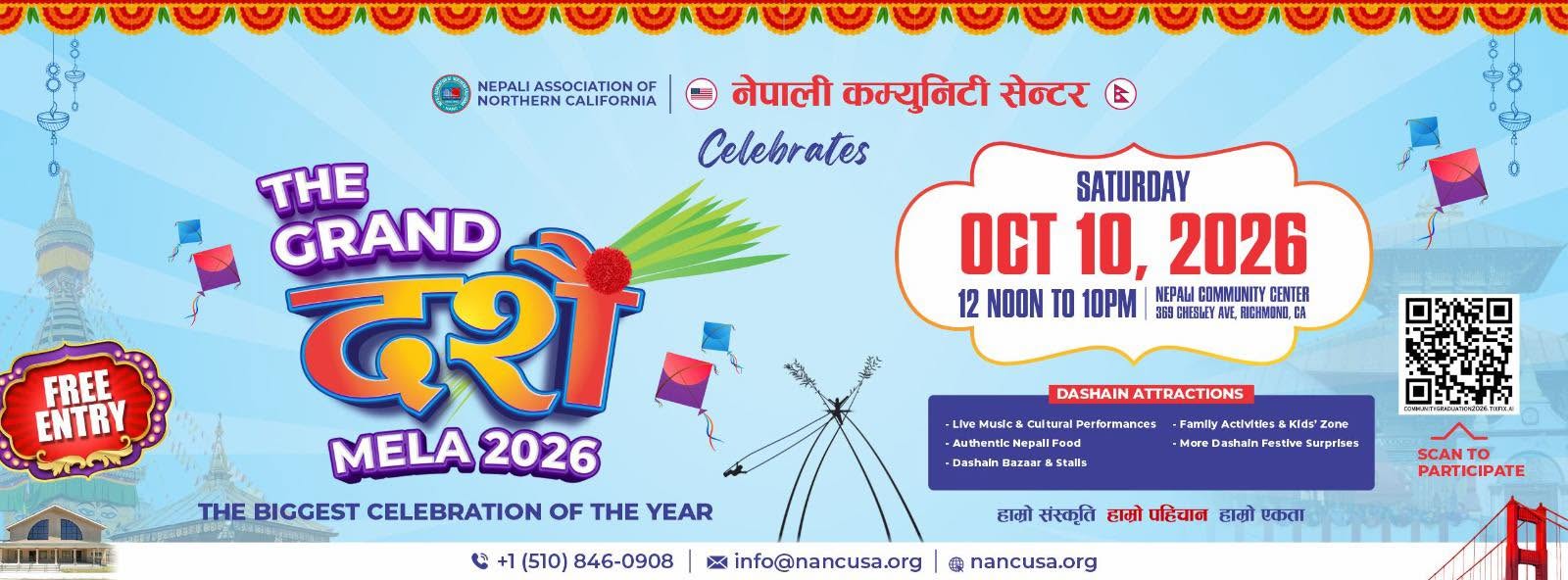 Grand Dashain Mela 2026 FestivalOct 10, 2026 11:00 AM · Bay Area / Northern California · 216 views
 -
 Oct 11, 2026 11:00 AM · DMV / Greater Washington · 229 views · Dashain
 -
 Dashain Festival Fulpati PartyOct 17, 2026 10:00 PM · Greater London · 190 views · Dashain
-
✓Vianet Communications OtherKathmandu · · 287 views
-
Aama Lama RestaurantMalden, MA · · 245 views
-
Ailaa Himalayan Bar & Grill RestaurantStoneham, MA · · 247 views
-
Ailaa Himalayan Bar & Grill RestaurantBedford, TX · · 223 views
-
Annapurna Curry & Sekuwa House RestaurantManchester, NH · · 226 views