very tolarent nepal
1700 Catholic priests in New York could be sent to prison for life, and New York Catholics were denied the right to vote. [Engh, 192] 1702 British author Daniel Defoe was pilloried, fined and imprisoned for fourteen months for writing a satirical religious tract, The Shortest Way with Dissenters. The tract recommended executing nonconformists in order to frighten others. "Several prominent Anglican churchmen took the proposal seriously and endorsed the policy."[Engh, 229] 1704 Maryland criminalized conversion to Catholicism. Catholics were not allowed to teach school. Irish servants were heavily taxed to discourage more immigration. A few years later, new laws prevented Catholics from voting or holding public office. [Engh, 191] 1706 Deist Matthew Tindal published The Rights of the Christian Church in England. He, his publisher and printer were all prosecuted. [Cross, 1360] 1706 Kimpa Vita (who called herself "St. Anthony") and her assistant ("St. John") were burned as heretics in the Christian African kingdom of Kongo. [Engh, 150] 1709 Matthew Tindal published A Defense of the Rights of the Christian Church. The book was burned on order of the House of Commons because it was thought to undermine Christianity. [Cross, 1360] 1715 "... King Louis XIV proudly declared that all Protestantism had been suppressed in France." [Haught, 1990, 96] 1715 Protestants were violently persecuted in the Rhineland Palatinate. [Haught, 1990, 130] 1716 "Christian religious teaching prohibited in China." [Grun, 328] 1720s English writer Thomas Woolston was put under lifetime house arrest for doubting the Resurrection and Bible miracles. [Haught, 1990, 131] 1720 Two competing monastic orders of the Ethiopian Church accused each other of heresy. The emperor David III took sides with one group and massacred the monks of the other. [Engh, 156] 1721 "... a ninety-six-year-old woman named María Bárbara Carillo was sent to the stake at Madrid...." [Kirsch, 202] 1722 A Scottish woman was burned as a witch. [Haught, 1990, 78] 1723 The bishop of Gdansk, Poland, demanded the expulsion of Jews but the city council declined. The bishop then raised a mob which killed them. [Haught, 1990, 129] 1723 The printer and publisher of the works of Michael Servetus were imprisoned and all copies of the books were burned. Servetus was burned by Calvinists in 1553 for unorthodox ideas about the Trinity. [Engh, 229] 1727 The crime of obscenity, founded on religious grounds, was enacted in England. The highest court affirmed that Christianity was part of the common law of England and that offenses against it and morals should be punished.[Engh, 229] 1731 "Mass expulsion of Protestants from Salzburg." [Grun, 336] 1731 Eighty-three people were burned at the stake in Lisbon. [Kirsch, 197] 1732 Archbishop Firmian forcibly expelled 20,000 Protestants from Salzburg province. [Haught, 1990, 130] 1736 Freemasons were denounced by Clement XII, and later popes also condemned them. In France, Italy, and other Latin countries Freemasonry was openly hostile to the Church and to religion. In England, Germany, and other Germanic countries they professed a non-doctrinal Christianity. Catholics are prohibited from joining the Freemasons, with the penalty being excommunication. In more recent times Freemasonry demands belief in God from its members and is not hostile to religion. It is concerned primarily with philanthropic and social activities.[Grun, 338; Cross, 527] 1743 "Pogroms in Russia." [Grun, 342] 1749 A nun was burned as a witch in Wurzburg. [Haught, 1990, 78] 1752 French Catholics nullified all Protestant marriages and baptisms. [Haught, 1990, 132] 1752 At his own request, Fr. Junipero Serra was appointed Head Inquisitor of Sierra Gorda, Mexico. He wrote that the native people "... are addicted to the most detestable and horrible crimes of sorcery, witchcraft, and devil worship...." Serra later brought his inquisitorial techniques to the California mission system. [Jose Ignacio Rivera, "Father Serra And The Skeletons of Genocide," in Leedom, 270-271] 1755 "... Jacob Ilive was sentenced to three years hard labor for writing and printing an attack on the orthodox opinions of the bishop of London." [Engh, 229] 1755 In Maryland, the law forced Catholics to pay twice the property tax that Protestants paid. [Engh, 191] 1756 Virginia made it illegal for a Catholic to own a firearm or to own a horse worth more than five pounds. [Engh, 192] 1757 In Puritan Massachusetts a man was whipped for jokingly saying that "God was a damned fool for ever making a woman." [Engh, 190] St. Thomas Aquinas wrote much the same thing and was made a saint. [See 1265-73.] 1759 The Jesuits were expelled from Portugal amid many accusations, from plotting assassinations to perpetrating frauds in the colonies. [Johnson, 1976, 353; Grun, 350] 1761 Jews were executed in Nancy, France, on unfounded allegations of host-nailing. [Haught, 1990 52] 1761 "The Portuguese Inquisition burned its last condemned heretic...." [Kirsch, 203] 1762 Seventy-year-old Peter Annet was sentenced to a "mitigated" twelve months hard labor, plus two sessions in the pillory, a fine, and a surety for his good behavior, after pleading guilty to a charge or blasphemy for printing a deist weekly, the Free Enquirer. [Engh, 230] 1766 A boy, Chevalier de La Barre, in Abbeville, France, was tortured and killed for criticizing the church. [Haught, 1990, 10] 1772 "Inquisition abolished in France." [Grun, 356] 1775 Fr. Junipero Serra, in Monterey, California, wrote to the governor requesting soldiers to help bring back native Americans who had fled the mission. The letter evidences Serra's practice of forced residency. [Jose Ignacio Rivera, "Father Serra And The Skeletons of Genocide,"] in Leedom, 272-273] 1779 Fr. Junipero Serra wrote to a priest to resist the military's plan to get native Americans to work for them. He added, "... no Indian has authority to dispose of his people without the consent of the Fathers." [Jose Ignacio Rivera, "Father Serra And The Skeletons of Genocide," in Leedom, 274.] 1780 Fr. Junipero Serra wrote to the governor that native Americans had no ability to manage their own affairs. He recommended punishing all malcontents and added, "... the natives of these parts will, in the course of time, develop into useful vassals for our religion and for our State ...." [Jose Ignacio Rivera, "Father Serra And The Skeletons of Genocide," in Leedom, 274.] 1780 "The unhappy treatment which the Franciscans give the Indians renders the Indian condition worse than slaves. The fathers aim to be independent and sovereign over the Indians and their wealth." [Governor Felipe de Neve, July 4, 1780, during the tenure of Fr. Serra (in Costo and Costo., 132)] 1782 Pope Pius VI tried to get Joseph II of Austria to revoke his freedoms of religion and of the press. [Grun, 362] 1782 Switzerland performed the last legal execution of a witch. The witch-hunts had been directed "not by superstitious savages, but by learned bishops, judges, professors, and other leaders of society." [Haught, 1990, 78-79]
_____ · Jan 4, 2013 9:23 PM
19th Century This century saw Christian missionaries making great efforts to convert peoples all over the world, using force when necessary. They showed no respect for indigenous cultures, indeed they meant to replace them with "civilized" Christian culture. European governments were quite willing to send military assets to support the missionaries. In Polynesia, missionaries forced native religion underground and made Christianity the law of the land. They were unhappy about their inability to spread guilt among the islanders. In Australia, "only Christians could testify in court." Children were forced to attend Christian schools and indoctrinated with Christian religion. In China, the British compelled the government to make Christianity a protected religion. Unlike that earlier, more diplomatic missionaries, the new ones were willing to destroy China in order to "save" it. In America, missionaries made a concerted effort to teach children that their native cultures were barbarous and they should be ashamed of it. They were punished for speaking their native language. Jews were not allowed to attend public schools in Quebec. [Engh, 210-215, 244, 247] 1801 In Bucharest, Romania, Orthodox priests incited their parishioners to kill Jews by repeating the lies that Jews sacrificed Christians and drank their blood. [Haught, August 1990] 1810 Mexican Miguel Hidalgo was excommunicated by the Roman Catholic Church for using his pulpit to advocate revolution against foreign rule. After that, he was known as "Zorro" to the parishioners. He was executed in 1811. ["Freethought Today," Nov. 2009, 17] 1814 "Pope Pius VII returns to Rome and restores the Inquisition." [Grun, 382] 1814 The Spanish Inquisition condemned artist Francisco Goya for his now famous painting, "Naked Maja." [Kirsch, 187] 1814 At the behest of the Russian Orthodox Church, Christians who observed the Sabbath and followed the laws of Moses were exiled to Siberia. Jews were then excluded from any district where "Sabbatarians" had been found, and were forbidden to hire Christian servants. [Engh, 234] 1815 Mexican Jose Maria Morelos, successor to Hidalgo (see 1810, above), was tried by the Inquisition and shot.[Freethought Today, Nov. 2009, 17] 1818 Spain prosecuted its last person of Jewish origin for heresy. [Kirsch, 193] 1821-34 "... there were seventy-three convictions for blasphemy in England. Most of those were for printing or distributing The Age of Reason." [Engh, 228] 1825 "France makes sacrilege a capital offense." [Grun, 388] 1826 The Spanish Inquisition took its last human life. [Kirsch, 204] 1828 A Catholic Irishman, Daniel O'Connell, was elected to Parliament. After he refused to take the oath of office, which denounced Catholicism, he was not allowed to take his seat. [Engh, 230-231] 1831 In his "Catechism on Revolution" Pope Gregory XVI wrote: "Does the Holy Law of God permit rebellion against the legitimate temporal sovereign? No, never, because the temporal power comes from God." [Burleigh, 116] 1832 Pope Gregory XVI published Mirari Vos, an encyclical against freedom and the separation of church and state. He specifically condemned freedom of thought, speech, writing, the press, and religion. He said "It is in no way lawful to demand, to defend, or to grant [these fredoms] as if they were so many rights that nature has given to man." Freedom of thought would lead to "the ruin of the Church" and freedom of the press is "the most deadly and execrable freedom for which one cannot have enough horror." [Cline, "This Date in History: Freedom of Conscience vs. Catholicism"; Burleigh, 141] 1834 A Protestant mob burned an Ursuline Catholic convent in a suburb of Boston. Thirteen men were arrested. Only one was convicted, and he was pardoned. The Ursuline order was not reimbursed for the loss of their property.[Engh, 247] 1838 Lilburn Boggs, governor of Missouri, ordered the state militia to treat Mormons as enemies and run them out of the state or exterminate them. A few days later during an attack on the Mormon village of Haun's Mill, militiamen found a nine-year-old boy. In response to efforts to protect the child, one militiaman said, "Nits will make lice," and shot the boy dead. [Engh, 241] 1840 Three English publishers were imprisoned on charges of blasphemy for publishing Letters to the Clergy of All Denominations by Junius Haslam. One, Henry Hetherington, accused a respected publisher, Edward Moxon, of blasphemy for publishing Shelley's poem Queen Mab. Hetherington's point was that only cheap publishers were actually punished. Hetherington's contention was proved when, after Moxon was found guilty, the prosecutors and judge let him off with no sentence. [Engh, 231-232] 1841 Charles Southwell was imprisoned for publishing England's first atheist periodical, "The Oracle of Reason." His successor, George Jacob Holyoake, was imprisoned for his "blasphemous" answer to a question from the audience after he gave a lecture. [Engh, 229] 1844 A cannon battle between Catholics and Protestants in Philadelphia killed 20. The fight arose when a Catholic bishop wanted Catholic children in the public schools to read from a Catholic Bible, rather than the King James Version required by the education authorities. Protestant mobs burned Catholic homes and churches. [Haught, 1990] 1847 Lionel de Rothschild became the first Jew elected to the English Parliament. He was denied his seat for eleven years on religious grounds. [Engh, 234] 1854 The Crimean War started when the Ottoman sultan declared war against Russia. The Czar had declared Russia protector of Christians and holy places in Ottoman lands. [Haught, 1990, 153-154] 1854 "Pope Pius IX declares the dogma of the Immaculate Conception of the Blessed Virgin Mary to be an article of faith." [Grun, 418] c.1857 The Dutch Reformed Church in South Africa enforced church separation, thus providing a justification for apartheid. It set a precedent for separate educational institutions for Afrikaners, English and the native African population. The new Calvinism of Abraham Kuyper played a key role in the evolution of this ideology. His view of Christianity was intended to counter the new freedoms of the Enlightenment. [Nieder-Heitmann] 1860s Western missionaries had reduced Hawaii's native population by 90%. The Reverend Rufus Anderson said that the situation was similar to "the amputation of diseased members of the body." [Stannard, 244] 1860 The Haitian government gave the Catholic church special privileges. [Engh, 248] 1864 Pope Pius IX, in Syllabus Errorum, condemned rationalism, liberalism, modern civilization, and the idea of progress. Other errors he included were the state's not excluding all religions other than Roman Catholicism, and stating that the pope should accept modern civilization. [Grun, 426; Williams, 2003, 21] 1864 The Haitian government and the Church tortured and executed eight people during a campaign to eliminate the native Voodoo religion. [Engh, 248] 1865 A letter from Odo Russell, representative of the British government to the Vatican, to the British Foreign Office reported that Pope Pius IX said to him: "That liberty of conscience and toleration I condemn here [in Rome], I claim in England and other foreign countries for the Catholic Church." [De Rosa, 21] 1870 The First Vatican Council proclaimed papal infallibility when speaking ex cathedra, i.e. when speaking of doctrine or morals applicable to the Church as a whole. [Catholic Encyclopedia, "General Councils"; Grun, 432] 1972-89 Ethiopian Christian emperor Yohannes IV ordered all Muslims, Jews and pagans to become Christians. The penalty for disobedience was forfeiture of all property. His actions included forced baptism, tithing, and holy day celebration. [Engh, 257] c.1878-1903 Pope Leo XIII forbade Catholics to participate in the new Italian state elections. His purpose was to prevent the separation of church and state, which he termed an "American" idea. [Williams, 2003, 23] c.1878-1903 Pope Leo XIII approved capital punishment for heretics and other rebels who are not deterred by other penalties.[Ellerbe, 38] 1878 Heinrich Treitschke, a German historian, started an anti-Semite movement. [Grun, 438] 1879 "Anti-Jesuit Laws introduced in France." [Grun, 438] Early 1880s Atheist Charles Bradlaugh was repeatedly denied his seat in Parliament for refusing to take the oath of office. The oath had to be taken with a hand on the Bible, and the member had to swear "by the true faith of a Christian." [Engh, 232-233] 1881 "Persecution of Jews in Russia." [Grun, 440] 1882 Liberal Czar Alexander II was assassinated by bomb-throwing nihilists. One of six sentenced to death for the killing was a Jewish woman, mobs looted and beat Jews. Severe anti-Jewish laws were passed, and Moscow expelled 35,000 Jews. [Haught, 1990, 150; Engh, 234-235] 1885 "The Mormons split into polygamous and monogamous sections." [Grun, 442] 1890s An estimated 200,000 Christian Armenians were killed by Muslim Turks. [Haught, 1990, 154] 1890 A policy of genocide by American Christians eliminated 80% of California's native-Americans when that state joined the Union. [Stannard, 145] 1893 An alliance of churches, missionaries and sugar growers overthrew Hawaii's Queen Liliuo Kalani. [Leedom, 278] 1896 Catholic Christian Haiti banned Voodoo religious services, Voodoo shrines were destroyed, and practitioners were arrested. [Engh, 248] Late 1800s The czars helped anti-Semitic groups to incite Orthodox Christians in order to divert public attention from rebellion. Pogroms occurred in the 1880s, from 1903 to 1906, and during the 1918 revolution. The pogroms of the revolutionary period saw 530 communities attacked and 60,000 Jews murdered. [Haught, August 1990]
_____ · Jan 4, 2013 9:25 PM
1903 The Russian Czar and the Orthodox Church hierarchy blamed the current civil unrest on the Jews. 300 Jews were killed at Odessa and 120 at Yekaterinoslav. Pamphlets urging pogroms were printed on a press of the Czar's secret police. [Haught, 1990, 150] 1907 Pope [St.] Pius X issued the decree Lamentabili and the encyclical Pascendi gregis both of which condemned modernism. He thought that modernism threatened the purity of Catholic doctrine. [Cross, 1080; Grun 460] 1908 The Roman Holy Office of Inquisition was renamed the Sacred Congregation of the Holy Office. [Kirsch, 208] 1909 20,000 Armenians were killed by Turks. [Haught, 1990, 154] 1910 Pope Pius X issued Sacrorum antistitum which contained an anti-modernist oath. In it he called modernism "Americanism" and said that it "represented 'the synthesis of all heresies.'" [Williams, 2003, 23; Cross, 1080] 1914 "When a clearly defined dogma contradicts a scientific assertion, the latter has to be revised." [Catholic Encyclopedia, 1914, "Science and the Church" (article), "Conflicts" (section heading] 1914 "To undo the creed is to undo the Church. The integrity of the rule of faith is more essential to the cohesion of a religious society than the strict practice of its moral precepts." [Catholic Encyclopedia, 1914, "Heresy" vii, "Vindication of their teaching"] 1915 While Ottoman Turks fought WWI on the German side, Christian Armenians backed by Russia rebelled and slaughtered Muslims, including 30,000 at Van. The Ottomans sent armies against them and forcibly relocated some. After WWI Muslim/Christian killing continued until the 1920s, when Armenia was incorporated into the Soviet Union. [Haught, 1990, 154] 1918 During the Bolshevik revolution 60,000 Jews in 530 communities were killed, mostly by the anti-communist White Army and Ukrainian troops. [Haught, 1990, 150] 1923 After receiving financial help from Mussolini, the Vatican ordered the Catholic Populist Party to disband. [Williams, 2003, 27] 1926 Therese Neumann (1898-1962), a German stigmatic visionary, lived in the Bavarian village of Konnersreuth. She lost her health and her sight, and became bedridden. On the day of the beatification of Teresa of Lisieux (or Teresa of the Child Jesus and the Holy Face) in 1923, Therese Neumann reportedly regained her sight. On the day of Teresa of Lisieux's canonization in 1925, Therese Neumann reportedly regained her ability to walk. During Lent in 1926, she began to have visions and to show stigmata, which bled on Fridays. She was alleged to have supernatural abilities, such as reading consciences and authenticating relics. Supposedly, Theresa took no solid food after 1922, and no nourishment at all after 1927 other than daily Holy Communion. As the news of her spread, pilgrims began visiting her village. Catholic authorities remained neutral and silent about her case.[Cross, 948; Grun, 490] 1928 A Hungarian court acquitted a peasant family of beating an old woman to death for witchcraft. The court found that the defendants had acted out of "irresistible compulsion." [Ellerbe, 137] 1928 Pope Pius XI published Mortalium animos: "On Fostering True Religious Unity." This encyclical forbade Catholics from taking part in Faith and Order or any other ecumenical movement to reunite the Christian churches. [Cross, 492 & 927; Grun 494] 1929 The Vatican under Pope Pius XI and Benito Mussolini signed a concordat known as the "Lateran Treaty." The Vatican blessed the Italian fascist in return for money and recognition of the Vatican as a sovereign state. "In Berlin, Adolf Hitler was delighted with the news of the treaty." Hitler wrote: "The fact that the Catholic Church has come to an agreement with Fascist Italy proves beyond doubt that the Fascist world of ideas is closer to Christianity than those of Jewish liberalism or even atheistic Marxism...." The treaty also made Catholicism the "'official religion of Italy' and outlawed propaganda in favor of Protestantism." [Williams, 2003, 31] c.1930 Bernardo Nogara, financial manager for the Holy See, took over Banca di Roma for the Vatican. Pope Pius XI, in authorizing the investment, broke the tradition against usury, which was condemned by the Council of Nicaea in 325 and reaffirmed by many councils thereafter. [Williams, 2003, 36-37] 1931 Catholic bishops, at a meeting in Fulda, Germany, voted down a condemnation of Nazism. "They hated liberalism and democracy much more than they hated Hitler." [Johnson, 1976, 482] 1933 Adolph Hitler became the Chancellor of Germany. "The Nazis, thanks to the clandestine workings of the Vatican, had gained control of the government." [Williams, 2003, 44] 1933 German Catholic bishops reversed their position and supported Hitler after he assumed power. The Vatican's Secretary of State Cardinal Pacelli convinced Pope Pius XII not to oppose Hitler. [Johnson, 1976, 482] 1933 Hitler told Bishop Berning of Osnabruch: "As for the Jews, I am just carrying on with the same policy which the Catholic church had adopted for 1500 years." [Johnson, 1976, 490] 1933 Rome signed a concordat with Hitler, which unilaterally ceded all power to the Nazis and advised German Catholics to support Hitler's regime. At the time of the signing, Nazis had been asserting their hostility to Catholics by "by searching priests' houses, forcing Catholic clubs and organizations to liquidate themselves, dismissing Catholic civil servants, confiscating diocesan property, censoring Catholic papers, and even attempting to close Catholic schools." Priests and leading lay Catholics were arrested and held until the Catholic Bavarian People's Party dissolved itself. In the face of these provocations, there was nothing but silence from German Bishops and the Vatican. [Johnson, 1976, 482-483, 489] Hitler and the Vatican signed a concordat. The Nazis promised state support for Catholic social programs, outlawed criticism of Catholic doctrines in schools and public forums, and instituted a "church tax" on incomes of all Catholics in Germany. The tax was 9 percent of gross income and was collected via payroll deductions. In return, the Vatican agreed that Germany's Catholic Center Party would dissolve itself. In addition, German Catholic bishops were forced to swear loyalty oaths to the Nazi regime. [Williams, 2003, 46] 1934 The "Night of the Long Knives." Nazis purged the Reich. The executed included Dr Fritz Gerlich, editor of "Der Gerade Weg," a Munich Catholic weekly, Dr. Edgar Jung, prominent in Catholic Action, Dr Erich Klausner, General-Secretary of Catholic Action, Adalbert Probst, Director of the Catholic Sports Organization, and Father Bernard Stempfle, editor of an anti-Semitic Bavarian newspaper. "Hitler refused to hand over their bodies to relatives and had them cremated in defiance of Catholic teaching." Evangelicals and Catholic bishops alike were silent, making no protest. One Evangelical bishop of Nassau-Hessen, a Dr. Dietrich, sent a congratulatory letter to Hitler, thanking him for the "rescue operation," and claiming that "he has been sent to us by God." Cardinal Pacelli (later, Pope Pius XII), the Vatican's Secretary of State, stated that the atrocities against Jews and Catholics were matters of German internal affairs. [Johnson, 1976, 487; Williams, 2003, 48] 1935 A munitions plant owned by the Vatican provided armaments for Mussolini's invasion of Ethiopia. [Williams, 2003, 38] 1935 The Nuremberg Laws forbade two Catholics to marry if one was non-Aryan. The Church had initially complained that the law infringed on its spiritual jurisdiction, but eventually gave in. The Church excommunicated Catholics who willed that they be cremated, "but it did not forbid them to work in concentration or death-camps. "... at the end of 1938, 22.7 per cent of the SS were practising Catholics." [Johnson, 1976, 491] 1936 Talking with Bishop Berning of Osnabruch, Adolf Hitler told him "there was no fundamental difference between National Socialism and the Catholic Church. ... 'I am only doing what the church has done for fifteen hundred years, only more effectively.' Being a Catholic himself, he told Berning, he 'admired and wanted to promote Christianity.'" [De Rosa, 5] 1938 Pope Pius XI had prepared an encyclical that condemned Hitler's anti-Semitism and terrorism. He scheduled a meeting of the Italian hierarchy for February 11 to be followed by the public release of the document on the twelfth. On February 10 the pope died under mysterious circumstances. Not only was the encyclical never issued publicly, for decades the Vatican maintained that the document never existed. In 1997 scholars found a copy among the papers of Cardinal Eugenio Tisserant, who had been dean of the Sacred College under Pius XI. Only Dr. Francisco Petacci and Cardinal Pacelli (later Pope Pius XII) had access to Pius XI's body. Against Vatican tradition, they had the deceased pope's body immediately embalmed and refused to allow an autopsy. It turned out that Dr. Petacci's daughter was one of Mussolini's mistresses, and Cardinal Pacelli's secretary, Monsignor Umberto Benigni, was an official of the Fascist Secret Police—a Nazi spy. [Williams, 2003, 49-54] 1939 Cardinal Pacelli became Pope Pius XII on March 9, 1939. One of his first acts as pope was to send greetings to Hitler and "to strengthen papal ties to the Reich." "Hitler's response to the groveling of the Austrian bishops was to revoke their concordat, close their schools, and loot and burn the palace of Cardinal Innitzer, their leader. Despite this, Pius XII ... could hardly wait to send Hitler a friendly letter." [Williams, 2003, 59; Johnson, 1976, 489] 1939-42 In 1939 Hitler invaded predominantly Catholic Poland. He planned to kill the Polish intelligentsia, including clergy, and enslave everyone else. There were more than 2,000 concentration camps in Poland. "Altogether Poland lost six million citizens during the war years." "In his 1939 encyclical, Summi Pontificatus, Pius XII condemned the war but not the German invasion." "...the official Vatican newspaper, L'Osservatore Romano, said vaguely that the pope suffered because of the destiny of a Catholic nation, but that the Holy See would remain impartial and speak in the name of truth and justice." Polish clergy wrote to the pope in 1941, telling him how bad things were for Polish Catholics. The Polish ambassador to the Vatican told the Vatican's secretary of state about it also. In the fall of 1942, six countries, including the US and Britain sent separate letters to the pope, warning him about the loss of papal moral authority. In 1942 the English minister to the Holy See checked the record and told the Vatican that "Pope Pius had not referred explicitly and publicly to Poland since June of 1940." For a long time, the Vatican's official position on their silence was that condemning the atrocities in Poland would just make matters worse for the Poles. A second reason given for inaction was that they didn't want to be accused of giving in to Allied pressure. A third reason: the Vatican feared the Germans would put an end to their charitable work for the Poles. Then they admitted that the Nazis hadn't allowed it up to that time anyway It appears that the real reason for the Pope's silence was that he was afraid of German retaliation against the Vatican if he spoke out. Three times during the latter half of 1941, Pius sent a representative to Germany to plead for better treatment of Polish priests and lay people, but that accomplished nothing. When the Vatican pressed the Germans more strongly in 1942, they received threats from the Nazis, so they backed off. But, Pius said privately that he wanted both an independent Poland and a strong postwar Germany. On several occasions he spoke about Germany's "vital necessities." [Phayer, Chapter 2] It was believed that the pope feared communism more than Nazism. 1941 Hitler conquered Yugoslavia and partitioned Catholic Croatia from Orthodox Serbia. A few days later, the primate of Croatia, Archbishop Stepinac, offered his congratulations to Hitler's new puppet ruler, Ante Pavelic, for the Fascist victory. He was the leader of the Croat fascist movement, the Ustasha. Besides being anti-Semitic, he was anti-Serb and pro-Catholic.The Catholic press published a statement which ended with "Glory be to God, our gratitude to Adolf Hitler, and infinite loyalty to chief Ante Pavelic." [Williams, 2003, 64; Phayer, 32] 1941-42 Many Catholic priests were officers at Ustashi death camps in Croatia. Fr. Miroslav Filipovic, Fr. Zvonko Brekalo, Fr. Zvonko Lipovac, Fr. Josef Culina, Fr. Grga Blazevitch, and Br. Tugomire Soldo, all of whom were Franciscans, also took an active part in the atrocities. Many more such atrocities by Croatian Catholics (including priests) are documented here. Williams comments that even some hardened Nazi officers were horrified; one reported to Hitler that "the Ustashi have gone raving mad." The massacres and plundering of Orthodox establishments resulted in much treasure being transferred to the Vatican. [Williams, 2003, 67-68] 1942 Ample documentation exists which shows that Pope Pius XII and his closest advisers were well-informed throughout the war about the atrocities committed by the Croatians. The World Jewish Congress sent a letter to the Pope asking for help. Archbishop Stepinac of Croatia and the pope's personal representative in Croatia, Monsignor Ramiro Marcone, both regularly reported to him about the conditions in Croatia. Francis D'Arcy Osborne, London's Minister to the Vatican monitored and translated BBC broadcasts for the Pope. Prvislav Grizogono, former Minister of the Kingdom of Yugoslavia, wrote an official letter to Pius XII listing the atrocities in Croatia. Notwithstanding these reports and postwar documented stories in the international press, Pius XII did not censure the Ustashi, the Franciscans, or any member of the clergy. After the war, when a war crimes tribunal found Archbishop Stepinac guilty and sentenced him to sixteen years in prison, then Pius XII publicly declared his outrage and excommunicated everyone who had taken part in the trial. Furthermore, in 1998 Pope John Paul II went to Croatia and announced the archbishop's beatification.[Williams, 2003, 70-72] Corroboration and augmentation of the events in Croatia, described above, can be found in Chapter Three of Michael Phayer's The Catholic Church and the Holocaust, 1930-1965. The record clearly shows that Pope Pius XII wanted a Catholic Croatian state more than he wanted to end the genocide. 1942 On order of the Nazis, 500 Polish Christian men shot to death 1800 Jews in one Polish village. [Newberg, 147] 1942 The Vatican bank was founded by Pope Pius XII, despite never having withdrawn its ban against the charging of interest on loans "under any circumstances." The bank was involved in major financial scandals a few decades later. [De Rosa, 21] 1945 Pope Pius XII finally condemned the Nazis. By this time the Germans had surrendered and Hitler was dead.[Johnson, 1976, 493] 1948 "In a state where the majority of people are Catholic, the church will require that legal existence be denied to error, and that if religious minorities exist, they shall have only a de facto existence without opportunity to spread their unbeliefs." [Civilta Cattolica (Jesuit), (quoted in Leedom, 265]
_____ · Jan 4, 2013 9:28 PM
959 "Anti-Semitism flares at Cologne, Germany." [Grun, 544] 1959 "Cardinal Spellman said: 'Next to Jesus Christ, the greatest thing that happened to the Church was Bernardino Nogara.'" Nogara had been the manager and director of the Special Administration of the Holy See, a financial institution. Eventually, the Special Administration's "workings were esteemed to be of such importance that Nogara became the only Vatican official with free and unannounced access to the Holy Father." [Williams, 2003, 36] 1965 The Sacred Congregation of the Holy Office (formerly The Holy Office of Inquisition) was again renamed. This time it became the Congregation for the Doctrine of Faith. [Kirsch, 208] 1968 "Ulster civil rights campaign leads to fighting between Protestants and Roman Catholics." [Grun, 562] 1968 "Pope Paul VI: encyclical 'Humanae Vitae' against all artificial means of contraception." [Grun, 562] 1970 "Pope Paul VI declares priestly celibacy to be a fundamental principle of the Roman Catholic Church." [Grun, 568] 1971 "A synod of Roman Catholic bishops, meeting in Rome, reaffirms the role of celibacy for the clergy." [Grun, 568] 1975 "Four women ordained to the Episcopal priesthood in Washington; previous ordination of 11 women in Philadelphia is invalidated by the House of Bishops." [Grun, 580] 1976 "... a poor spinster, Elizabeth Hahn, was suspected of witchcraft and of keeping familiars, or devil's agents, in the form of dogs. The neighbors in her small German village ostracized her, threw rocks at her, and threatened to beat her to death before burning her house, badly burning her and killing her animals." [Ellerbe, 137] 1977 "... in France, an old man was killed for ostensible sorcery." [Ellerbe, 137] 1978 U.S. Rep. Leo Ryan, his aides, reporters, State Dept. officers and relatives of colonists were killed at Jonestown, Guyana, by members of Rev. Jim Jones' People's Temple. Then 914 colonists killed themselves by drinking a poisoned liquid. A female member and her three children had their throats cut in Georgetown, Guyana. More than a year later, Former member Al Mills and his family were shot to death at their California home. They had helped to expose the problems at Peoples Temple. Jim Jones was an evangelical, a self-proclaimed prophet of God, then Jesus, who performed "miracles" and faith healing. He had also predicted that the world would end on July 15, 1967. [Haught, 1990, 185-191] 1979 "I hope I live to see the day when, as in the early days of our country, we won't have any public schools. The churches will have taken them over again and Christians will be running them. What a happy day that will be!"[Rev. Jerry Falwell, (quoted in Leedom, 265)] 1981 The Sacred Congregation for the Doctrine of the Faith (the new name for the old Inquisition) "reaffirmed an old decree of excommunication against Catholics who dare to join the Freemasons...." [Kirsch, 208] 1981 "A mob in Mexico stoned a woman to death for her apparent witchcraft which they believed had incited the attack upon Pope John Paul II." [Ellerbe, 137] 1983 In Darkley, Northern Ireland, Catholic terrorists with automatic weapons killed three and wounded seven in a Protestant church on a Sunday morning. It was "one of hundreds of Protestant–Catholic ambushes which have cost nearly 3,000 lives during 20 years of religious conflict in Northern Ireland." [Haught, 1990, 10] 1984 "I believe this notion of the separation of church and state was the figment of some infidel's imagination." [Rev. W. A. Criswell, Dallas TX, (quoted in Leedom, 265)] 1984 Father Gilbert Gauthe was indicted for many crimes, including rape and sexual relations with a minor, in Lafayette, Louisiana. Knowing Gauthe's history, the Church transferred him to different parishes several times for positions in which he had contact with children. [BishopAccountability.org, citing "The Tragedy of Gilbert Gauthe" by Jason Berry in The Times of Acadiana, May 23, 1985; Gaylor, Annie Laurie, "Sexual Child Abuse In The Church," in Leedom, 372.] 1984 When attorney Gloria Allred scheduled a press conference to name seven priests who had sexually abused her client, all seven "disappeared." When Msgr. Benjamin Hawkes found out about the lawsuit, he telephoned the priests and told them to leave town immediately. The Los Angeles diocese claimed not to know their whereabouts. [Morrison, Los Angeles Times, March 28, 1991] 1985 In Northern Ireland, "there were 54 assassinations, 148 bombings, 237 shooting episodes, 916 woundings, thirty-one kneecappings, 522 arrests on terrorism charges, and 3.3 tons of explosives and weapons seized. All this in a tiny country with a population of 1.5 million people." [Haught, 1990, 183] 1986 "The Supreme Court of the United States of America is an institution damned by God Almighty." [Rev. Jimmy Swaggart, (quoted in Leedom, 265)] 1986 The son of Faye and Glenn Gastal were awarded $1 million for damages to their son by Father Gilbert Gauthe in Louisiana. [Gaylor, Annie Laurie, "Sexual Child Abuse In The Church," in Leedom, 372.] 1986 Father Andrew Christian Anderson was found guilty on 26 counts of child molestation. He was sentenced to only five years probation. The church had never reported him to authorities, and continued allowing him contact with young boys. [Gaylor, Annie Laurie, "Sexual Child Abuse In The Church," in Leedom, 373.] 1987 "[Non-believers] can't be considered citizens or patriots ... this is one nation under God." [George H.W. Bush, 41st US President, at a press conference at O'Hare Airport, Chicago] 1990 The death toll in Northern Ireland from the previous two decades was 3,000. [Haught, 1990, 184] 1990 According to a study by Rev. Ronald Barton and Rev. Karen Lebaczq at Berkeley found that 25% of all clergy have engaged in sexual misconduct. [Gaylor, Annie Laurie, "Sexual Child Abuse In The Church," in Leedom, 369.] 1990 "11 out of the 46 Protestant ministers charged in 1990 with criminal sexual abuse had prior convictions ... all dating since 1985. Most of the men had received light sentences ... Churches are not only failing to check ministers' records, but in some instances are knowingly hiring convicted child molesters." [Gaylor, Annie Laurie, "Sexual Child Abuse In The Church," in Leedom, 370.] 1991 "I want to be invisible. I do guerilla warfare. I paint my face and travel at night. You don't know it's over until you're in a body bag. You don't know until election night." [Ralph Reed, Christian Coalition, (quoted in Leedom, 265).] 1991 Letters dating from the 1980s from the Archdiocese of Los Angeles advised Santiago Tamayo, a priest accused of sexual abuse with a minor, to leave the country and stay there. Church officials later denied knowledge of his whereabouts. They later admitted that they did know that Tamayo was in the Philippines when the victim's attorney was trying to serve him legal papers. [Morrison, Los Angeles Times, March 28, 1991] 1992 "The majority of our leaders are pro-abortion. So you don't go in there and say, 'I'm an advocate against abortion.' No, you say, 'I'm interested in housing, or development, or sanitation.' And you keep your personal views to yourself until the Christian community is ready to rise up, and, wow! They're gonna be devastated!"[Antonio Rivera, Christian Coalition NYC, (quoted in Leedom, 265.] 1992 After a thirteen year study of Galileo's trial, a commission appointed by Pope John Paul II reported that the Inquisition had committed "a subjective error of judgment." The pope expressed sympathy with their findings but declined to reverse Galileo's conviction. As of 2008, Galileo's conviction still stood. [Kirsch, 208] 1994 Two thousand attendees including, then Vice-President Dan Quayle, at a religious-right training conference, pledged allegiance to Jesus and a Christian flag. [Sidney Blumenthal, New Yorker, July 18, 1994, (quoted in Leedom, 292] 1994 Rwandan Benedictine nun Maria Kisito and her mother superior Sister Gertrude helped Hutu militiamen set fire to a garage in which Tutsis had taken refuge. Five hundred Tutsis were burned alive. 5000 to 7000 in all died after taking refuge at the convent in southern Rwanda. [Wikipedia, "Maria Kisito," citing the Washington Post, June 9, 2001] 1995, July "Srebrenica: Worst European Atrocity Since World War II" Led by "Serb commander-in-chief General Ratko Mladic." "In a five-day orgy of slaughter at Srebrenica in July 1995, up to 8,000 Muslims were systematically exterminated in what was described at the U.N. war crimes tribunal as "the triumph of evil." "More than 60 truckloads of refugees were taken from Srebrenica to execution sites where they were bound, blindfolded, and shot with automatic rifles." "Some were buried alive...." "... Bosnian Serb forces had killed and tortured refugees at will. Streets were littered with corpses, he said, and rivers were red with blood. Many people committed suicide to avoid having their noses, lips and ears chopped off...." "... adults being forced to kill their children or watching as soldiers ended the young lives." [CNN World, 05/26/2011] 1998 Pope John Paul II announced the beatification of Archbishop Stepinac, who was a convicted war criminal.[Williams, 2003, 70-72. See also: 1942.]
_____ · Jan 4, 2013 9:30 PM
This thread has been hijacked by some cut and paste bloke. The only reason why one cannot find such chronological equivalent in Hinduism and others is because they did not record history as well and when they did it was not unbiased. If one does more research one can find so much crimes in other religions too that are really much worse. The fact remains that religion has had an evil history as far as politics is concerned. But which religion has evolved the best to support freedom and tolerance?. The answer is the religion which let you talk about its bad history even while staying in the country which was founded by that religion and established on its ideals by its founders.
freedom2012 · Jan 5, 2013 8:55 AM
LOL....freedon 2012 ....i have been reading your posts from the top and interesting to see how you are changing your stance about your religion. you started out as how christianity was the best religion and now ending with its equally bad as hinduism because bad stuffs are not recorded in hinduism. Hinduism is the most tolerable and most free religion of all so far. There are no strict guidelines on how to approach the GOD. Each can find their own way to reach salvation. Hindus are so tolerant that they have allowed christians to open conversion shops at every little corner of India and Nepal. In other Abhramic religion such as Muslims, those christians would have been burned alive. Hindus know that the christians take advantage of their illitracy, poverty and ignorance and convert them into christianity wiht food and clothes sponsored from vatican and yet they allow them to keep on doing that in their land.
sidster · Jan 5, 2013 9:31 AM
This thread has been hijacked by some cut and paste bloke. The only reason why one cannot find such chronological equivalent in Hinduism and others is because they did not record history as well and when they did it was not unbiased. If one does more research one can find so much crimes in other religions too that are really much worse. They did not use christian calanader does not mean that they did not record their history. The problem is not the record of the history, the problem is wanting to see everything thgoriugh christian spectacle If one does more research one can find so much crimes in other religions too that are really much worse. No need to do "more Research". Just few clicks will take you there.(or may be few clicks in internet is "more research" for you) But which religion has evolved the best to support freedom and tolerance? Are you sure? or just you are day dreaming? read following Ireland to clarify abortion rules after Indian woman's death Reuters | Nov 16, 2012, 04.49 PM IST DUBLIN: Ireland's government pledged on Thursday to clarify its abortion laws after an Indian woman who was refused a termination died from blood poisoning in an Irish hospital. Thousands took to the streets to protest on Wednesday after news broke of the death ofSavita Halappanavar of septicaemia following a miscarriage 17 weeks into her pregnancy. Activists in the overwhelmingly Roman Catholic country, which has some of the world's most restrictive laws on abortion, say the refusal by doctors to terminate the pregnancy earlier may have contributed to her death. "I was deeply disturbed yesterday by what Savita's husband said. I don't think as a country we should allow a situation where women's rights are put at risk in this way," deputy prime minister Eamon Gilmore told parliament on Thursday. "There is no question of equivocation. We need to bring legal clarity to this issue and that is what we are going to do." Irish law does not specify under what circumstances the threat to the life or health of the mother is high enough to justify a termination, leaving doctors to decide. Critics say this means doctors' personal beliefs can play a role. Halappanavar was admitted to hospital in severe pain on October 21 and asked for a termination after doctors told her the baby would not survive, according to her husband Praveen. The foetus was surgically removed when its heartbeat stopped days later, but her family believes the delay contributed to the blood poisoning that killed Halappanavar on Oct. 28. Praveen said he would wait for the results of an investigation before deciding whether to sue, but that Ireland's Roman Catholic tradition appeared to have been a factor in the decision to deny a termination. "I am still in shock. It is hard to believe that religion can mean somebody's life," Praveen Halappanavar told Reuters. He said he planned to return to Ireland from India, where he travelled with his wife's body. The Irish health authority (HSE) has launched an inquiry which the health minister said must "stand up to the scrutiny of the world." Irish media said Praveen would be interviewed. The Indian couple were resident and working in Ireland, he as an engineer and she as a dentist. Political storm Despite a dramatic waning of the influence of the Catholic Church, which dominated politics in Ireland until the 1980s, successive governments have been loath to legislate on an issue they fear could alienate conservative voters. Fine Gael, the senior partner in Ireland's ruling coalition, told supporters before a recent election that it would not introduce new laws allowing abortion during its five-year term, despite pressure from its junior partner Labour to act. The government said it had received long-delayed recommendations from an expert panel on introducing new rules on abortion, and would report before the end of the month. Four out of five Irish voters support a change in the law to permit abortion in cases where a mother's life is at risk, according to a recent opinion poll. But a vocal anti-abortion minority has dominated the debate on abortion in Ireland in the past, with campaigners arguing that the adoption of legislation or guidelines for medical terminations would bring in abortion through the back door. In 1992, when challenged in the "X-case" involving a 14-year-old rape victim, the Supreme Court ruled that abortion was permitted when the woman's life was at risk, including from suicide. A European court of human rights in 2010 ruled that Ireland must clarify what this means in practice. "This is exactly what the (European) court was complaining about ... The court has not said Ireland must or must not have abortion, they said they have to clarify circumstances," said Ronan McCrea, a barrister and lecturer in law at University College London. "The vagueness ... gives excessive scope to doctors to follow their own personal views or it means even if they want to give the treatment, they worry they'll fall foul of the law," he said. Halappanavar's death has dominated debate in Ireland's parliament since news of it broke on Wednesday. Her photograph was spread across front pages of all Ireland's major newspapers on Thursday, while editorials demanded action from politicians. The fact that she is a foreign national has heightened the government's embarrassment. The story was on the front of several large Indian newspapers and family members were featured on national television. The Indian government said on Thursday it deeply regretted Halappanavar's death. "The death of an Indian national in such circumstances is a matter of concern," a spokesman said. _________________________________ Please do not come to sajha and start advocating religion as a blindfolded person may be it is a good idea to do "more research" before posting somthing. because not all people are vulnarable to propoganda. The answer is the religion which let you talk about its bad history even while staying in the country which was founded by that religion and established on its ideals by its founders. if you are talking about US, FYI I do not live in US. You are so naive that you think everyone who posts in sajha live in US? what do you think? US was founded by religion ?? The United States Constitution serves as the law of the land for America and indicates the intent of our Founding Fathers. The Constitution forms a secular document, and nowhere does it appeal to God, Christianity, Jesus, or any supreme being. (For those who think the date of the Constitution contradicts the last sentence, see note 1 at the end.) The U.S. government derives from people (not God), as it clearly states in the preamble: "We the people of the United States, in order to form a more perfect Union...." The omission of God in the Constitution did not come out of forgetfulness, but rather out of the Founding Fathers purposeful intentions to keep government separate from religion. Although the Constitution does not include the phrase "Separation of Church & State," neither does it say "Freedom of religion." However, the Constitution implies both in the 1st Amendment. As to our freedoms, the 1st Amendment provides exclusionary wording: Congress shall make NO law respecting an establishment of religion, or prohibiting the free exercise thereof; or abridging the freedom of speech, or of the press; or the right of the people peaceably to assemble, and to petition the government for a redress of grievances. .......... .......... The Declaration of Independence Many Christian's who think of America as founded upon Christianity usually present the Declaration of Independence as "proof" of a Christian America. The reason appears obvious: the Declaration mentions God. (You may notice that some Christians avoid the Constitution, with its absence of God.) However, the Declaration of Independence does not represent any law of the United States. It came before the establishment of our lawful government (the Constitution). The Declaration aimed at announcing the separation of America from Great Britain and it listed the various grievances with them. The Declaration includes the words, "The unanimous Declaration of the thirteen united States of America." The grievances against Great Britain no longer hold today, and we have more than thirteen states. Although the Declaration may have influential power, it may inspire the lofty thoughts of poets and believers, and judges may mention it in their summations, it holds no legal power today. It represents a historical document about rebellious intentions against Great Britain at a time before the formation of our government. Of course the Declaration stands as a great political document. Its author aimed at a future government designed and upheld bypeople and not based on a superstitious god or religious monarchy. It observed that all men "are created equal" meaning that we all have the natural ability of life, liberty and the pursuit of happiness. That "to secure these rights, governments are instituted among men." Please note that the Declaration says nothing about our rights secured by Christianity. It bears repeating: "Governments are instituted among men." The pursuit of happiness does not mean a guarantee of happiness, only that we have the freedom to pursue it. Our Law of the Land incorporates this freedom of pursuit in the Constitution. We can believe or not believe as we wish. We may succeed or fail in our pursuit, but our Constitution (and not the Declaration) protects our unalienable rights in our attempt at happiness. Moreover, the mentioning of God in the Declaration does not describe the personal God of Christianity. Thomas Jefferson who held deist beliefs, wrote the majority of the Declaration. The Declaration describes "the Laws of Nature and of Nature's God." This nature's view of God agrees with deist philosophy and might even appeal to those of pantheistical beliefs, but any attempt to use the Declaration as a support for Christianity will fail for this reason alone. The Treaty of Tripoli Unlike most governments of the past, the American Founding Fathers set up a government divorced from any religion. Their establishment of a secular government did not require a reflection to themselves of its origin; they knew this as a ubiquitous unspoken given. However, as the United States delved into
_____ · Jan 5, 2013 11:28 AM
http://www.nobeliefs.com/Tripo... However, as the United States delved into international affairs, few foreign nations knew about the intentions of the U.S. For this reason, an insight from at a little known but legal document written in the late 1700s explicitly reveals the secular nature of the U.S. goverenment to a foreign nation. Officially called the "Treaty of peace and friendship between the United States of America and the Bey and Subjects of Tripoli, of Barbary," most refer to it as simply the Treaty of Tripoli. In Article 11, it states: "As the Government of the United States of America is not, in any sense, founded on the Christian religion; as it has in itself no character of enmity against the laws, religion, or tranquillity, of Musselmen; and as the said States never have entered into any war or act of hostility against any Mehomitan nation, it is declared by the parties that no pretext arising from religious opinions shall ever produce an interruption of the harmony existing between the two countries." [bold text, mine] The preliminary treaty began with a signing on 4 November, 1796 (the end of George Washington's last term as president). Joel Barlow, the American diplomat served as counsel to Algiers and held responsibility for the treaty negotiations. Barlow had once served under Washington as a chaplain in the revolutionary army. He became good friends with Paine, Jefferson, and read Enlightenment literature. Later he abandoned Christian orthodoxy for rationalism and became an advocate of secular government. Joel Barlow wrote the original English version of the treaty, including Amendment 11. Barlow forwarded the treaty to U.S. legislators for approval in 1797. Timothy Pickering, the secretary of state, endorsed it and John Adams concurred (now during his presidency), sending the document on to the Senate. The Senate approved the treaty on June 7, 1797, and officially ratified by the Senate with John Adams signature on 10 June, 1797. All during this multi-review process, the wording of Article 11 never raised the slightest concern. The treaty even became public through its publication in The Philadelphia Gazette on 17 June 1797. So here we have a clear admission by the United States in 1797 that our government did not found itself upon Christianity. Unlike the Declaration of Independence, this treaty represented U.S. law as all U.S. Treaties do (see the Constitution, Article VI, Sect.2: "This Constitution, and the laws of the United States which shall be made in pursuance thereof, and all treaties made, or which shall be made, under the authority of the United States, shall be the supreme law of the land; and the judges in every State shall be bound thereby, anything in the constitution or laws of any State to the contrary notwithstanding.") [Bold text, mine] Although the Treaty of Tripoli under agreement only lasted a few years and no longer has legal status, it clearly represented the feelings of our Founding Fathers at the beginning of the American government. Common Law According to the Constitution's 7th Amendment: "In suits at common law. . . the right of trial by jury shall be preserved; and no fact, tried by a jury, shall be otherwise re-examined in any court of the United States than according to the rules of the common law." Here, many Christians believe that common law came from Christian foundations and therefore the Constitution derives from it. They use various quotes from Supreme Court Justices proclaiming that Christianity came as part of the laws of England, and therefore from its common law heritage. But one of our principle Founding Fathers, Thomas Jefferson, elaborated about the history of common law in his letter to Thomas Cooper on February 10, 1814: "For we know that the common law is that system of law which was introduced by the Saxons on their settlement in England, and altered from time to time by proper legislative authority from that time to the date of Magna Charta, which terminates the period of the common law. . . This settlement took place about the middle of the fifth century. But Christianity was not introduced till the seventh century; the conversion of the first christian king of the Heptarchy having taken place about the year 598, and that of the last about 686. Here then, was a space of two hundred years, during which the common law was in existence, and Christianity no part of it." ". . . if any one chooses to build a doctrine on any law of that period, supposed to have been lost, it is incumbent on him to prove it to have existed, and what were its contents. These were so far alterations of the common law, and became themselves a part of it. But none of these adopt Christianity as a part of the common law. If, therefore, from the settlement of the Saxons to the introduction of Christianity among them, that system of religion could not be a part of the common law, because they were not yet Christians, and if, having their laws from that period to the close of the common law, we are all able to find among them no such act of adoption, we may safely affirm (though contradicted by all the judges and writers on earth) that Christianity neither is, nor ever was a part of the common law." In the same letter, Jefferson examined how the error spread about Christianity and common law. Jefferson realized that a misinterpretation had occurred with a Latin term by Prisot, "ancien scripture", in reference to common law history. The term meant "ancient scripture" but people had incorrectly interpreted it to mean "Holy Scripture," thus spreading the myth that common law came from the Bible. Jefferson writes: "And Blackstone repeats, in the words of Sir Matthew Hale, that 'Christianity is part of the laws of England,' citing Ventris and Strange ubi surpa. 4. Blackst. 59. Lord Mansfield qualifies it a little by saying that 'The essential principles of revealed religion are part of the common law." In the case of the Chamberlain of London v. Evans, 1767. But he cites no authority, and leaves us at our peril to find out what, in the opinion of the judge, and according to the measure of his foot or his faith, are those essential principles of revealed religion obligatory on us as a part of the common law." Thus we find this string of authorities, when examined to the beginning, all hanging on the same hook, a perverted expression of Priscot's, or on one another, or nobody." The Encyclopedia Britannica, also describes the Saxon origin and adds: "The nature of the new common law was at first much influenced by the principles of Roman law, but later it developed more and more along independent lines." Also prominent among the characteristics that derived out of common law include the institution of the jury, and the right to speedy trial. For another article on this subject visit The Early America Review: http://www.earlyamerica.com/re... Note 1: The end of the Constitution records the year of its ratification, "the Seventeenth Day of September in the Year of our Lord one thousand seven hundred and Eighty seven." Although, indeed, it uses the word "Lord", it does not refer to Jesus but rather to the dating method. Incredibly, some Christians attempt to use this as justification for a Christian derived Constitution. The term simply conveys a written English form of the Latin, Anno Domini (AD), which means the year of our Lord (no, it does not mean After Death). This scripted form served as a common way of dating in the 1700s. The Constitution also uses many pagan words such as January (from the two-headed Roman god, Janus), and Sunday (from the word Sunne, which refers to the Saxon Sun god). Can you imagine the ludicrous position of someone trying to argue for the justification of a pagan god based Constitution? The same goes to any Christian who attempts to use a dating convention as an argument against the Constitution's secular nature, and can only paint himself as naive, or worse, as dishonest and deceiving. (For a satire on using calendar words to support pagan Gods, see The United States: A Country founded on paganism.) Sources (click on an underlined book title if you wish to obtain it): Robert Boston, "Why the Religious Right is Wrong About Separation of Church & State, "Prometheus Books, 1993, pp. 78-79 Morton Borden, "Jews, Turks and Infidels," Chapel Hill, NC: University of North Carolina Press, 1984) Charles I. Bevans, "Treaties and Other International Agreements of the United States of America 1776-1949," Vol. II, [ICCN 70600742 // x763] Merrill D. Peterson, "Thomas Jefferson Writings," The Library of America, 1984 Hunter Miller, ed., "Treaties and other International Acts of the United States of America," Vol. 2, Documents 1-40: 1776-1818, United States Government Printing Office, Washington: 1931 Paul F. Boller, Jr., "George Washington & Religion," Southern Methodist University Press: Dallas, 1963, pp. 87-88 George Seldes, "The Great Quotations," Pocket Books, New York, 1967, p. 145
_____ · Jan 5, 2013 11:43 AM
Mr. freedom 2012, By doing "some more research" on founding fathers of US , i suspect that you may have fallen pray to the christian advocacy group. Please read following. The U.S. Founding Fathers: Their Religious Beliefs Joseph Ellis - February 23, 2007 Although the Declaration of Independence mentioned “Nature’s God” and the “Creator,” the Constitution made no reference to a divine being, Christian or otherwise, and the First Amendmentexplicitly forbid the establishment of any official church or creed. There is also a story, probably apocryphal, that Benjamin Franklin’sproposal to call in a chaplain to offer a prayer when a particularly controversial issue was being debated in the Constitutional Convention prompted Hamilton to observe that he saw no reason to call in foreign aid. If there is a clear legacy bequeathed by the founders, it is the insistence that religion was a private matter in which the state should not interfere. In recent decades Christian advocacy groups, prompted by motives that have been questioned by some, have felt a powerful urge to enlist the Founding Fathers in their respective congregations. But recovering the spiritual convictions of the Founders, in all their messy integrity, is not an easy task. Once again, diversity is the dominant pattern. Franklin and Jefferson were deists, Washington harbored a pantheistic sense of providential destiny, John Adams began a Congregationalist and ended a Unitarian, Hamilton was a lukewarm Anglican for most of his life but embraced a more actively Christian posture after his son died in a duel. One quasi-religious conviction they all shared, however, was a discernible obsession with living on in the memory of posterity. One reason the modern editions of their papers are so monstrously large is that most of the Founders were compulsively fastidious about preserving every scrap of paper they wrote or received, all as part of a desire to leave a written record that would assure their secular immortality in the history books. (When John Adams and Jefferson discussed the possibility of a more conventional immortality, they tended to describe heaven as a place where they could resume their ongoing argument on earth.) Adams, irreverent to the end, declared that, if it could ever be demonstrated conclusively that no future state existed, his advice to every man, woman, and child was to “take opium.” The only afterlife which they considered certain was in the memory of subsequent generations, which is to say us. In that sense, these very blog posts are a testimonial to their everlasting life. http://www.britannica.com/blog... so my friend, dont become so vulnarable to propoganda machine. use your brains analytical ability
_____ · Jan 5, 2013 11:55 AM
Sidster, I am an Agnostic. It is true that people in Asia never recorded their history as well as did the white people. USA becoming more Atheist is not something to cheer about for Hindus and Muslims because Atheists do not believe in God in general, not just the Bible God but neither the hindu god nor the muslim god. These Atheists from the West however had a Christian upbringing and some values which are encouraged from childhood like donating to the poor, adopting kids, making a meritocratic and egalitarian society are encouraged. This is why millions of hindus and muslims still migrate to the West every year. Using my analytical brain, i see followers of certain religion failing to make an egalitarian and meritocratic society. Copy Paste bro, isnt it amazing that all the Western countries are predominantly christian and white?. Mass immigration to the West by Asians (hindus. muslims) is a recent phenomenon. And you can relax as you will not be persecuted for showing the bad side of Christianity in the past even if you live amidst them at present. Try doing the same in India or muslim country and speak against their religion and you will wish you had never left the West. During Xmas here, one Hindu actually put a Hanuman on the Xmas tree at work once. There was one Xtian who got offended. But majority of the workmates actually told her off and continued with the celebration. Even that one was smiling and celebrating later on. This is my actual experience at work. I learnt a lot from that experience. Actually the most easy religion to criticize is Hinduism for obvious reasons. If i really were to dwell on it, i could write an encyclopedia on it.
freedom2012 · Jan 5, 2013 1:35 PM
During Xmas here, one Hindu actually put a Hanuman on the Xmas tree at work once. There was one Xtian who got offended. But majority of the workmates actually told her off and continued with the celebration. Even that one was smiling and celebrating later on. This is my actual experience at work. I learnt a lot from that experience. You have got to stop coming up with those little fun stories that has helped you to norture the "christianity" inside you. Try hanging Hanuman to KKK's christmas tree and let me know. Your co workers are probably all ahiests and probably do not care what hangs in the tree and they just want to be part of the celebration. I have celebrated diwali, christmas and Eed with my coworkers. http://www.youtube.com/watch?v... Enjoy the video....i think this is what you need. Joe Pesci is better than Jesus.
sidster · Jan 5, 2013 1:45 PM
Sidster, lolz all were Atheists and even the one who objected initially was an Atheist. Seriously dude?. You are in severe denial. But even the Atheists of the West have a Christian upbringing at some stage and some values hold on. What the hindu lady did was wrong. You should respect other peoples' religion. But inspite of the wrong, there was merry making. I was merely highlighting the tolerance. LOLZ and you bring the KKK on. Ever heard of SHIV SENA?. The only difference is that KKK commits a crime, they get caught and punished my friend. KKK is a minority. SHIV SENA is a majority.
freedom2012 · Jan 5, 2013 2:15 PM
LOLZ and you bring the KKK on. Ever heard of SHIV SENA?. The only difference is that KKK commits a crime, they get caught and punished my friend. KKK is a minority. SHIV SENA is a majority. Are you finally accepting Christians are as bad as the Hindus? I dont know what else you are saying in the above statement.
sidster · Jan 5, 2013 7:20 PM
And the IRONY of your priceless discussion of "very tolerant nepal" is next to the other posting " Nepali restaurant serving beef". At the end of the day, NO we are NOT as tolerant as you claim. If you cannot get use to beef in this day and age, then you're in kindergarden of tolerance. Last edited: 06-Jan-13 01:49 AM Last edited: 06-Jan-13 01:56 AM
Vhootee · Jan 6, 2013 12:26 AM
Sidster bro, this thread (as per the poster and video) is about the hindu intolerence towards christians. So, i made my opinion. i have grown up in the West. I had colleagues whose son/daughter became hindu/buddhist and their catholic mother/father was happy for their choice and talked about it with a smile on their face. Some colleagues asked me nicely about my religion and were keen to learn. So this is not about religion but freedom and tolerance. Religion is a personal choice, even if someone does it for money, it is their choice. I never said Christianity is perfect. What i said was it has evolved to be the best supporter of freedom and tolerance. More often than not, Christians succeed in making a meritocratic and egalitarian society.
freedom2012 · Jan 6, 2013 1:58 AM
This conversation is preserved exactly as it was on the original Sajha.com and can't accept new replies.
Start a New DiscussionYou might be interested in...





-
Room Available for Rent USD 850.00Melrose, MA ·
-
One bed room available for rent USD 1,300.00Germantown, MD ·
-
Malden, MA, United States · Reposted Originally posted
-
Big Room with Parking Next to bus stop USD 1,100.00Everett, MA ·
-
Rooms Available for Rent USD 2,700.00Reston, VA ·
-
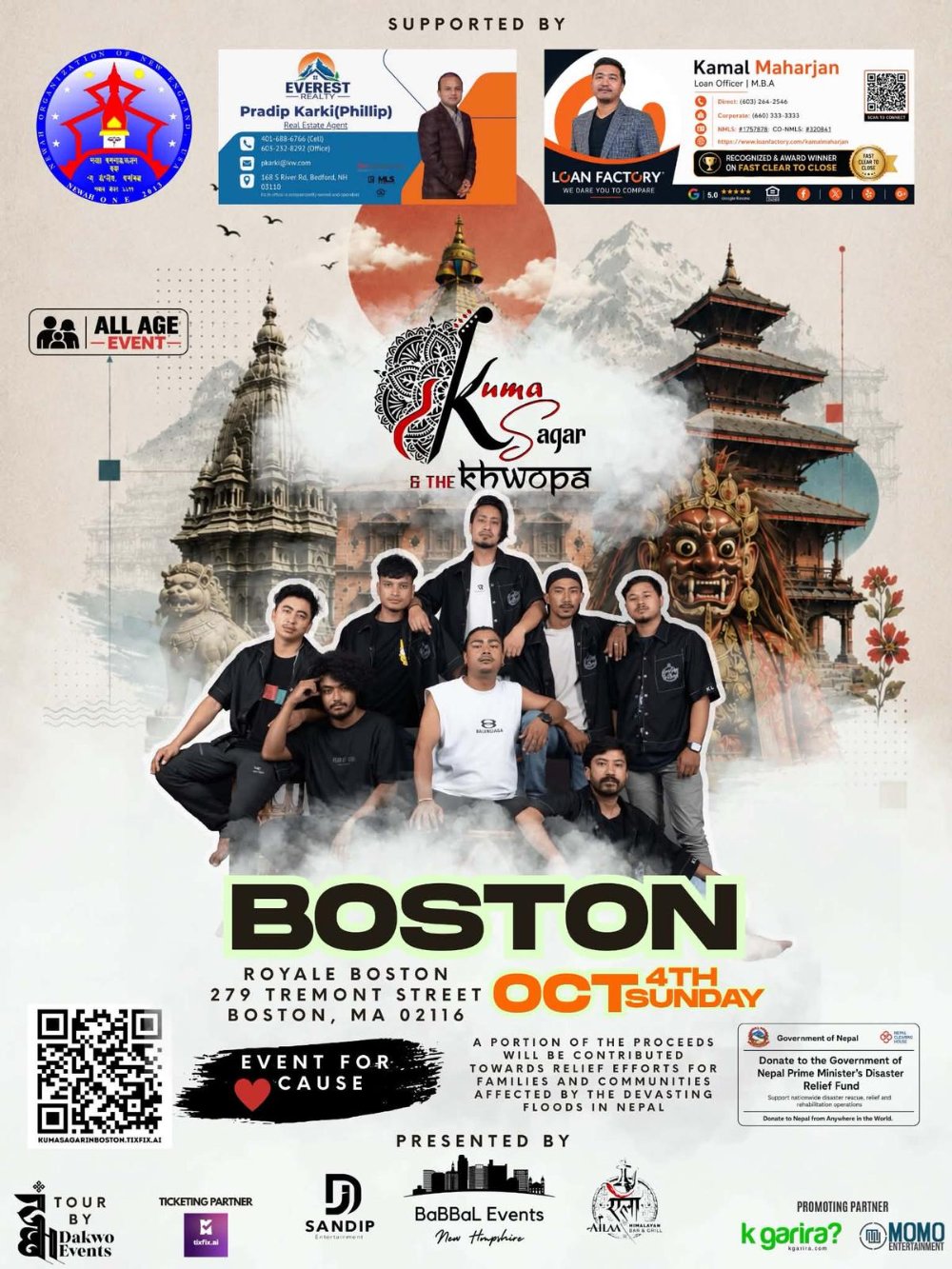 Oct 4, 2026 7:00 PM · Boston / New England · 507 views
 -
 Nepal Festival Perth 2026 FestivalOct 10, 2026 10:00 AM · Perth / Western Australia · 220 views
 -
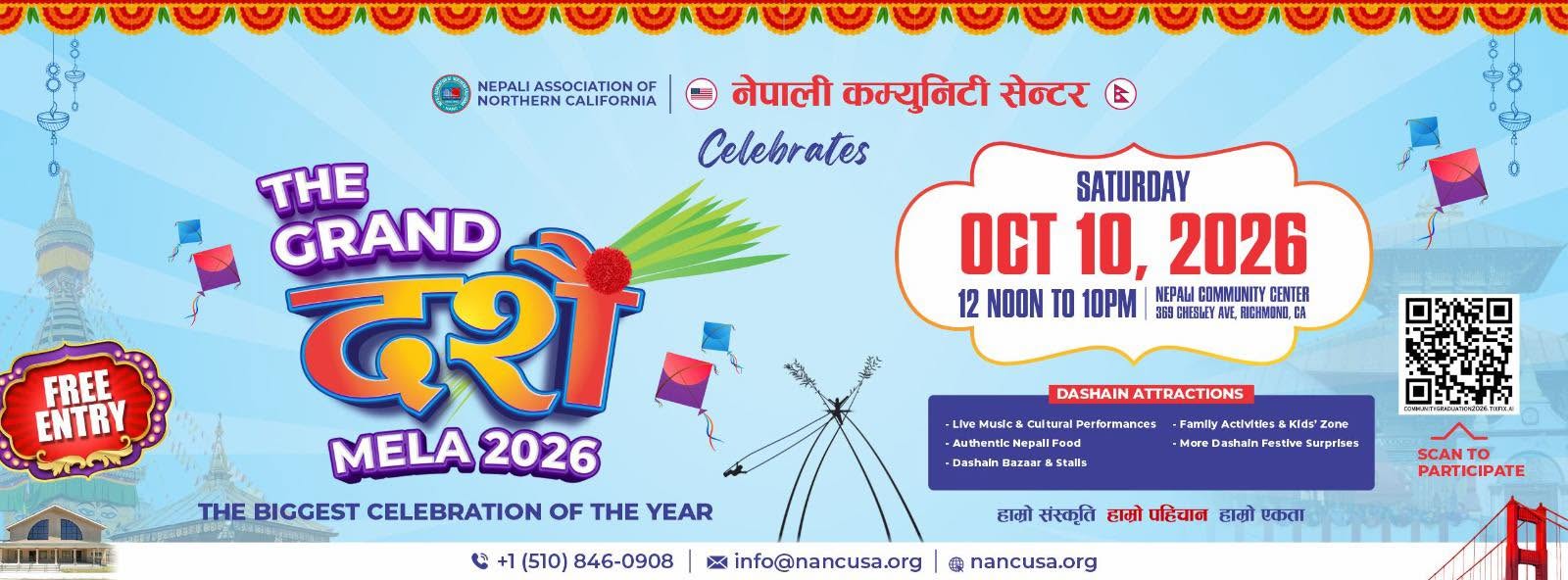 Grand Dashain Mela 2026 FestivalOct 10, 2026 11:00 AM · Bay Area / Northern California · 208 views
 -
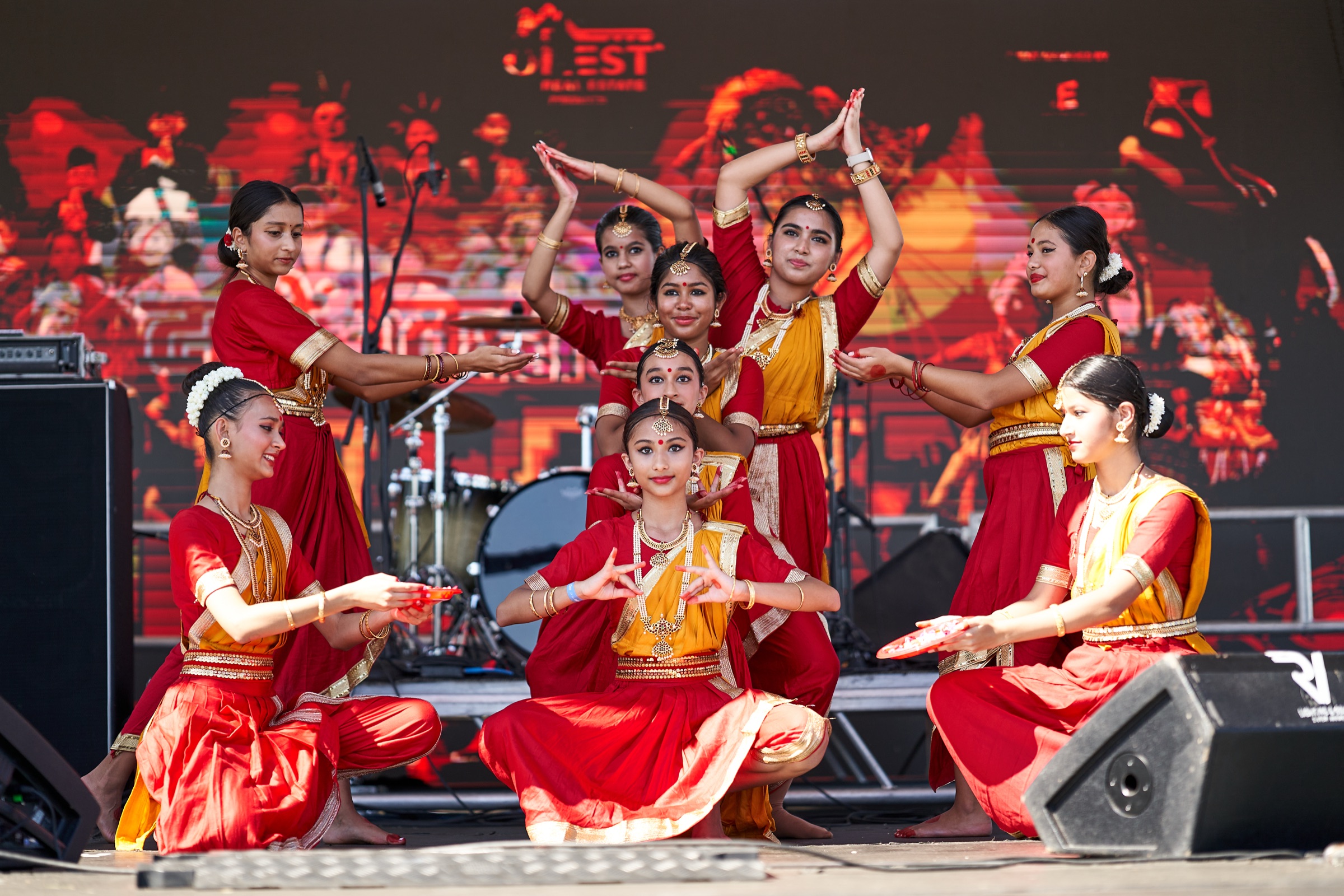 Oct 11, 2026 11:00 AM · DMV / Greater Washington · 221 views · Dashain
 -
 Dashain Festival Fulpati PartyOct 17, 2026 10:00 PM · Greater London · 182 views · Dashain
-
✓Vianet Communications OtherKathmandu · · 280 views
-
Aama Lama RestaurantMalden, MA · · 238 views
-
Ailaa Himalayan Bar & Grill RestaurantStoneham, MA · · 239 views
-
Ailaa Himalayan Bar & Grill RestaurantBedford, TX · · 214 views
-
Annapurna Curry & Sekuwa House RestaurantManchester, NH · · 218 views